
Reviewed · HISTORICAL TOURS
Takayama Local Cuisine, Food & Sake Cultural Tour with Government-Licensed Guide
Takayama’s best stories often come from its shopkeepers, brewers, and market sellers, not from a guidebook. This private walking tour puts you beside them, with a licensed local guide such as Mitsu or Yoko explaining how the town’s food and daily life grew around old streets and traditional businesses.
I especially like the custom itinerary, which lets you choose among the Jinya, two morning markets, Sanmachi Suji, a miso shop, and sake breweries. I also like the small private format: guides have adjusted the day for interests ranging from food and crafts to local culture. The main drawback is that the advertised six hours covers walking and guiding, not lunch, transportation, entry tickets, or every tasting.
Key points
- Choose 3 to 4 sights: You can shape the day around food, history, crafts, markets, or sake.
- Meet a licensed local guide: Guides including Mitsu and Yoko offer English-language context about Takayama and Japanese culture.
- Visit working food businesses: Onoya focuses on miso and soy sauce, while Harada and Kawashiri offer sake.
- Morning markets are central: Jinya-Mae and Miyagawa markets show Takayama’s everyday food culture.
- Private six-hour walk: Only your group participates, but the tour does not include private vehicle transport.
- Budget for extras: Lunch, admission, sake tastings, transportation, and personal purchases are separate.
Takayama food culture begins on foot
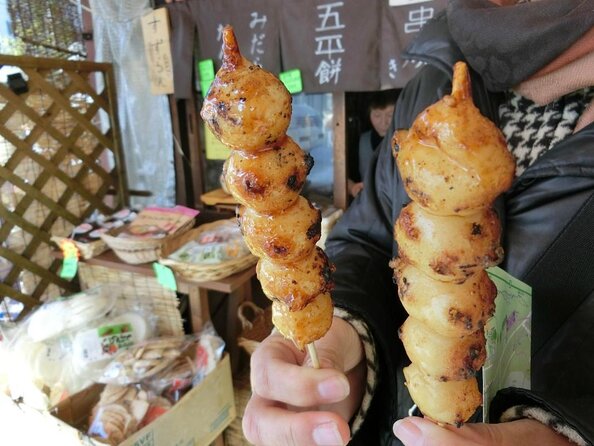
This is not a restaurant crawl with a fixed menu. It is a guided walk through the old center, where food shops, breweries, markets, and preserved buildings sit close enough to connect in one outing.
That matters in Takayama. You are not simply sampling local products. You are seeing where they are sold, hearing how they fit into town life, and learning why the old streets still function as more than a photo backdrop.
The tour lasts about six hours, though you choose only three or four sites from the available stops. That flexibility is useful. A first-time visitor may want the Jinya and Sanmachi Suji, while a sake fan may prefer the markets and breweries. If crafts interest you, tell your guide early. Yoko has tailored a day around food, arts, and crafts, and another guide adjusted the route as a group’s interests changed.
The private format also makes conversation easier. Your group is the only group on the activity, and the guide can explain things at your pace rather than keeping a large crowd moving.
More History Walks with a Drink in Japan:
- Takayama: Authentic Sake Tasting at a Historic Brewery
★ 5.0 · 65 reviews - Takayama: Authentic Sake Tasting at a Historic Brewery
★ 4.8 · 50 reviews - Historic Kanda Sake Tasting at Tokyo’s Oldest Shop (1596)
★ 4.9 · 33 reviews
Why the licensed guide matters
The guide is not just there to point toward a brewery. This experience uses a National Government Licensed Guide Interpreter, a Japanese government certification requiring strong knowledge of Japanese culture and history.
That is particularly useful at places such as Takayama Jinya, where the buildings make more sense once you understand their role under the Tokugawa shogunate. It also helps in the old town, where a shop selling soy sauce, a market stall, and a sake brewery each connect to the wider story of Hida.
Mitsu and Yoko are named guides associated with this experience. Mitsu has led families through her hometown and focused on Takayama’s past and local people. Yoko has been praised for prompt communication, good English, and adapting the route to a group’s interests. Guide assignments can vary, so treat those names as examples rather than a guarantee.
The best use of your guide is to ask questions. If you want to understand sake brewing, say so. If you care more about food than architecture, make that clear before the walking route is set.
Takayama Jinya puts the town in context
Takayama Jinya is the strongest history option on the route. It is a surviving Edo-period jinya, a government office that served as the headquarters for Hida Province under the Tokugawa shogunate from 1692 to 1871.
You get about 30 minutes here. That is enough for an introduction and a focused look, but not a long museum visit. Admission is not included, so budget for the ticket if this is one of your selected stops.
I would choose the Jinya early in the day if you want the food stops to have more meaning afterward. The building gives context to Takayama’s role and helps explain why the town developed such a strong local identity. If you are mainly seeking tastings, this may be the stop you trade for another market or brewery.
Two morning markets, two different moods
The Jinya-Mae Morning Market and the Hida-Takayama Miyagawa Morning Market are both listed as 30-minute stops. Both are free to enter, and both bring you close to produce, local goods, and the practical side of town life.
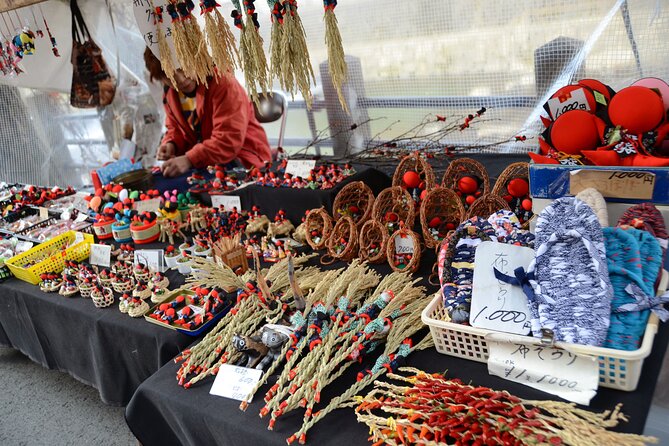
Jinya-Mae is tied to the Takayama tradition called Asa-ichi, the morning market. It is a good place to see fresh produce and local crafts in a compact setting. The market visit can also help you understand how small-scale selling remains part of the town’s daily rhythm.
Miyagawa Morning Market runs along the Miya River between two bridges. It has existed in some form for more than two centuries and remains a place for fresh produce. The river setting gives this stop a different feel from a market beside the Jinya.
You may not need both markets if your time is limited. They overlap in purpose, so I would choose both only if you want a stronger look at local produce and market life. If you have a firm interest in old architecture, sake, or soy sauce, use one market slot for another stop.
The morning timing matters. This is not an evening food tour, and market activity is part of the early-day appeal. If you start at 9 a.m., as Yoko did with one group at its hotel, the schedule fits naturally with the markets.
More Sake Tours in Japan:
- 1-Day Snow Monkeys, Zenko-ji Temple & Sake in Nagano
★ 5.0 · 1,020 reviews - 3-Hour Kyoto Insider Sake Brewery Tour with Tastings & Pairings
★ 5.0 · 917 reviews - Nagano: Snow Monkeys, Zenkoji Temple & Sake Day Trip
★ 4.9 · 833 reviews - Kyoto: Insider Sake Brewery Tour with Sake and Food Pairing
★ 5.0 · 704 reviews
Sanmachi Suji is Takayama’s visual centerpiece
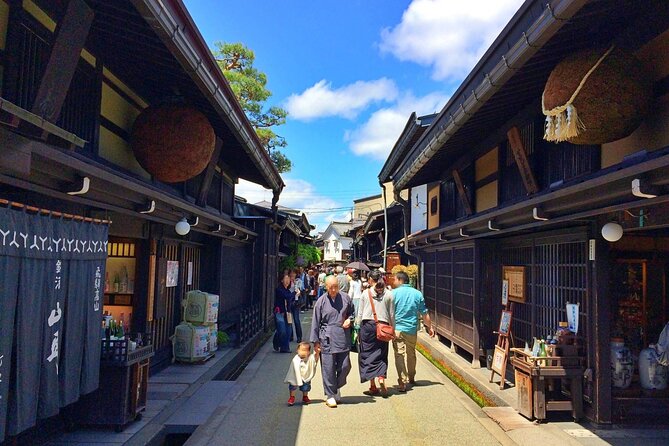
Sanmachi Suji is the old town’s main historic area, with preserved and restored buildings lining the streets. During the Edo period, Takayama was a hub for craftsmen, merchants, and farmers, and this district still gives you the clearest sense of that older town pattern.
The scheduled visit is about 30 minutes. That is enough for orientation and a walk through the core, but you should not expect time to inspect every shop or browse at length. If you see something worth buying, ask your guide how it fits into the local food or craft tradition, then plan to return later if the itinerary moves on.
This is one of the best choices for a first visit because it combines atmosphere with practical orientation. It also links naturally to Onoya, Harada, and Kawashiri. The drawback is that Sanmachi can feel more commercial than the smaller side streets, so your guide’s local context is what makes the stop more than a quick photo break.
Onoya explains miso and soy sauce
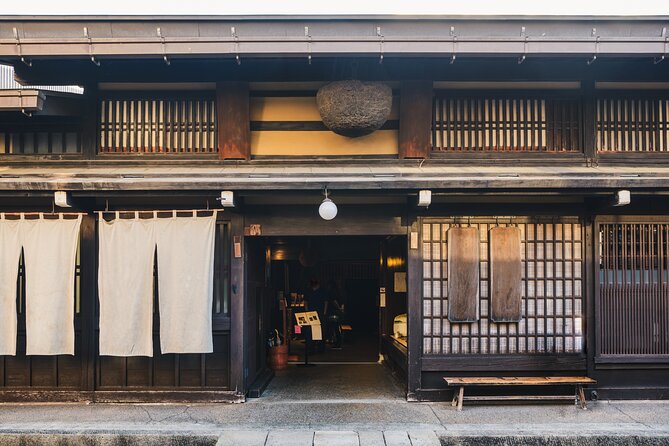
Onoya is a traditional miso and soy sauce brewery and shop founded 250 years ago in Takayama, in the Hida area. The visit lasts about 15 minutes and admission is free.
This is a short stop, but it adds an important piece to the food story. Miso and soy sauce are not side notes in Japanese cooking. Seeing a long-running producer helps you connect familiar flavors with the local businesses that make and sell them.
Do not expect this stop to fill half an afternoon. It is best used as a compact food-focused visit between larger sights. If you want a broad look at Takayama’s cooking traditions, Onoya pairs well with a market. If you want tastings and more time with drinks, a sake brewery may be a better use of one of your three or four selections.
Harada Sake Brewery offers the widest tasting choice
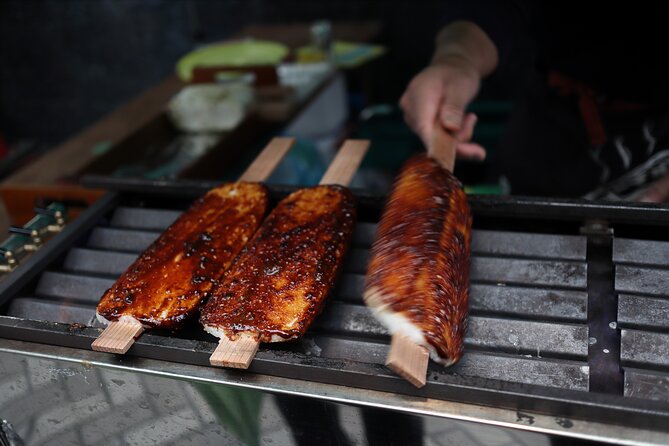
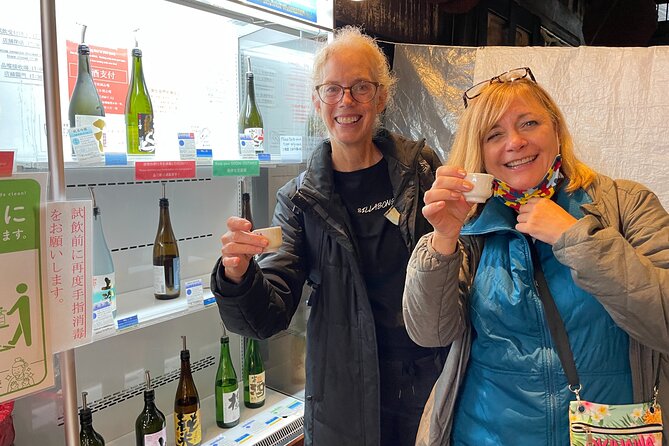
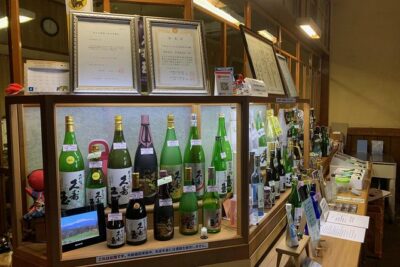
Harada is a traditional sake brewery with the brand Sansha, described as a dry sake with a strong umami character. You can buy a small tasting cup and sample more than ten types of sake.
The scheduled stop is 30 minutes, which gives you time to compare bottles without turning the visit into a long tasting session. The tasting is not included in the tour price, so bring extra money if sampling is important to you.
Harada also sells steamed manju buns and cakes made with sake. That gives non-drinkers or cautious tasters another way to connect with the brewery’s products, though you should still expect to pay separately for purchases.
This is likely the strongest stop for someone who wants choice. More than ten types of sake means you can compare styles rather than trying one token sample. It is also a good place to ask your guide about dry sake, umami, and which bottle might suit your taste.
Kawashiri focuses on matured sake
Kawashiri Sake Brewery takes a different angle, specializing in artisanal matured sake. For a small additional charge, you can taste three brews, including Hidamasamune.
The trio format is more limited than Harada’s selection, but it may be better if you prefer a focused comparison. Matured sake can offer a different profile from the dry Sansha style, so visiting both breweries gives you a broader view of Takayama’s brewing culture.
You do not need to pay for a tasting if you would rather browse or listen. That is useful for groups with mixed interests, especially when one person drinks little or no alcohol. Ask your guide to help you decide which brewery better fits your priorities before spending one of the available site choices.
What the six-hour format really includes
The headline price is $154.37 per person. That is not a cheap walk, especially once you add lunch, admission to Takayama Jinya, sake samples, transport, and shopping.
The price makes more sense for a private group that values a tailored guide. You are paying for about six hours of English-language guiding, cultural interpretation, and route planning rather than a fixed tasting platter. A larger family or group can also benefit from the private format, since the guide can adjust explanations and stops for different interests.
Still, you should compare the cost with what you actually want. If you only need a quick walk through Sanmachi and one market, a six-hour private tour may be more than necessary. If you want a local person to connect food, architecture, and town history, the longer format gives the guide room to make those links.
The tour includes a licensed English-speaking guide and a walking route within the designated Takayama area. It does not include private transportation, transportation fees, lunch, entrance fees, or personal expenses. Pickup is offered on foot, so clarify the meeting point rather than expecting a vehicle at your hotel.
Who will get the most from this tour
I would recommend this experience to first-time visitors who want Takayama explained, not just photographed. It also suits families, since the private format lets the guide adjust the pace and mix of history, markets, food, and crafts.
Food-focused visitors should select at least one market and one producer. Sake fans should consider Harada and Kawashiri, but remember that tastings cost extra. Visitors who prefer history can select Takayama Jinya and Sanmachi Suji, then use the remaining choice for a market.
This is less suitable if you want a full restaurant lunch included, a vehicle-based tour, or a fixed tasting menu. It is also not ideal for someone who wants to visit every listed stop, since the included plan allows only three or four sites.
Most travelers can participate in the walking tour, and service animals are allowed. Since the activity is on foot, wear comfortable shoes and be ready for several hours of walking between stops.
Simple planning advice before you book
At booking, think in terms of priorities rather than trying to fit everything in. Tell the guide if your main goal is sake, traditional food, crafts, architecture, or local history.
I would also ask about the exact meeting point and selected stops before the day begins. The tour is customizable, but the guide entry fees are covered only for sights listed under the included expectations. Takayama Jinya still lists admission as separate, so confirm the cost of any entrance you want.
Keep cash or another payment method available for sake tastings, small food purchases, lunch, and admission. The market and brewery visits can tempt you into buying snacks or bottles, and those personal expenses are not part of the tour price.
Cancellation is free up to 24 hours before the start time. Within 24 hours, the payment is not refunded, and late changes are not accepted.
Should you book the Takayama food and sake walk?
Book it if you want a private, flexible introduction to Takayama and value the guide as much as the food. The strongest features are the local English-speaking guidance, the choice of three or four sites, and access to food businesses that make the old town feel lived-in rather than staged.
I would book it for a family, a couple with mixed interests, or a small group that wants to ask questions and adjust the day. I would skip it if you only want a short sightseeing stroll or if the $154.37 price feels high before adding meals and tastings.
For the best use of your time, choose one history stop, one market, and one or two food producers. That combination gives you Takayama’s old streets, daily commerce, and local flavors without trying to force every attraction into one six-hour walk.
FAQ
How long does the Takayama cuisine and sake tour last?
The tour lasts approximately six hours.
Is the tour private?
Yes. Only your group participates in the private tour or activity.
How many sights can I choose?
You can create a customized itinerary by choosing three or four sites from the listed options.
Is an English-speaking guide included?
Yes. The tour includes a licensed local English-speaking guide. The experience uses a National Government Licensed Guide Interpreter.
Are pickup and transportation included?
The guide meets you on foot within the designated Takayama area. Private transportation and transportation fees are not included.
Is lunch included?
No. Lunch is not included in the tour price.
Are entrance fees included?
Entrance fees are not generally included. Guide entry fees are covered only for sights listed under the tour’s included expectations, and Takayama Jinya lists admission as not included.
Do sake tastings cost extra?
Yes. Tastings at Kawashiri cost an additional small charge, and Harada’s tasting cup and sake samples are also separate purchases.
What is the cancellation policy?
You can cancel up to 24 hours before the experience start time for a full refund. Cancellations or changes made less than 24 hours before the start time are not accepted for a refund.
Newly added around Japan
- Nara: Sake Tasting Tour at the Birthplace of Japanese Sake★ 4.9 · 8 reviews
- Nara Sake Tasting Tour at Local Brewerie(tasting fee included)★ 5.0 · 12 reviews
- Sake “Omakase” in Osaka : Guided Tasting by a Active Sake brewer★ 5.0 · 11 reviews
- Special Food and Sake Factory Tour in Takayama★ 5.0 · 11 reviews
- EXPERIENCE TAKAYAMA & LOCAL SAKE TASTING with explanation 1 HOUR!★ 4.5 · 12 reviews
- 7 Kinds of Sake Tasting with Complementary Foods★ 5.0 · 11 reviews
- Japanese Sake Tasting & Wagyu Sukiyaki Cooking Class in Tokyo★ 5.0 · 10 reviews
- Tokyo Sake Tour with a Local Guide, Private & Tailored to Your Taste★ 4.0 · 12 reviews
Historical Tours, compared.
Historic Kanda Sake Tasting at Tokyo’s Oldest Shop (1596)
Read our review →
World Heritage Himeji Castle & Sake Breweries Private Tour
Read our review →Browse the lists this tour appears in