
Reviewed · OSAKA SAKE TOURS
3.5h Osaka Night guided Local Bar Hopping, Sake & Karaoke
The best part of this Osaka night tour comes at the end: you sit in a small local karaoke bar, share drinks, and sing with Japanese customers. It is less about polished entertainment and more about joining the room, even if your singing is better suited to the shower.
I like the small group size, which makes it easier to ask questions and share dishes without getting lost in a crowd. I also like the mix of sake, kushikatsu-style food, Hozenji Temple, and karaoke. You get several sides of Namba in one evening, not just a crawl from one tourist bar to another.
The main drawback is the price structure. The $40 booking fee covers the guide and souvenir, but food and drinks cost another JPY 7,000 to 10,000 per person, and the group also covers the guide’s drinks. Some restaurants may allow smoking, so this is worth considering before you book.
Key points at a glance
- Karaoke with local customers: Finish the evening at a super-local snack bar with all-you-can-drink beverages and shared singing.
- Sake tasting with food: Try several recommended varieties and learn how different sake styles pair with small dishes.
- Namba after dark: Walk through Dotonbori, photograph the Glico sign and Kuidaore Taro, and hear stories about Osaka life.
- Hozenji Temple stop: Learn the local way to pray at this small temple tucked among Namba’s narrow lanes.
- Small groups of 10 or fewer: The format suits solo visitors, couples, and small friend groups who want easy conversation.
- Extra costs matter: Plan for roughly JPY 7,000 to 10,000 per person beyond the listed tour price, plus the guide’s drinks.
Why this Osaka night tour feels different
Many Osaka evening activities focus on big signs, famous food streets, or a fixed restaurant meal. This one uses those sights as a starting point, then takes you into the social side of Japanese nightlife.
You move through three local eating and drinking stops over about three and a half hours. Along the way, your guide explains izakaya manners, Osaka food customs, sake, temple etiquette, and the relaxed rules of karaoke snack bars.
That combination is useful because Osaka nightlife can feel confusing at first. A small izakaya may have a short menu, shared plates, unfamiliar customs, and little English. With a guide beside you, you can pay attention to the food and people instead of worrying about every small rule.
The guides named in the feedback include Ryoko and Yoko, though your guide may be different. The strongest part of their role is not simply translation. They take photos, keep the group moving, explain local habits, and help create conversation between visitors and Japanese customers.
More Late Nights in Japan:
- Casual Japanese SAKE tasting and snack experience in Kabukicho
★ 5.0 · 159 reviews - Casual Japanese sake tasting and snack experience, Kabukicho
★ 4.7 · 31 reviews - Kyoto: Foodie Night Tour in Gion with 9 dishes + 6 Sake
★ 4.4 · 26 reviews
Meeting at Namba Station at 7:00 PM
The meeting point is in front of FamilyMart Namba 1-chome, just outside Namba Station Exit 14. Look for a guide holding a BITEMEOSAKA sign.
This is a practical location, but Namba Station has a maze of underground passages and exits. Give yourself extra time. If you are arriving by train, follow signs carefully and use Exit 14 rather than assuming all Namba exits lead to the same street.
The tour begins at 7:00 PM. That timing works well for dinner and gives you the evening ahead, but you should arrive having eaten only lightly. The food is shared at several stops, and the aim is to sample a range of dishes rather than fill up at the first restaurant.
The group is limited to 10 people. That is large enough for a social night but small enough for the guide to explain dishes and customs without shouting. Solo visitors should find it easier to join the conversation here than on a large coach-style activity.
Dotonbori, neon signs, and Osaka character
The first walk lasts about 30 minutes and takes you through Namba and Dotonbori. You will have time for photos by the famous Glico running-man sign and Kuidaore Taro, the striped, drum-playing restaurant mascot.
These are well-known Osaka sights, so do not expect a quiet introduction to the city. The streets can be crowded, bright, and noisy. That is part of the point. Your guide gives the signs and food streets some context, then gets you away from simply taking pictures and moving on.
This opening section also helps explain Osaka’s reputation as a food-loving city. The local phrase often linked to Osaka is kuidaore, roughly meaning to eat until you drop. The tour does not ask you to tackle an enormous meal, but it does build the night around shared eating and conversation.
I like this short orientation because it keeps sightseeing from taking over the evening. You see the big names, then use them as landmarks before turning toward smaller places.
First izakaya: shared plates and local manners
The first restaurant stop lasts about 45 minutes. You receive a welcome drink and share several Japanese dishes with the group.
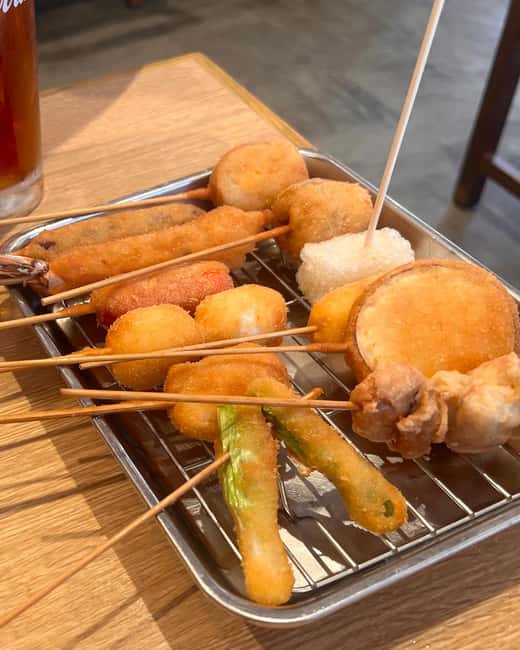
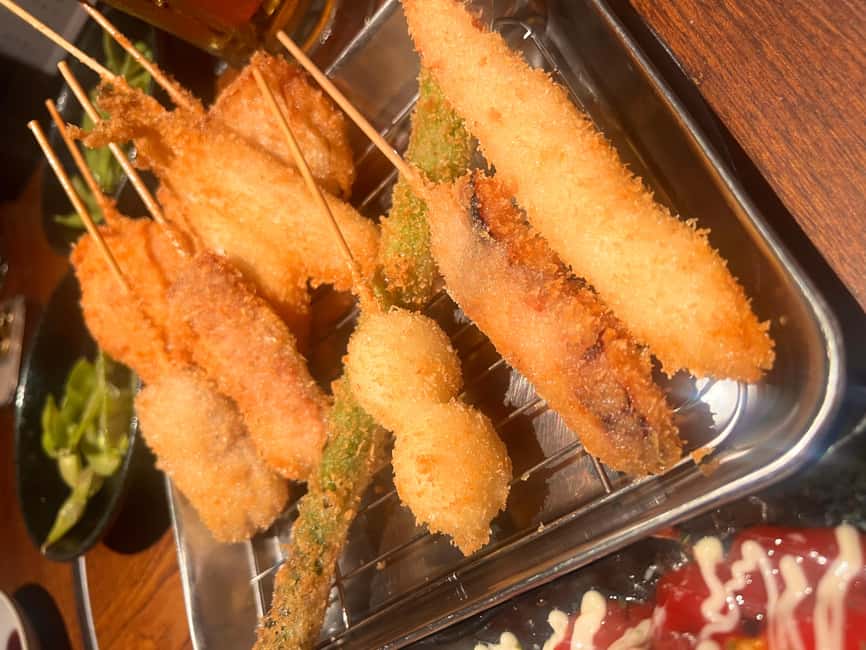
An izakaya is not simply a Japanese bar. It is closer to a casual pub serving small plates, where people order several dishes for the table and keep drinks coming. The food may include skewers, fried items, seafood, vegetables, or other house specialties, but the exact menu is not fixed in the supplied details.
Your guide explains basic izakaya customs and manners. That matters because shared dining has its own rhythm. You order for the table, pass dishes around, and pay attention to small habits that can otherwise be easy to miss.
One useful detail covered during the evening is the no-double-dipping rule associated with kushikatsu. Fried food on skewers may come with shared sauce, and once a skewer has touched the sauce, it should not go back in. It is a simple rule, but knowing it lets you enjoy the food without an awkward mistake.
The food is shared, so this stop works best if you are comfortable trying a little of several things. If you need a specific diet or have strong food restrictions, ask the operator before booking. The supplied information does not promise a special menu.
Same corner of Japan, a different pour:
- 1-Day Snow Monkeys, Zenko-ji Temple & Sake in Nagano
★ 5.0 · 1,020 reviews - 3-Hour Kyoto Insider Sake Brewery Tour with Tastings & Pairings
★ 5.0 · 917 reviews - Nagano: Snow Monkeys, Zenkoji Temple & Sake Day Trip
★ 4.9 · 833 reviews - Kyoto: Insider Sake Brewery Tour with Sake and Food Pairing
★ 5.0 · 704 reviews
Sake tasting with snacks
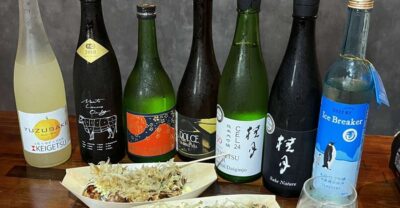
The second restaurant stop focuses on Japanese sake and lasts about 45 minutes. You try several recommended varieties with snacks selected to match the drinks.
This is more useful than being handed one glass and told it is sake. Japanese sake can vary in aroma, sweetness, dryness, weight, and texture. A side-by-side tasting helps you notice that it is not one single flavor category.
The food pairings also give the tasting a clear purpose. Small snacks can show how a drink changes when eaten with something salty, fried, savory, or delicate. Your guide can explain the differences in plain language and help you decide what you prefer.
The cost of sake is included in the shared food and drink bill, not the $40 guide fee. The group normally spends about JPY 7,000 to 10,000 per person across the evening. Another section of the information gives a lower estimate of JPY 7,000 to 9,000 for the three places, so I would budget toward the upper figure rather than count on the lower one.
The group also covers the guide’s drinks. That is not unusual for a small hosted bar experience, but it should be clear in your budget. The night becomes less of a bargain once the venue costs are added, although you are paying for several food and drink stops rather than one standard dinner.
Hozenji Temple and a slower fifteen minutes
After the second restaurant, the group takes a short walk to Hozenji Temple. The temple visit lasts about 15 minutes and offers a welcome pause between drinking stops.
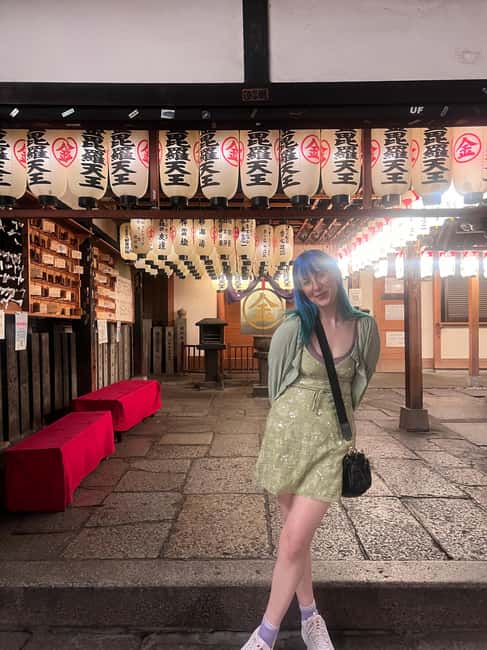
Hozenji is small and atmospheric, set among the lanes of the Namba area. Your guide explains the traditional way to pray at a Japanese temple, giving you a chance to take part respectfully instead of treating the site as just another photo stop.
The walk may also include a sweet or takoyaki from a local food stall. The wording here is flexible, so do not assume both are guaranteed. Think of this as an opportunity to try an extra bite if the group stops and you still have room.
This part of the tour is brief, but I consider it important. Without it, the evening would be only food and alcohol. The temple adds a little quiet and shows how religious places can sit close to entertainment streets in Japanese cities.
Because the tour includes alcohol and walking, comfortable shoes are sensible. The route is not described as strenuous, but you are on your feet between restaurants and bars.
The final karaoke snack bar
The last stop lasts about an hour and is the night’s main social gamble. You visit a local karaoke snack bar, sing with Japanese customers, and have all-you-can-drink beverages.
A snack bar in Japan is not always the same as a private karaoke room. It can be a small place centered on conversation, drinks, and singing, with regular customers sharing the room. That setup is why this stop can feel personal and memorable, but it also means you need to be willing to sing in front of other people.
English songs may be part of the evening, and the group can join local customers in singing. The exact songs and mix of people will change from night to night. You should not book this expecting a private room or a carefully staged show.
This is where the tour’s small size helps most. Ten people or fewer can fit into the atmosphere without taking over the room. A good guide can introduce you, keep the mood comfortable, and make sure quieter members are not pushed too hard.
The all-you-can-drink arrangement is included at this final venue, but the wider food and drink costs are still paid separately from the booking fee. Drink at your own pace. The aim is to enjoy the social side of the stop, not to turn the last hour into a contest.
Several guides have also helped participants continue the evening by recommending another bar or arranging a further karaoke stop. That is a helpful extra, but it should not be treated as part of the guaranteed 210-minute program.
Photos and the small souvenir
The guide fee includes explanations, photo taking, and a traditional Japanese souvenir. Photo help is more useful than it sounds on a night tour. Group members can get pictures together without asking strangers, and the guide knows which parts of the route make good backdrops.
A printed photo souvenir has also been given at the end on some outings. The stated inclusion is a Japanese souvenir, so the exact gift may vary. Treat the photo as a pleasant possibility, not a promised item.
This personal touch comes through most clearly for couples and solo visitors. You get a record of the evening without needing to organize it yourself, and the souvenir is small enough to pack easily.
The real price and what you receive
The listed price is $40 per person. Add roughly JPY 7,000 to 10,000 for shared food and drinks, including the guide’s beverages. In practical terms, this is not a $40 night out. It is a guided evening whose total cost depends on exchange rates and the group’s orders.
I think the value is strongest if you want access and explanation, not simply cheap drinks. You are paying for a local guide, several venues, food, sake, a temple visit, photos, and a hosted karaoke experience. Finding a drink and a Dotonbori restaurant on your own would cost less, but it would not offer the same introduction to manners or the same bridge into a local snack bar.
The cost is less appealing if you do not drink, dislike shared plates, or plan to leave before karaoke. The final stop is a major part of the experience, so book only if you like the idea of singing and talking with strangers.
Some restaurants may allow smoking. If smoke bothers you, ask about current venue arrangements before confirming. Participants must be at least 20 years old.
Who should book this evening
I would recommend it to a first-time Osaka visitor who wants help getting oriented after dark. It is also a good fit for solo visitors who want company, couples who enjoy food and casual walking, and friends who would rather meet local people than stay in a private karaoke room.
The format suits people who are open to trying unfamiliar dishes and asking questions. You do not need to be a sake expert or a confident singer. You do need to accept that some parts of the night are shared, flexible, and social.
I would be more cautious if you want a precise menu, a quiet dinner, no-smoking venues, or a private bar experience. The evening depends on the group, the atmosphere at the snack bar, and your willingness to join in.
The tour has English and Japanese guides, and names used by the operator include Ryoko and Yoko. Guide assignment can vary, but the reviews consistently praise the warm, personal approach, especially the photo taking, local stories, and help with continuing the night after the official finish.
Should you book it?
Book this tour if you want Osaka nightlife explained from the inside, with food, sake, a small temple, and a real chance to sing with local customers. The karaoke stop, not the sightseeing, is the deciding factor.
Skip it if the extra JPY 7,000 to 10,000 feels too high, if shared drinking does not suit you, or if smoke is a serious concern. For the right person, this is a friendly introduction to Namba that turns a night of bar hopping into something more personal and easier to navigate.
FAQ
Where does the Osaka night tour meet?
You meet at 7:00 PM in front of the FamilyMart Namba 1-chome store, directly outside Namba Station Exit 14. Look for the guide holding a BITEMEOSAKA sign.
How long does the tour last?
The experience lasts 210 minutes, or three and a half hours, and returns to the FamilyMart meeting point.
What is included in the $40 price?
The price includes the guide fee, explanations about Osaka and Japanese culture, photo taking, and a Japanese souvenir.
How much should I budget for food and drinks?
Shared food and drinks usually cost about JPY 7,000 to 10,000 per person. Another estimate gives JPY 7,000 to 9,000, so budgeting toward JPY 10,000 is safer. The group also covers the guide’s drinks.
Is karaoke included?
Yes. The final stop is a local karaoke snack bar with all-you-can-drink beverages and the chance to sing with Japanese customers.
What languages are available?
The tour is offered with live guides in English and Japanese.
Can people under 20 join?
No. The activity is not suitable for anyone under 20 years old.
More Evening Sake Sessions in Japan
- Kyoto: Gion Evening Walk with Hidden Gems, Geisha & Sake
★ 5.0 · 41 reviews
Newly added around Japan
- Nara: Sake Tasting Tour at the Birthplace of Japanese Sake★ 4.9 · 8 reviews
- Kobe: Sake Brewery Tour with Tasting and Kobe Beef Bites★ 5.0 · 11 reviews
- Kobe: Sake Brewery Tour with Tasting Sake★ 4.7 · 9 reviews
- Kyoto: Fushimi Sake District Tour with Boat Ride★ 4.6 · 10 reviews
- Nara – Craft Beer, Sake, and Food Walking Tour★ 3.5 · 9 reviews
- World Heritage Himeji Castle & Sake Breweries Private Tour★ 4.5 · 11 reviews
- Visit behind the Scenes: Hiroshima Saijo Sake Brewery Tour★ 5.0 · 9 reviews
- Sake Town Tour in Saijo Hiroshima★ 5.0 · 9 reviews
Osaka Sake Tours, compared.
Osaka Cooking Class and Sake Tasting with Local Supermarket Visit
Read our review →
Sake “Omakase” in Osaka : Guided Tasting by a Active Sake brewer
Read our review →Browse the lists this tour appears in