
Reviewed · SAKE TASTING
Osaka Cooking Class and Sake Tasting with Local Supermarket Visit
Osaka’s food culture makes more sense when you handle the ingredients yourself. This four-hour class begins at a local supermarket, then moves to a cooking studio for niku-sui, okonomiyaki, and gyoza, with a drink to enjoy alongside the finished meal.
I like the supermarket stop because it shows you the everyday ingredients behind familiar Japanese dishes. I also like the small maximum of seven people, which leaves room for hands-on help from guides such as Yuka or Mari.
The main consideration is the price: at $92.50 per person, this costs more than a simple meal. You are paying for instruction, shopping, cooking, and drinks, so it makes the most sense if you want an active food experience rather than dinner alone.
Key points to know before booking
- Three Osaka dishes in one class: Prepare niku-sui, okonomiyaki, and gyoza rather than focusing on just one recipe.
- A local supermarket comes first: Learn about Japanese ingredients while shopping for what you will cook.
- Small group, capped at seven: The format should allow direct help with folding, mixing, and cooking.
- Beginner-friendly instruction: You do not need previous cooking experience, and live guidance is part of the class.
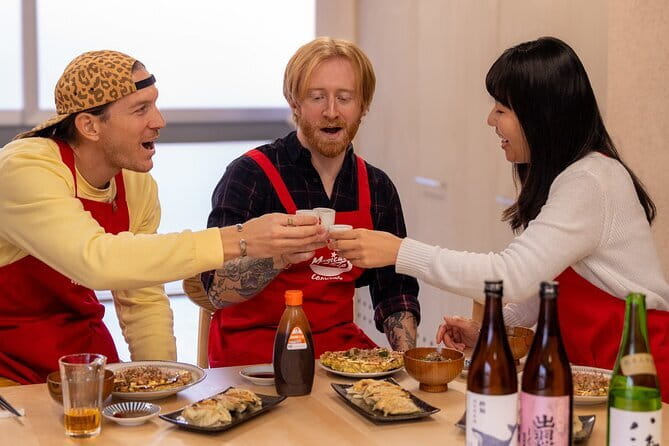
- Drinks are part of the meal: Taste local sake, beer, or soft drinks after or while preparing the food.
- Simple meeting point: Meet at 10:00 a.m. outside FamilyMart near the south side of Minami-Morimachi Station.
Starting with Osaka ingredients at 10 a.m.
The class starts at the FamilyMart Minamimorimachi station South side, at 2-chōme 3-10, 1F, in Osaka’s Kita Ward. The listed start time is 10:00 a.m., and the activity returns to this meeting point at the end.
That starting point matters. You are not asked to find a distant cooking school or make your own way to a second location. The meeting point is near public transportation, which keeps the morning fairly simple. Still, I would arrive early enough to identify the correct side of the station and the convenience store before the group sets off.
The experience lasts about four hours. That gives the class time to include both the shopping visit and the cooking session without reducing the food preparation to a rushed demonstration. You should plan your morning around the full block, since the activity is not just a sit-down tasting.
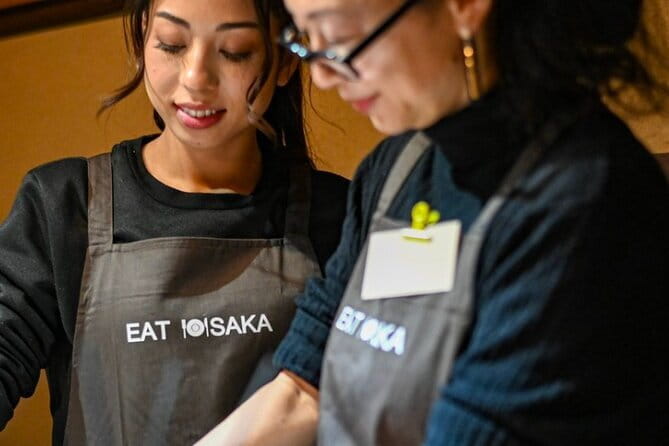
The group limit is seven people. That is one of the strongest practical features here. Cooking classes can become awkward when one instructor has to divide attention among a large crowd. With fewer participants, you have a better chance to receive help when folding gyoza, shaping an okonomiyaki, or checking a dish as it cooks.
More Cooking Classes with Sake in Japan:
- Ramen and Sushi Cooking Class with Sake Pairing Set in Tokyo
★ 5.0 · 291 reviews - Osaka Sake Tasting with Takoyaki Cooking
★ 5.0 · 156 reviews - Osaka Sake Tasting & Takoyaki Cooking Experience
★ 5.0 · 149 reviews
The supermarket stop shows you what goes into the recipes
The first part takes place at a local supermarket. This is more useful than it may sound. Japanese cooking often depends on ingredients that look familiar but may be labeled in ways you do not recognize. A guide can explain what to buy and connect those products to the dishes you will make later.
Guides such as Yuka and Mari have been praised for explaining what to shop for and why the ingredients matter. That help is especially useful if you want to repeat the recipes at home. You are not simply watching someone prepare a meal. You are learning how the shopping list becomes dinner.
The supermarket also gives you a small look at ordinary Osaka life. It is not a staged food market built only for sightseeing. You are shopping for the class in a place used for daily groceries, then carrying those ingredients into the cooking portion.
Do not expect this to be a long food tour. The stop is there to support the class, not to cover every aisle or explain all of Osaka’s food scene. Its value comes from the practical connection between the products you see and the dishes you prepare.
Cooking niku-sui, okonomiyaki, and gyoza
Back at the studio, the instructor leads you through three well-known dishes: niku-sui, okonomiyaki, and gyoza. This gives the class a good mix of skills and textures.
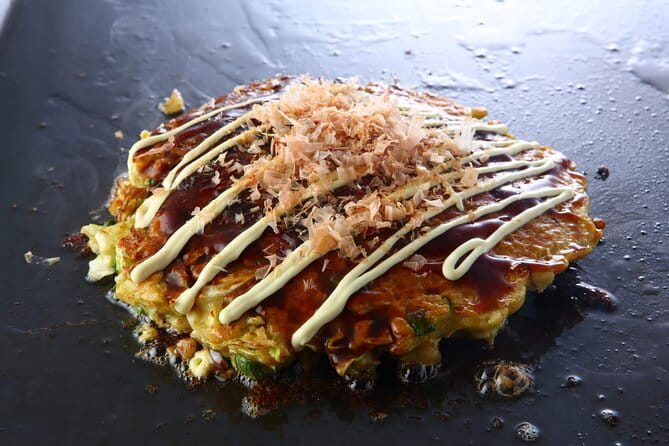
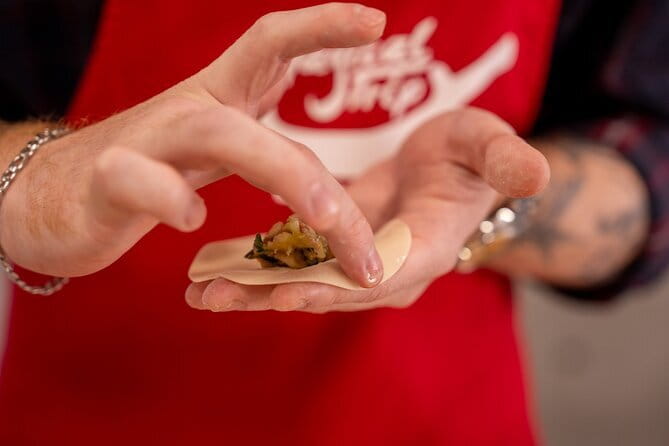
Niku-sui is a beef soup. It provides a warm, straightforward dish and lets you work with broth and beef in a format that is different from the other two recipes. Okonomiyaki is a savory pancake, a dish closely linked with Osaka’s food identity. Gyoza adds a hands-on folding task that gives you something physical to practice rather than simply stirring a pot.
The class is designed for all skill levels. If you cook often, you can focus on technique and ingredient choices. If you rarely cook, the step-by-step format keeps the work manageable. The instructor provides live feedback, so you are not left guessing about every stage.
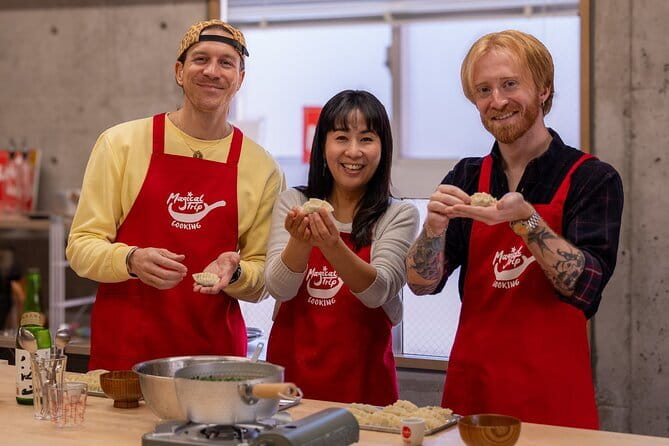
The gyoza folding is likely to be one of the most engaging parts. The class specifically includes practice folding the dumplings, and the small group gives you room to ask for help. Do not worry about making every piece look identical. The point is to learn the method and take that skill home.
Okonomiyaki also works well in a group setting. You get to build the mixture, shape the savory pancake, and see how a few basic ingredients become a complete dish. The class presents the recipe as simple enough to repeat, rather than as a complicated restaurant performance.
A lesson you can repeat at home
The best reason to choose this class is that it teaches food you can try making again. A cooking demonstration can be entertaining but forgettable. Here, you take part in selecting ingredients and preparing the dishes, which gives you a clearer sense of the process.
The recipes are described as beginner-friendly. That does not mean every result will look exactly like a professional cook’s version. It means the instructor aims to make the techniques clear and practical. You can ask questions as you work, and the guides offer corrections while you are still holding the ingredients.
I like this approach for a first visit to Osaka. You leave with more than a list of restaurants. You gain a better idea of what goes into several local dishes and why certain ingredients appear together. Even if you do not recreate the entire meal at home, you will recognize more of the food you see elsewhere in Japan.
The food is also prepared by the group, so the experience has a social side without depending on a large crowd. It suits solo visitors who want an organized activity, couples who want to cook together, families, and friends. Since the class welcomes beginners, you do not need a confident cook in your group to make the booking worthwhile.
More Sake Tastings in Japan:
- 3-Hour Kyoto Insider Sake Brewery Tour with Tastings & Pairings
★ 5.0 · 917 reviews - Kyoto Sake Brewery & Tasting Walking Tour
★ 5.0 · 623 reviews - 1.5-Hour Kyoto Insider Sake Experience with 7 Tastings & Pairings
★ 5.0 · 297 reviews - Sake Tasting Masterclass in Shinjuku (8+ Varieties with a Pro)
★ 5.0 · 271 reviews
Sake, beer, or soft drinks with the meal
The class includes a tasting and meal period with local sake, beer, or soft drinks. This makes the final part feel like a shared lunch rather than a lesson that ends as soon as the stove is turned off.
The sake tasting is a key part of the experience, but you are not limited to alcohol. If you do not drink, soft drinks are available. Beer is also offered for those who prefer it. The choices make the class easier to enjoy with a mixed group.
The drink pairing adds value to the meal, though you should keep your expectations in proportion. This is a cooking class with tasting, not a dedicated sake education session. The information provided does not promise a long formal tasting, a specific number of sake varieties, or a detailed lesson on brewing.
What you do get is a chance to try local sake alongside food you have prepared yourself. That is a more useful setting than tasting a drink without any connection to the meal. The experience lets you consider how the dishes and drinks work together while sitting down with the people in your group.
What the $92.50 price includes in practical terms
At $92.50 per person, this is not a budget meal. You could eat okonomiyaki or gyoza for less at a restaurant, and a supermarket visit costs nothing beyond the groceries you buy. The price needs to be judged as payment for a four-hour activity, not for a plate of food.
You are getting a guided supermarket visit, ingredient instruction, a hands-on class, help from an instructor, three dishes, and a drink choice. The group limit of seven also matters. A private cooking lesson would normally cost more, while a large group class might feel less personal.
I would book it if you value participation and want to understand the food rather than simply eat it. If your main goal is to find the cheapest lunch in Osaka, this is not the right use of your money. If you want an organized cultural activity that produces a meal and practical cooking skills, the price is easier to justify.
The strongest value comes from the combination of activities. A standard cooking class might not include a supermarket visit. A food tour might not let you prepare the dishes. This experience links the two, then adds drinks at the end.
Who will get the most from this class
This is a good match for first-time visitors who want a clear introduction to Osaka food. You do not need to know Japanese cooking, and you do not need previous kitchen experience. The instructor guides you through each stage.
It also suits people who prefer active sightseeing. You will be standing, shopping, folding, mixing, and cooking rather than sitting through a lecture. The class offers a change of pace from temples, shopping streets, and restaurant meals.
Families can consider it because the recipes are designed for beginners and the group is small. Friends and couples can divide tasks and prepare the meal together. Solo visitors may appreciate the built-in structure and chance to meet a few other people without joining a very large group.
Experienced home cooks may still enjoy the class, especially if they want to learn how the ingredients are selected and how the dishes are handled in a Japanese setting. Just keep in mind that the class is aimed at a broad range of ability. It is not presented as advanced professional training.
A few practical limits to keep in mind
The experience begins at 10:00 a.m. That schedule works well if you want an early activity and lunch afterward, but it may not suit a late-starting day. You should also allow the full four hours rather than trying to fit another fixed appointment immediately after it.
The activity ends back at the original meeting point. That is convenient, but the supplied information does not specify an alternate drop-off location or a detailed route between the supermarket and studio. Follow the guide’s directions on the day.
The class has a maximum of seven people, but the exact number in your session can vary. A small maximum is reassuring, though it does not guarantee a private class. You are joining a small-group activity.
Mobile tickets are accepted, and confirmation is provided when you book. Free cancellation is available if you cancel at least 24 hours before the local start time. Cancellations or changes made within 24 hours are not accepted for a refund, so check your plans before the deadline.
Should you book this Osaka cooking class?
Book this class if you want to do more than order Osaka food. The supermarket visit, hands-on preparation, small group, and sake tasting create a useful four-hour introduction to local cooking. Guides such as Yuka and Mari have been singled out for clear explanations and friendly instruction, and the format is built for beginners.
Skip it if you want a quick meal, a formal sake seminar, or an advanced culinary course. At $92.50, the value depends on using all parts of the experience: shopping, learning, cooking, and tasting.
For most food-focused visitors, I would consider it a strong choice. You get three recognizable Osaka dishes, direct instruction, and recipes you can try again after returning home. Just arrive ready to participate, not merely watch.
FAQ
How long does the Osaka cooking class and sake tasting last?
The experience lasts approximately four hours.
What time does the activity start?
The listed start time is 10:00 a.m.
Where do I meet the group?
Meet at FamilyMart Minamimorimachi station South side, at Japan, 530-0041 Osaka, Kita Ward, Tenjinbashi, 2-chōme 3-10, 1F.
Where does the activity end?
The activity ends back at the meeting point.
What dishes will I prepare?
You will prepare niku-sui, okonomiyaki, and gyoza.
Do I need cooking experience?
No. The class is suitable for all skill levels, including beginners.
What drinks are available?
You can enjoy local sake, beer, or soft drinks with the food.
How many people can join the class?
The activity has a maximum of seven participants.
Can I cancel for a full refund?
Yes. You can cancel for a full refund up to 24 hours before the experience start time. Cancellations made less than 24 hours before the start are not refunded.
Newly added around Japan
- Nara: Sake Tasting Tour at the Birthplace of Japanese Sake★ 4.9 · 8 reviews
- EXPERIENCE TAKAYAMA & LOCAL SAKE TASTING with explanation 1 HOUR!★ 4.5 · 12 reviews
- 7 Kinds of Sake Tasting with Complementary Foods★ 5.0 · 11 reviews
- Japanese Sake Tasting & Wagyu Sukiyaki Cooking Class in Tokyo★ 5.0 · 10 reviews
- Tokyo Sake Tour with a Local Guide, Private & Tailored to Your Taste★ 4.0 · 12 reviews
- Kobe: Sake Brewery Tour with Tasting and Kobe Beef Bites★ 5.0 · 11 reviews
- Kobe: Sake Brewery Tour with Tasting Sake★ 4.7 · 9 reviews
- Kyoto: Fushimi Sake District Tour with Boat Ride★ 4.6 · 10 reviews
Sake Tasting, compared.

3-Hour Kyoto Insider Sake Brewery Tour with Tastings & Pairings
Read our review →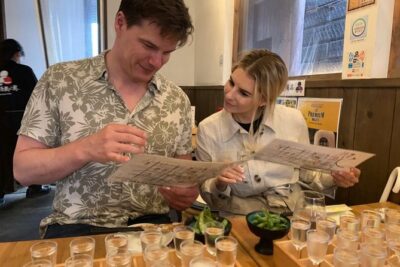

Sake Tasting Masterclass in Shinjuku (8+ Varieties with a Pro)
Read our review →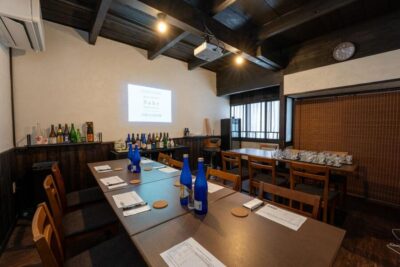
Insider Sake Experience with 7 Tastings and Snacks
Read our review →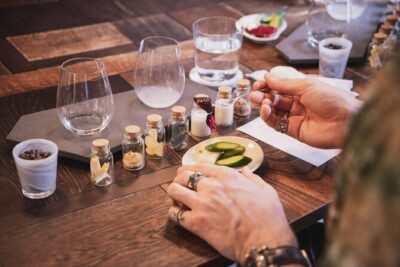
Sake Omakase in Tokyo: Guided Tasting by Certified Sommeliers
Read our review →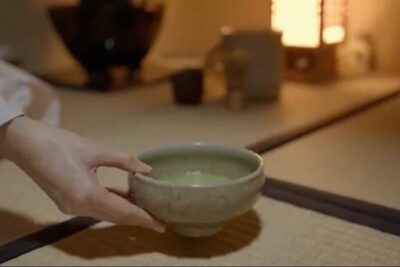
Private Tea Ceremony and Sake Tasting in Kyoto Samurai House
Read our review →
Casual Japanese SAKE tasting and snack experience in Kabukicho
Read our review →
Browse the lists this tour appears in