
Reviewed · KYOTO SAKE TOURS
Kyoto: Foodie Night Tour in Gion with 9 dishes + 6 Sake
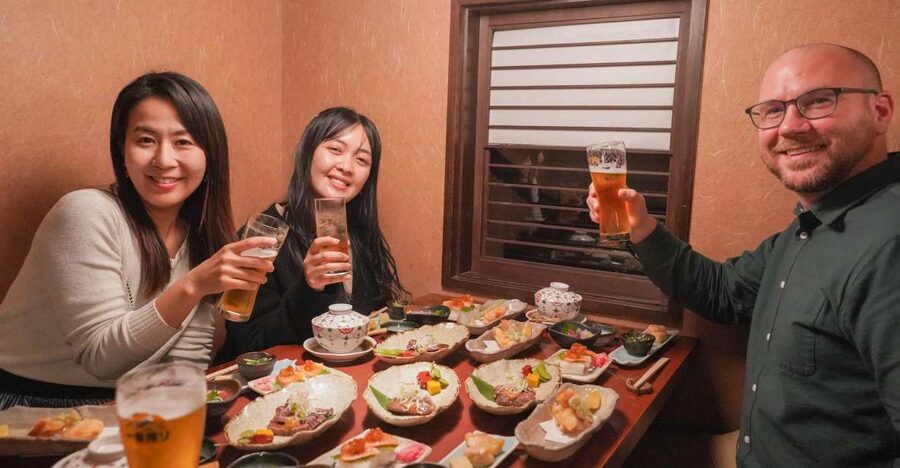
Kyoto’s best food experiences often happen behind an unmarked door, not beneath a bright restaurant sign. This evening tour leads you from the Izumo no Okuni statue through Gion and Pontocho, with stops for nine dishes, six Kyoto sake tastings, two drinks, and a local dessert.
I like the way the tour links food with place. You walk through old Kyoto-style streets, hear how locals spend an evening, and pass through Pontocho rather than simply sitting in one restaurant. I also like the chance to try foods such as obanzai, oden, and yuba, which show Kyoto’s quieter, more seasoned cooking.
The weak point is consistency. One stop may be excellent while another feels ordinary, and the price is high at $361 per person. The tour is best for you if the guide, the sake, and the chance to find less obvious restaurants matter as much as the meal itself.
Key points at a glance
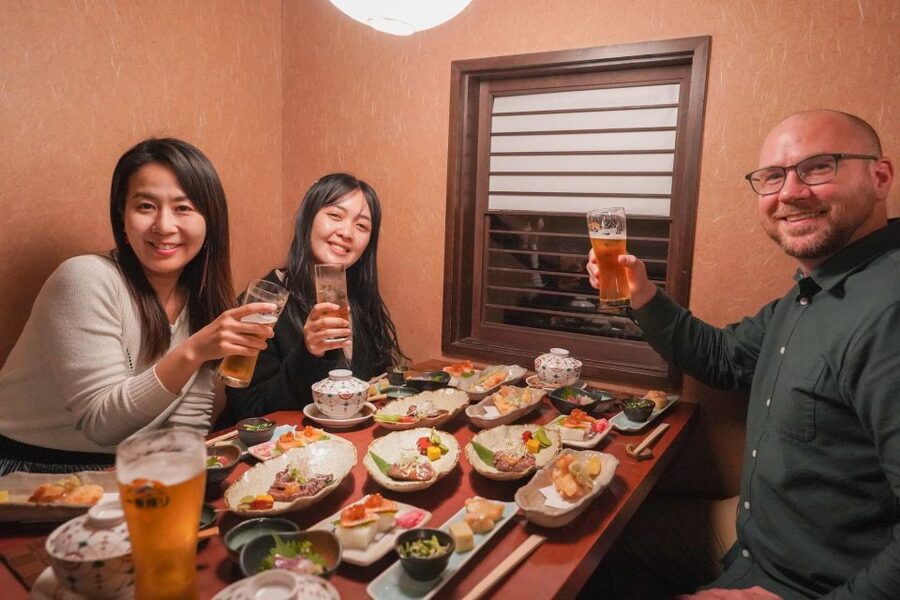
- Nine dishes across several stops: Expect a dinner course, traditional Kyoto foods, and dessert rather than one large restaurant meal.
- Six Kyoto sake tastings: The Kiki sake course offers three different Kyoto sake varieties, with a total of six sake samples listed for the tour.
- Gion and Pontocho after dark: Your walk connects two of Kyoto’s most atmospheric evening districts.
- English-speaking local guide: Guides explain the food and local customs, with Rika receiving especially warm praise for helping the group talk together.
- Cash and advance planning matter: Bring cash for food, drinks, and extras, and submit dietary requests by the day before.
- A costly, uneven choice: The food can feel local and memorable, but the high price means you should value the setting and guidance, not just the amount on your plate.
Starting under Gion’s evening lights
Meet your guide in front of the Izumo no Okuni statue outside Exit 5 of Gion Shijo Station. This is a sensible starting point because you are already beside one of Kyoto’s main evening districts, and you can reach it by train without arranging a separate transfer.
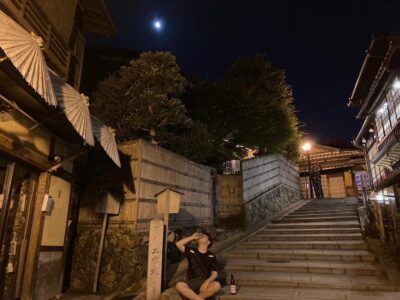
The first part takes you through Gion, where old Kyoto-style buildings give the walk its character. The tour is not only a meal with a few streets added on. The guide explains how local people enjoy their nights and points out the character of the area as you go.
You might even see a geisha passing through Gion, but this is luck, not a promised feature. Keep your expectations polite and realistic. Gion is a working neighborhood, not a stage set, and the respectful approach is to admire the setting without stopping people or taking intrusive photographs.
The route later continues through Pontocho Alley. This narrow district is packed with restaurants and traditional buildings, yet the tour aims to take you to places you might not choose on your own. That is useful in Kyoto, where a small entrance or Japanese-only sign can make a restaurant hard to judge from the street.
More Late Nights in Kyoto:
- Casual Japanese SAKE tasting and snack experience in Kabukicho
★ 5.0 · 159 reviews - Casual Japanese sake tasting and snack experience, Kabukicho
★ 4.7 · 31 reviews - 3.5h Osaka Night guided Local Bar Hopping, Sake & Karaoke
★ 5.0 · 27 reviews
The first meal: Kyoto flavors without a grand ceremony
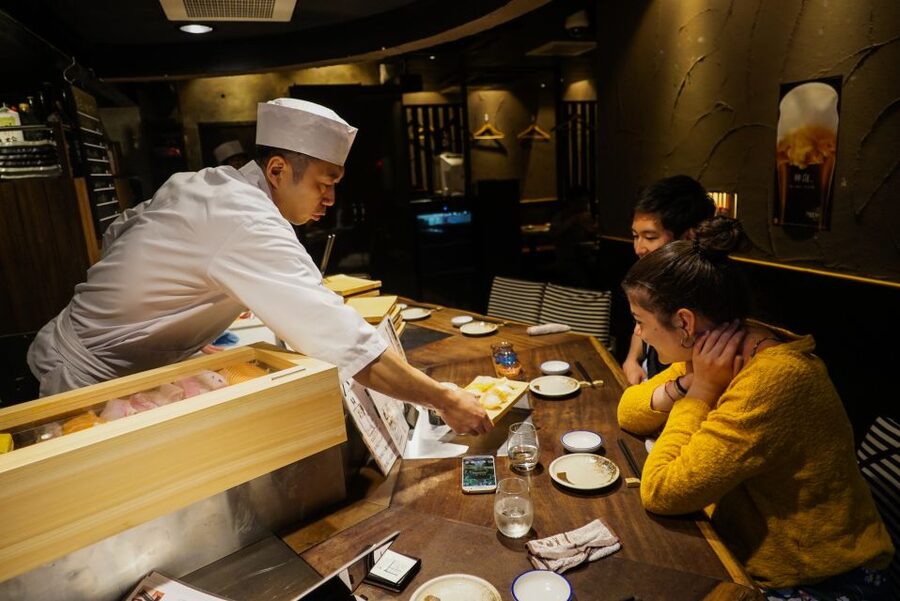
The first food stop is a traditional Japanese restaurant in Gion. It is described as a place you might never find unless someone showed you the way, which gives the stop much of its appeal.
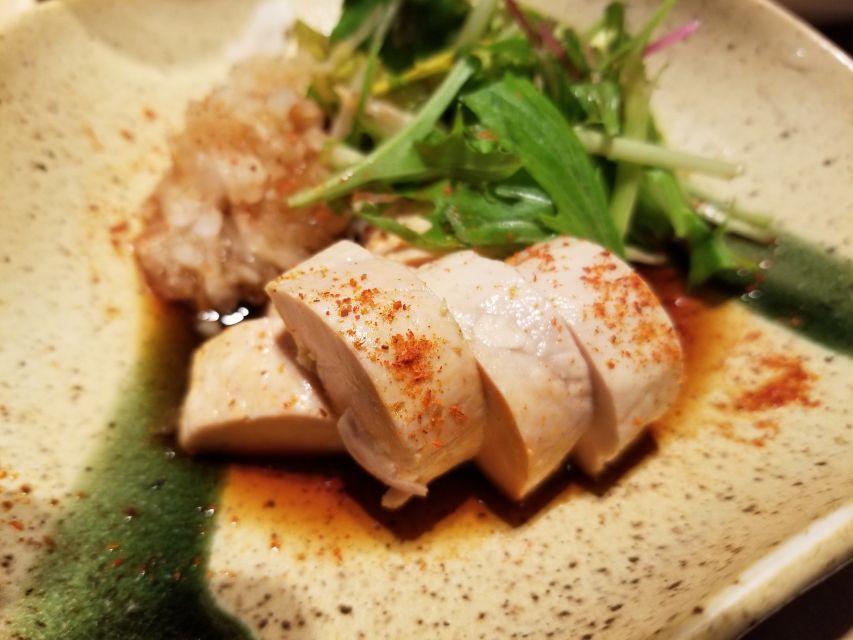
The food focuses on simple, seasoned Kyoto dishes. You may be served obanzai, a style of home-style cooking associated with Kyoto, along with oden or yuba. Obanzai is especially useful for understanding the city’s food culture because it is less about showy presentation and more about several modest dishes prepared with care.
Oden is a Japanese stew, usually served warm, while yuba is tofu skin. Neither is a flashy introduction to Kyoto, and that is part of the point. These are the sorts of foods that help you move beyond the familiar sushi and ramen menu.
The meal takes place in a traditional setting, with sake served alongside the food. The atmosphere matters here. You are not simply ticking off dishes. You are sitting in an older-style restaurant and learning why Kyoto cooking often values restraint, clean seasoning, and seasonal ingredients.
Still, you should not expect a luxury tasting menu. The description centers on simple, seasoned food, and the price does not guarantee that every dish will suit your taste. One food stop may appeal strongly to you while another feels less successful. That unevenness is the main caution to keep in mind.
Six sake tastings and a little Kyoto education
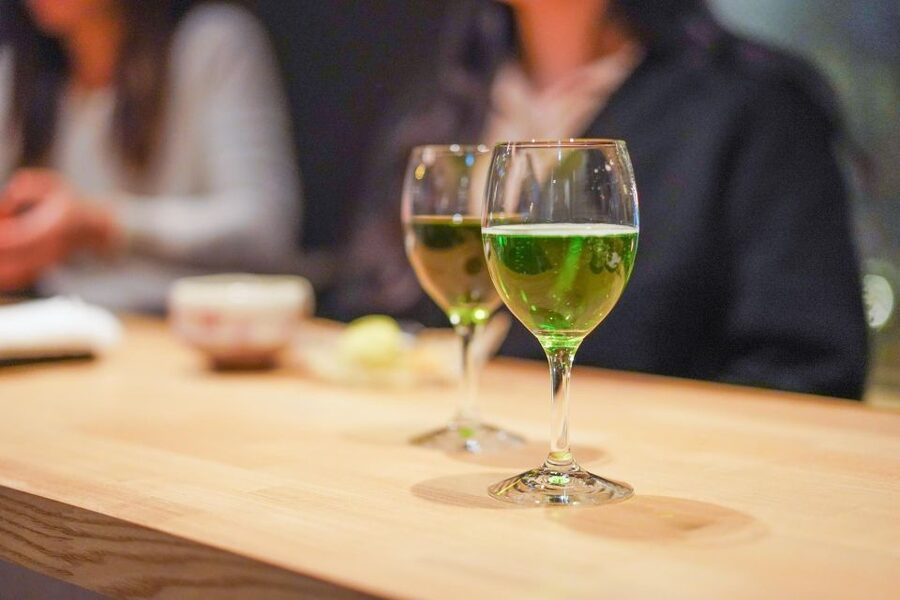
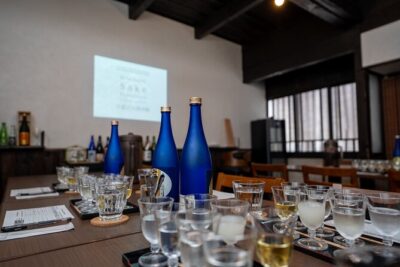
The sake portion is one of the tour’s clearest selling points. The course includes six kinds of sake tastings, with the Kiki sake experience offering three different sake varieties produced in Kyoto. The included drinks also list two drinks, with both alcoholic and non-alcoholic options available.
This arrangement gives you a chance to compare rather than simply order one glass. A guide can explain what you are drinking and connect it to the food, which is helpful if sake menus usually leave you guessing.
You do not need to be a sake expert to enjoy this part. Think of it as a guided introduction to local drinks, with small samples rather than a long commitment to one bottle. If you prefer not to drink alcohol, non-alcoholic options are available, but the tour’s strongest drink focus is clearly sake.
Japanese law means only people over 20 may drink alcohol. If someone in your party is younger, that person can still join the food tour, but alcohol is not available to them.
Pace is worth considering. The experience lasts 210 minutes, and it combines walking, a first dinner stop, another food stop, and dessert. Six sake samples can add up, so drink slowly and use the food as your anchor. Summer also brings intense heat and humidity in Japan. Carry water and wear a hat, especially for the walks between stops.
Walking Pontocho between dinner stops
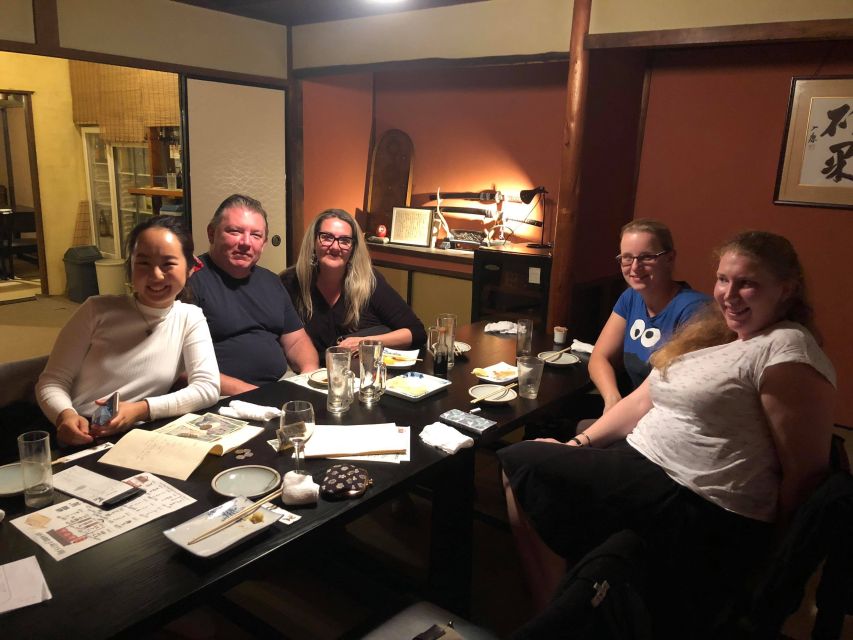
After the first traditional restaurant, the group walks toward the second cafe through Pontocho. This gives the evening a useful change of scene. You begin in Gion, pass through one of Kyoto’s best-known dining lanes, and continue toward another place to eat.
Pontocho is narrow and atmospheric, with many restaurants crowded along the alley. The value of walking through it with a local guide is not just finding the next table. You get a sense of how the district fits into Kyoto’s night-time life.
The advertised schedule gives about one hour for dinner at one Pontocho stop and another hour for dinner at a second Pontocho stop, followed by about an hour for dessert in Gion. The wording leaves some room for the exact food sequence to vary, so do not expect a rigid, restaurant-menu-style schedule.
This is also where the evening may feel less even. One direct account praised the first dinner but found the second stop quite poor. That does not mean your meal will follow the same pattern, but it is a fair warning not to book this expecting every course to be outstanding.
The walking itself is part of the experience, yet this is not a good pick if you have mobility limits. Some locations are not accessible to wheelchairs or strollers, and the tour is not recommended for people with mobility issues.
More Evening Sake Sessions in Kyoto:
- Kyoto: Gion Evening Walk with Hidden Gems, Geisha & Sake
★ 5.0 · 41 reviews
What the nine dishes really mean
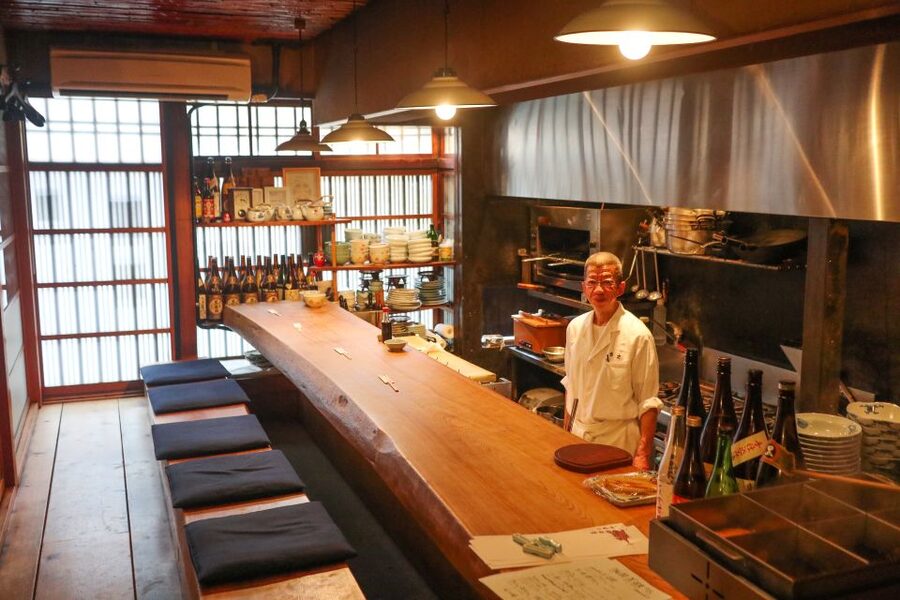
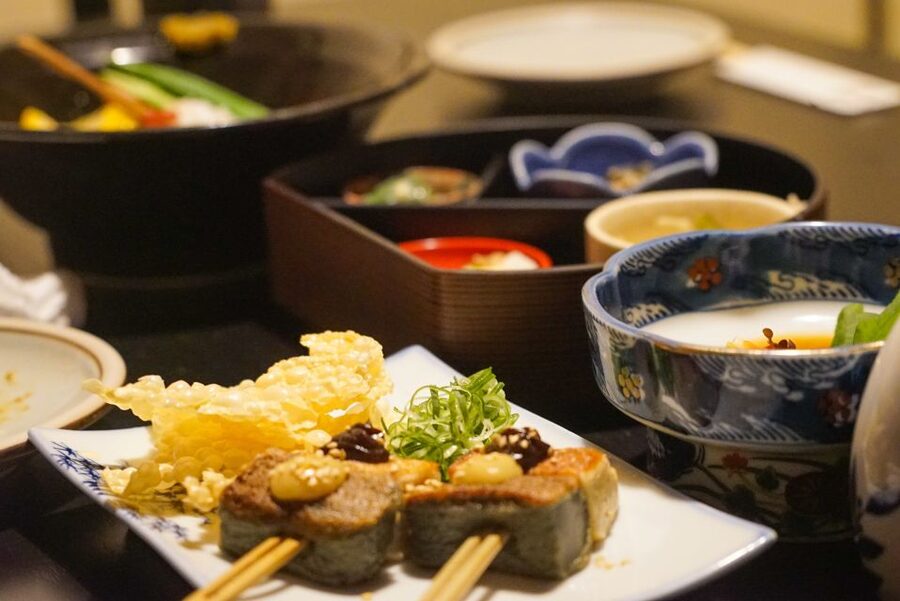
The nine-dish count sounds generous, but you should read it as a series of smaller servings across the evening rather than nine large plates. The course includes dinner and dessert, and the food may be spread over more than one restaurant or cafe.
That format suits you if you enjoy tasting many things and talking over food. It is less suitable if you want one substantial meal with complete control over every dish. Some people will find the variety satisfying; others may judge the portions or quality against the $361 price and feel disappointed.
The food is intended to be traditional and local in character. You may encounter Kyoto staples such as obanzai, oden, and yuba, plus a dessert at a Kyoto cafe in a traditional building. The menu can change, so the safest way to think about it is as a guided sample of Kyoto food rather than a fixed tasting menu.
Dietary planning is important. Send any request by the day before. The operator cannot promise an allergy-free meal because the food is prepared in kitchens it does not control, and substitutions may not be possible at every stop. The guide will make efforts to compensate at other stops, but strict allergies require extra caution.
Ending with dessert in a traditional cafe
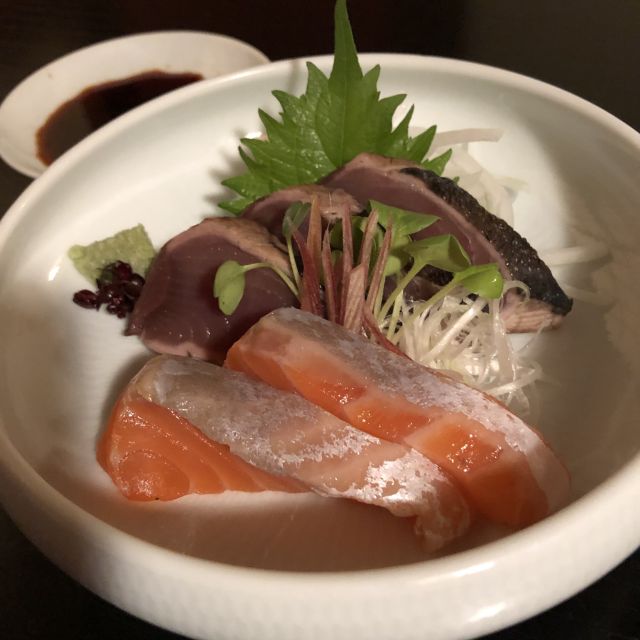
The final food stop takes place at a Kyoto cafe around Pontocho, in a traditional building. Dessert gives the evening a softer finish after the savory dishes and sake.
This part may be especially appealing if you want to see how Kyoto presents sweets and cafe culture. It also gives you a quieter setting for the last part of the conversation with your guide. The tour then returns to the Izumo no Okuni statue, so you finish where you began.
Do not count on the dessert alone to justify the cost. Its value comes from the complete sequence: a guided walk, several food stops, sake comparisons, and an evening in two historic districts. If you already know where you want to eat in Kyoto, you may prefer to spend $361 on separate restaurants and make your own choices.
A guide can make or break the night
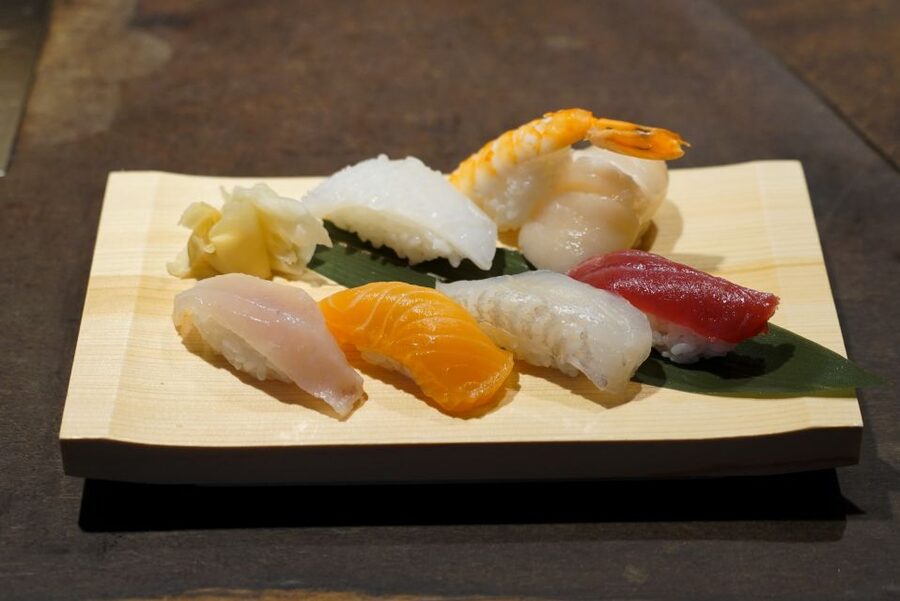
The guide is central to this experience. You are not only paying for food. You are paying for someone who can explain the dishes, help you navigate restaurants that may be difficult to find, and connect the streets of Gion and Pontocho with local life.
Rika received particular praise for keeping conversation moving among the group. That detail matters because shared meals can feel awkward when nobody knows what to say. A friendly guide can turn separate diners into a social evening.
The tour is described as an English-language experience with a MagicalTrip-certified guide. The exact guide is not guaranteed, so do not book on the assumption that Rika will lead your date.
There is some conflicting wording about group format. The additional information describes a private group, while the important information says it is not a private tour. I would confirm this point before paying if you specifically want a one-party experience. In practical terms, you should be ready to share the table and conversation unless the operator confirms otherwise.
Is $361 a fair price?
At $361 per person, this is an expensive food walk. The price is easier to defend if you want all of the following in one evening:
- A local English-speaking guide
- A walk through Gion and Pontocho
- Nine dishes and dessert
- Six sake tastings
- Two included drinks
- Access to restaurants that may be hard to identify on your own
- Tour photos
The price is harder to defend if your main goal is simply to eat well. One direct assessment put the value well below the cost and described the food as less than average. Another praised the local feel and the guide, while a separate account found the first food stop excellent and the second disappointing.
There is also a difference between the current listed price of $361 and an older account referring to $250 per person. Prices can change, so use the current booking price as the figure that matters. At $361, I would book this for the access, explanation, and company rather than for a guaranteed top-tier meal.
Two included drinks help, but you should still bring cash for food, drinks, and extras because many bars do not accept credit cards. The exact included items should be clear at booking, especially since the food and drink descriptions refer both to two drinks and six sake tastings.
Who should book this Kyoto night tour?
I would choose this experience if you are visiting Kyoto for the first time and want a guided introduction to Gion and Pontocho after dark. It fits people who enjoy small portions, local dishes, sake comparisons, and conversation more than a formal fine-dining meal.
It also suits solo visitors or couples who like the social side of a shared table. A good guide can fill in the gaps between courses and explain foods you might otherwise skip.
I would hesitate if you have strict allergies, serious mobility limits, or a tight food budget. I would also think twice if you already have a strong list of Kyoto restaurants and prefer to choose every dish yourself.
For the best chance of a good evening, request dietary help before the day of the tour, bring cash, wear comfortable shoes, and arrive ready to walk. In summer, carry water and protect yourself from the heat.
Should you book it?
Book this tour if you want a guided night in Gion and Pontocho, with traditional Kyoto dishes and a broad sake tasting built into the evening. The atmosphere, route, and local perspective are the strongest reasons to go.
Skip it if $361 feels too high for a meal that may vary from stop to stop. Kyoto has plenty of independent restaurants, and you may eat better for less if you are willing to research and make your own reservations. This tour earns its price only when the guide, setting, food discovery, and easy sake introduction all matter to you.
FAQ
Where does the tour meet?
Meet the guide in front of the Izumo no Okuni statue outside Exit 5 of Gion Shijo Station.
How long does the experience last?
The tour lasts 210 minutes, or three and a half hours.
Which areas does the tour visit?
The route includes Gion and Pontocho Alley, with the evening starting and ending near the Izumo no Okuni statue.
How many dishes are included?
The dinner course includes nine dishes and a dessert.
How many sake tastings are included?
Six kinds of sake tastings are included. The Kiki sake course offers three different sake varieties produced in Kyoto.
Are non-alcoholic drinks available?
Yes. The included drinks can be alcoholic or non-alcoholic.
Can people under 20 drink sake?
No. Japanese law allows alcohol only for people over 20.
Can I request food for an allergy or dietary restriction?
You must make any dietary request by the day before the tour. Allergy-free food cannot be guaranteed, and substitutions may not be possible at every stop.
Is the tour suitable for wheelchairs or strollers?
Some locations are not accessible to wheelchairs or strollers, and the tour is not recommended for people with mobility issues.
Should I bring cash?
Yes. Bring cash for food, drinks, and extras because many bars do not accept credit cards.
Newly added around Kyoto
- Kyoto: Fushimi Sake District Tour with Boat Ride★ 4.6 · 10 reviews
- Japanese Sake Breweries Tour in Fushimi Kyoto★ 5.0 · 10 reviews
- Private Sake Tasting in Central Kyoto with Sake Sommelier★ 5.0 · 13 reviews
- Kyoto Sake Brewery Tour with Lunch★ 4.5 · 12 reviews
- KYOTO Sake Tasting Tour at Local Breweries(tasting fee included)★ 5.0 · 16 reviews
- Japanese Sake Breweries Tour in Kyoto Fushimi★ 4.3 · 13 reviews
- Private Nishiki Market Food & Sake Tour by Young Local Guides★ 5.0 · 12 reviews
- 3 Hours Kyoto Insider Sake Experience | Tasting Konteki★ 5.0 · 24 reviews
Kyoto Sake Tours, compared.

3-Hour Kyoto Insider Sake Brewery Tour with Tastings & Pairings
Read our review →
Insider Sake Brewery Tour with Sake and Food Pairing
Read our review →
Insider Sake Experience with 7 Tastings and Snacks
Read our review →
Private Tea Ceremony and Sake Tasting in Kyoto Samurai House
Read our review →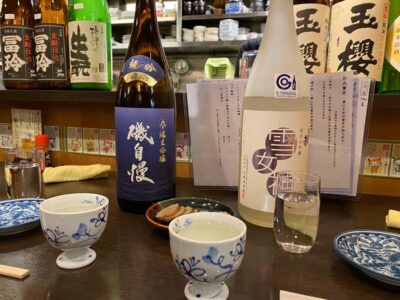
Gion Evening Walk with Hidden Gems, Geisha & Sake
Read our review →Browse the lists this tour appears in