
Reviewed · KYOTO SAKE TOURS
Kyoto: Gion Evening Walk with Hidden Gems, Geisha & Sake
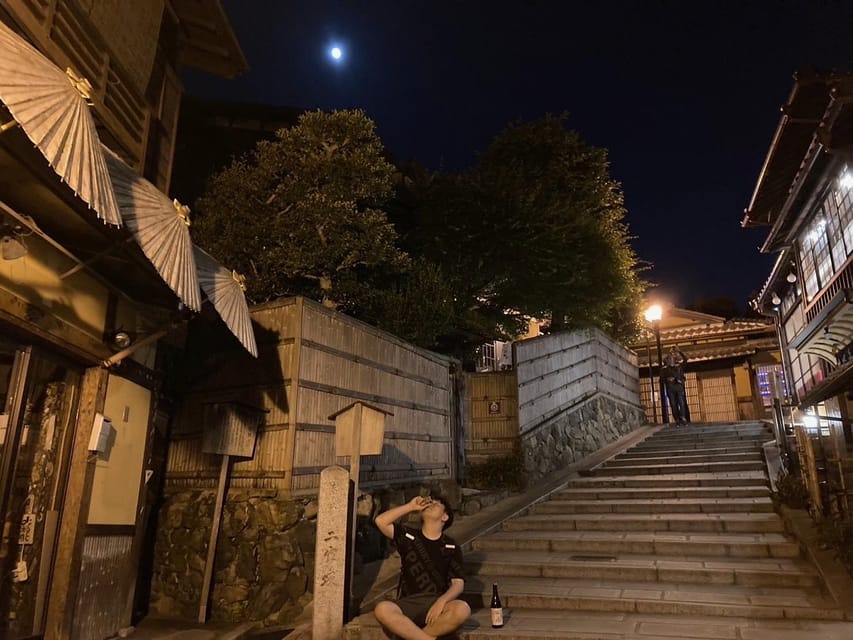
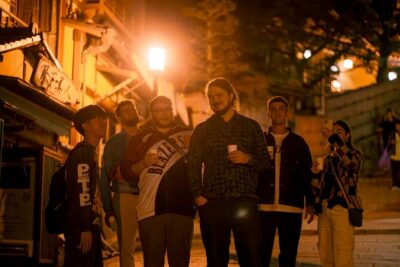
Gion changes after sunset. Tea-house facades glow under lanterns, the stone lanes grow quieter, and Kyoto’s famous geisha district feels less like a sightseeing zone and more like a living neighborhood. This 90-minute evening walk covers several of the city’s most memorable sights without asking you to spend half a day on your feet.
I like the small group limit of 10, which makes it easy to ask about geiko, maiko, Shinto, or the best place to eat next. I also like the sake stop, a simple touch that gives the walk a relaxed, social feel. The tradeoff is the brisk schedule: you see a lot, but this is an introduction rather than a long, detailed visit inside each site.
Key points to know before booking
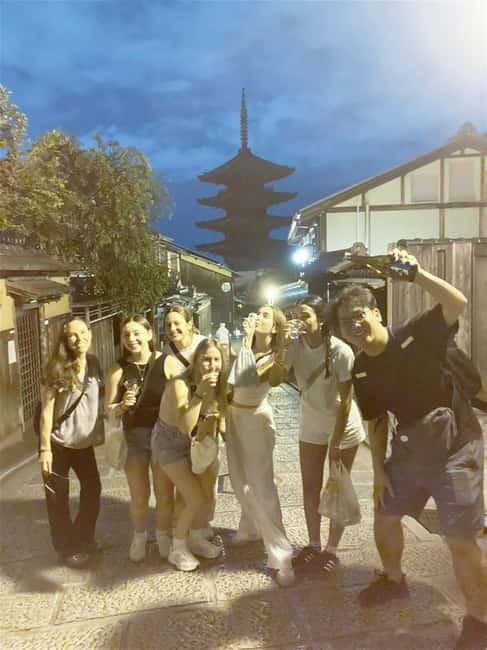
- Lantern-lit Gion: See Hanamikoji Street, Ninenzaka, and nearby lanes when the daytime crowds have thinned.
- Five major stops: The route includes Yasui Kompira-gū Shrine, Yasaka Pagoda, Ninenzaka, and Yasaka Shrine.
- Local sake included: You can sip sake while walking, but drink sensibly and follow local rules.
- Small English-speaking group: The maximum is 10 people, with guides such as Shumpei and Nick praised for warmth and humor.
- Photo help along the way: Your guide can assist with pictures at key viewpoints.
- Simple meeting point: Meet at Shijo Kiyamachi near the McDonald’s and Kikunoi Roan restaurant.
Why Gion works best after dark
Gion is one of Kyoto’s most watched and photographed districts, but daylight can bring a steady flow of people. An evening tour changes the mood. Wooden townhouses, screened tea houses, and narrow lanes take on a softer look beneath the lamps.
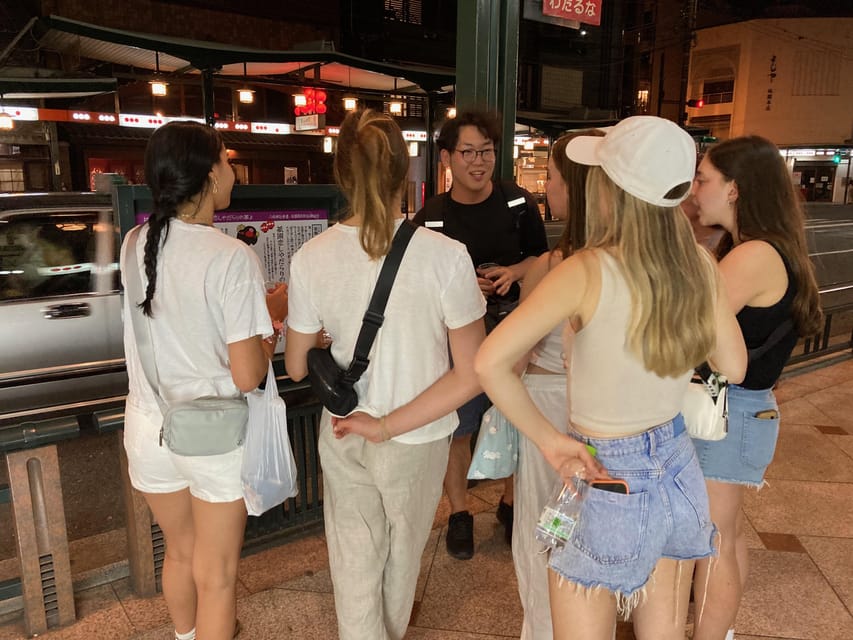
You begin near Shijo Kiyamachi, then walk south along Kiyamachi Street to find the guide holding an Otatrip Guide sign. The meeting point is between McDonald’s and the Japanese restaurant Kikunoi Roan. This is a busy part of town, so give yourself time to find the exact spot. The group may leave promptly, and a late arrival can mean catching up is difficult.
The walk is designed to be social rather than formal. Your guide explains what you are seeing in plain English, then leaves room for questions. That matters in Gion, where a quick explanation can help you tell the difference between a tea house, a shrine, a temple, and a historic street.
You will also hear about geiko and maiko. Geiko is the Kyoto term for a professional entertainer trained in traditional arts, while maiko are apprentices. The guide can explain the customs around these roles and help you understand the district without treating its residents as scenery.
Please keep your voice low around homes and sacred places. Gion is not a theme park. People live and work here, and respectful behavior is part of seeing the area well.
More Evening Sake Sessions in Kyoto:
- Kyoto: Foodie Night Tour in Gion with 9 dishes + 6 Sake
★ 4.4 · 26 reviews - 3.5h Osaka Night guided Local Bar Hopping, Sake & Karaoke
★ 5.0 · 27 reviews
Hanamikoji Street, Gion’s classic first look
The first main stop is Gion, with a guided visit and photo pause of about 15 minutes. Hanamikoji Street is the famous stretch, lined with traditional wooden buildings and tea houses. It is the place most people picture when they imagine old Kyoto.
At night, you can focus on the architecture rather than on a long list of daytime photo stops. Your guide points out details that are easy to miss, such as the restrained fronts of the buildings and the way the street connects to smaller lanes.
This is also where the conversation about geiko and maiko becomes especially useful. You may learn how to behave if you happen to see one, including the need to avoid blocking the way or taking intrusive pictures. One past participant happened to see two actual geisha during the walk, but that is luck, not a promised part of the tour.
The 15-minute stop gives you a good introduction, though it will feel short if you want to examine every building or wait for a particular photo. The value here comes from the guide’s context and from seeing Hanamikoji as part of a neighborhood, not simply checking off a famous street.
Yasui Kompira-gū and the power stone
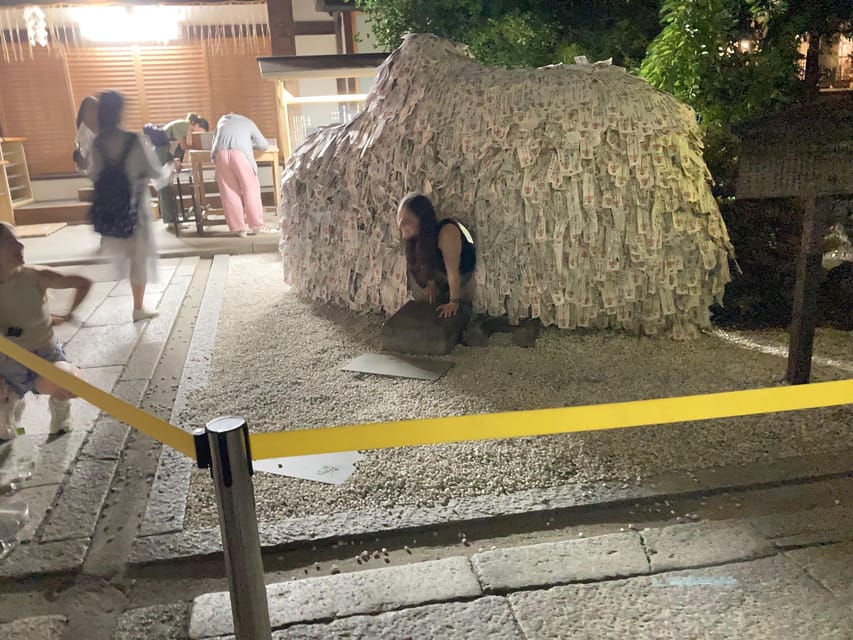
The walk continues to Yasui Kompira-gū Shrine for around 10 minutes. This small shrine is known for its unusual power stone, connected with breaking unwanted ties and forming better ones.
That story gives the stop a personal quality. Shinto shrines can seem similar at first, especially when you are visiting several in one evening. Here, the guide can explain why people come to this particular place and how its symbolic practice differs from simply offering a prayer.
The short visit is enough to see the central feature and hear the basic story. It is not enough for a long ritual explanation, and you should not expect a private ceremony or a quiet, extended meditation. Still, this is one of the more distinctive stops because it introduces a local belief that you might otherwise walk past.
As with other sacred sites, keep your voice down and follow the guide’s lead. Smoking is not allowed on the activity.
Yasaka Pagoda under the evening lights
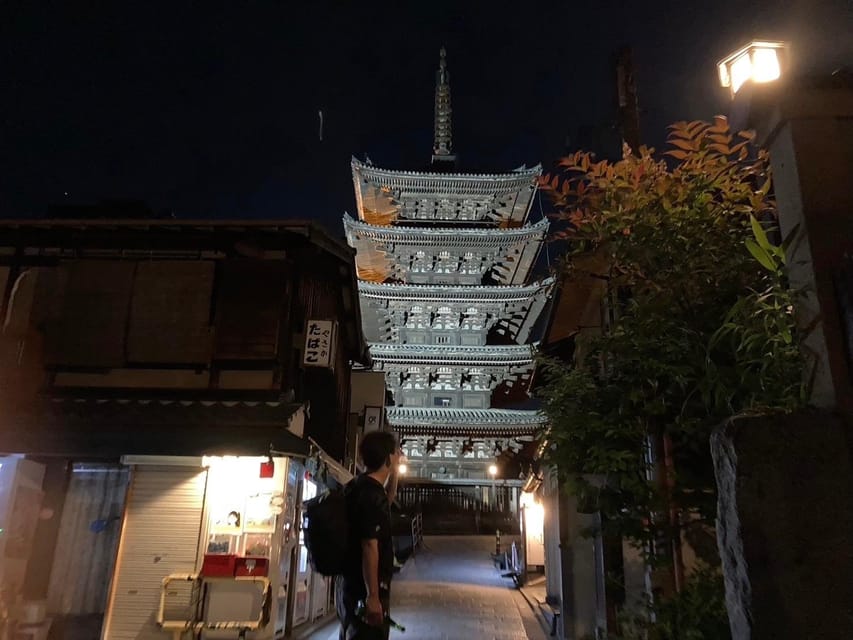
Hōkan-ji Temple, better known for its five-story Yasaka Pagoda, is one of Kyoto’s most recognizable sights. The pagoda is a strong photo stop, particularly after dark when it is lit and the streets around it are less crowded.
The tour allows about 10 minutes here. That is enough to frame the pagoda, hear its place in the district, and take photographs with help from the guide. If you are traveling alone or struggle with group photos, this assistance can be useful.
The limitation is simple: this is an exterior visit. The experience focuses on the view and the surrounding street, not on a full temple tour. The schedule also leaves little time to wait for an empty frame if other people are nearby.
Still, the evening timing is a real advantage. Yasaka Pagoda can feel much easier to appreciate when you are not trying to move through a thick daytime crowd. Rain can make the stone streets reflective and quiet, though wet weather also means you need proper shoes and a bit of patience.
More Sake Tours in Kyoto:
- 3-Hour Kyoto Insider Sake Brewery Tour with Tastings & Pairings
★ 5.0 · 917 reviews - Kyoto: Insider Sake Brewery Tour with Sake and Food Pairing
★ 5.0 · 704 reviews - Kyoto Sake Brewery & Tasting Walking Tour
★ 5.0 · 623 reviews - 1.5-Hour Kyoto Insider Sake Experience with 7 Tastings & Pairings
★ 5.0 · 297 reviews
Ninenzaka and old Kyoto streets
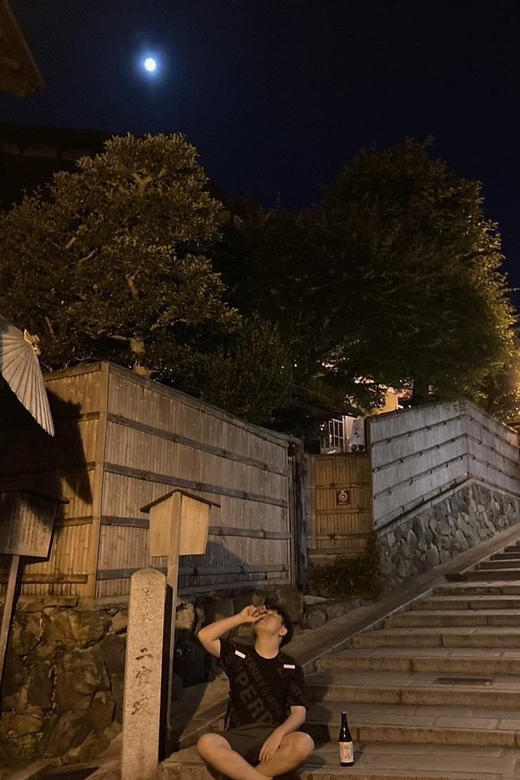
From the pagoda, you continue to Ninenzaka, a traditional cobbled slope lined with wooden townhouses. The walk here is short, but the setting is one of the most atmospheric parts of the route.
Ninenzaka is often busy in the daytime. At night, the mood can be calmer, with the shopfronts and old buildings taking on a more subdued character. The guide helps you notice how the street fits into the older part of Kyoto rather than treating it as just another photo background.
You should wear comfortable shoes. The route includes walking on cobbles and slopes, and the activity is not a good choice for people with back problems. The description allows about 10 minutes at this stop, so you will not have much time for shopping or a leisurely look inside businesses.
That is not necessarily a weakness. The evening walk is built for atmosphere and orientation. If you want to spend an hour browsing Ninenzaka shops, plan to return on your own.
Sake adds a social note
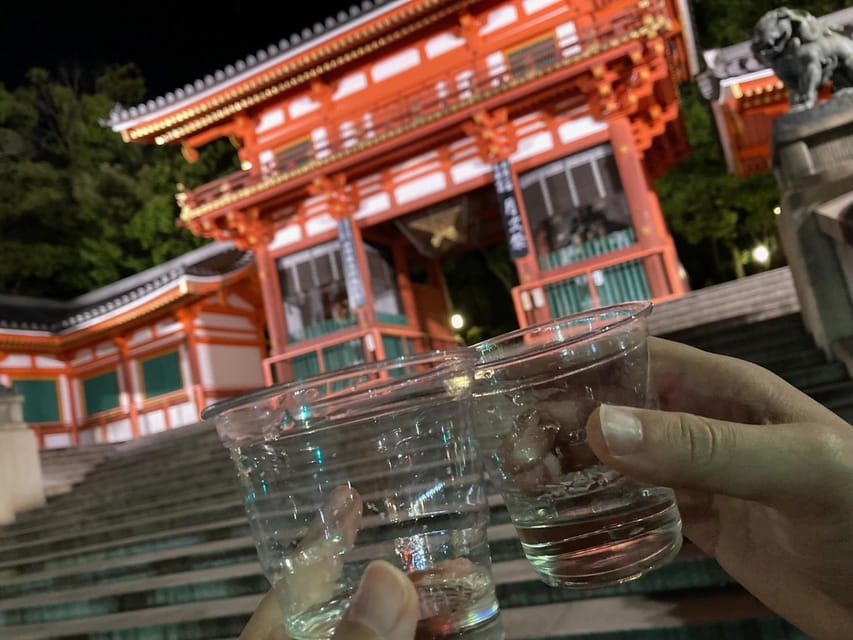
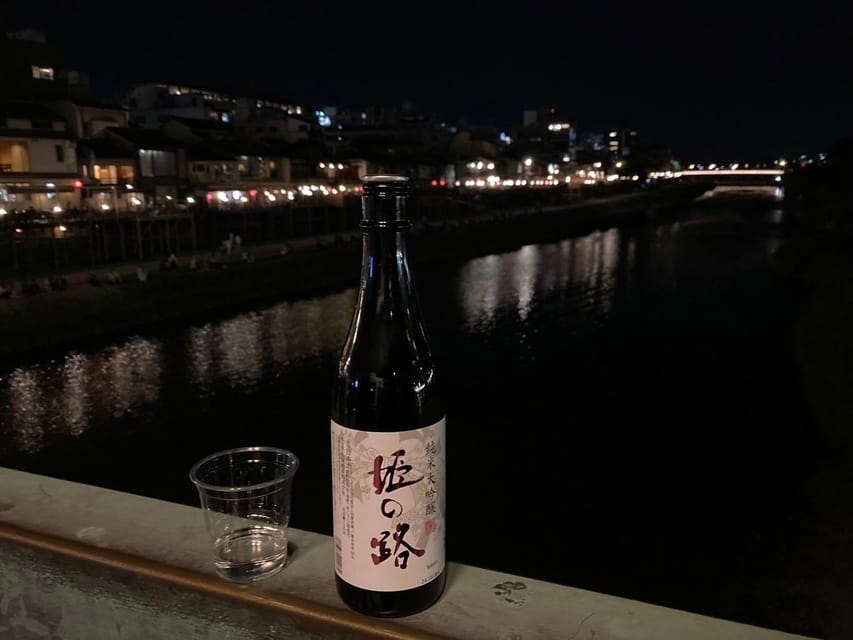
A cup of local sake is included, and you can enjoy it as you stroll. It is a modest extra, but it changes the feel of the walk. Instead of moving from one lecture point to the next, you have a chance to chat with the guide and other people in the group.
Past participants have especially enjoyed the sake, and one guide was praised for being generous with it. Take that as a reason to pace yourself, not as an invitation to turn the tour into a drinking session. You are walking through residential and sacred areas, so quiet and responsible behavior matters.
The sake also makes the experience a good fit for people who want a little more conversation than a standard sightseeing route provides. You can ask where to eat, what to see next, or how to make sense of Kyoto’s geiko tradition.
If you do not drink alcohol, the supplied details do not specify an alternative beverage. You may want to check with the provider before booking if that matters to you.
Yasaka Shrine provides a strong finish
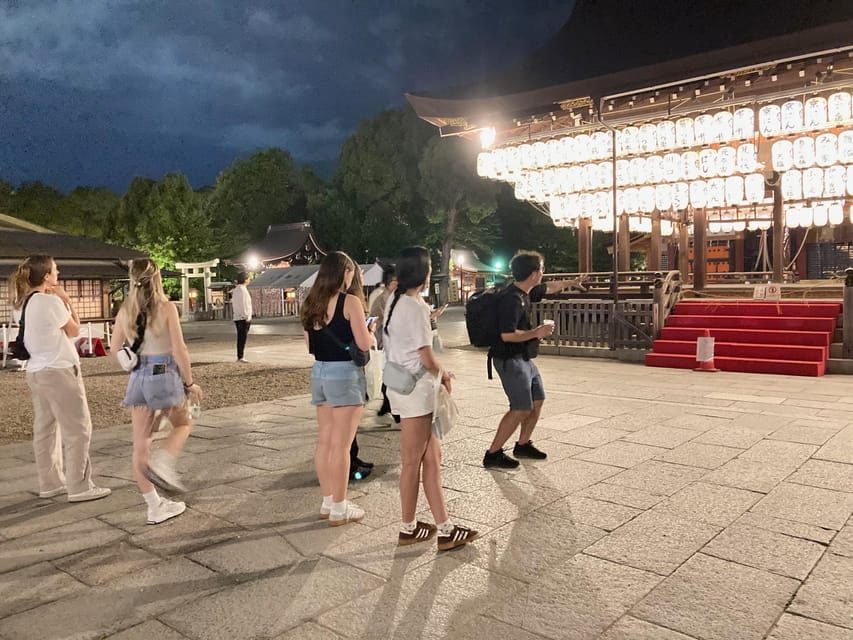
The route finishes at Yasaka Shrine, one of Kyoto’s best-known Shinto sites. The shrine has watched over Gion for more than 1,300 years and gives the walk a fitting final stop.
You will have visited both Buddhist and Shinto places during the evening, so the guide can help explain the difference in simple terms. That is useful if you are seeing several temples and shrines during a Kyoto stay and want a basic framework rather than a pile of names.
The tour ends at the shrine rather than returning you to the starting point. This is handy if you want to continue into central Kyoto, find dinner, or explore more of Gion. It also means you should know where you are going next, especially if you are tired or unfamiliar with the area.
The exact time at the final shrine is not listed, so expect the stated 70 to 90 minutes to cover the whole walk rather than a fixed period at every stop.
What the guides add to the walk

The guide is the heart of this experience. The format encourages conversation, and the small group makes that possible. Shumpei received repeated praise for being friendly, funny, and willing to answer everything from historical questions to anime recommendations. Nick was also described as warm, organized, and able to help people feel comfortable entering places they might have found intimidating alone.
Guide assignments can change, so you should not book solely for one named person. What you can count on is an English-speaking live guide and a maximum group size of 10.
That small size is particularly useful in narrow streets. A large group can clog a lane and make conversation hard. With fewer people, you can ask follow-up questions and hear the answers without shouting.
Photo assistance is included as well. This does not mean a professional photo shoot, but the guide can help with pictures at key locations. If you want carefully composed shots at every stop, the compact schedule may feel too tight.
Is $32 a good value?
At $32 per person, the price is reasonable for a 90-minute guided walk with a local sake and photo assistance. You are paying less for admission tickets and more for access to a well-planned route, local explanation, and an easier introduction to Gion at night.
The value is strongest if this is your first evening in the district. You get the main streets, two notable religious sites, a pagoda, a historic slope, and a final stop at Yasaka Shrine without having to work out the route yourself.
It is less useful if you already know Gion well or want long visits inside individual temples. This is not a private photography tour, a full geisha performance, or an in-depth religious study.
The private-tour possibility is worth noting. If other people book an earlier time, you might end up with a very small group or even a private walk, but that cannot be guaranteed. The standard promise is a small group of no more than 10.
Free cancellation is available up to 24 hours before the activity, and you can reserve now and pay later. Check the available start times when booking, since the exact schedule is not fixed in the details provided.
Who should book this Kyoto evening walk?
I would choose this tour if you want a friendly introduction to Gion, prefer walking to sitting through a formal talk, and like having a local person available for questions. It suits first-time Kyoto visitors, solo travelers who want company, and couples looking for a low-key evening activity.
It is also a good fit if you have only one free evening in the area. The route covers the essential sights efficiently, and the finish at Yasaka Shrine leaves you in a useful part of town for dinner or more sightseeing.
You should think twice if you have back problems, dislike uneven streets, or want a slow visit at every location. The tour moves through several stops in 70 to 90 minutes, so comfortable footwear is important.
Book it for the guide, route, evening mood, and conversation. Do not book it expecting guaranteed geisha sightings, entry to every building, or a long sake tasting. Those are not what this experience promises.
FAQ
How long does the Gion evening walk last?
The activity lasts 90 minutes, with the walking portion listed as approximately 70 to 90 minutes.
Where does the tour meet?
Meet at Shijo Kiyamachi. The guide will hold an Otatrip Guide sign between McDonald’s and Kikunoi Roan, a Japanese restaurant located a little south along Kiyamachi Street.
Where does the tour finish?
The walk finishes at Yasaka Shrine, written as 八坂神社 in the activity details.
Is the tour offered in English?
Yes. The activity includes a live English-speaking guide.
What sights are included?
The route includes Gion and Hanamikoji Street, Yasui Kompira-gū Shrine, Hōkan-ji Temple and Yasaka Pagoda, Ninenzaka, and Yasaka Shrine.
Is sake included?
Yes. A cup of local sake is included for you to enjoy during the walk. Please drink responsibly and keep your voice low near homes and sacred places.
Should you book it?
Yes, if you want to see Gion at its most atmospheric without planning the route yourself. The small group, local sake, useful cultural explanations, and evening timing make this a pleasant first look at the district for $32.
I would skip it only if you need a fully accessible route, prefer long temple visits, or want a guaranteed geisha encounter. For most visitors who want a relaxed Kyoto night with a good guide and several famous sights in one compact walk, this is a sensible choice.
Newly added around Kyoto
- Kyoto: Fushimi Sake District Tour with Boat Ride★ 4.6 · 10 reviews
- Japanese Sake Breweries Tour in Fushimi Kyoto★ 5.0 · 10 reviews
- Kyoto Sake Brewery Tour with Lunch★ 4.5 · 12 reviews
- KYOTO Sake Tasting Tour at Local Breweries(tasting fee included)★ 5.0 · 16 reviews
- Japanese Sake Breweries Tour in Kyoto Fushimi★ 4.3 · 13 reviews
- Private Nishiki Market Food & Sake Tour by Young Local Guides★ 5.0 · 12 reviews
- Private Sake Tasting in Central Kyoto with Sake Sommelier★ 5.0 · 13 reviews
- Private Food & Sake Tour in Central Kyoto with Sake Sommelier★ 5.0 · 24 reviews
Kyoto Sake Tours, compared.

3-Hour Kyoto Insider Sake Brewery Tour with Tastings & Pairings
Read our review →
Insider Sake Brewery Tour with Sake and Food Pairing
Read our review →
Insider Sake Experience with 7 Tastings and Snacks
Read our review →
Private Tea Ceremony and Sake Tasting in Kyoto Samurai House
Read our review →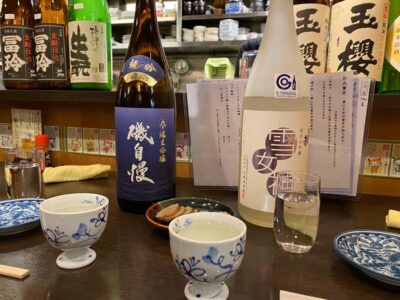
Gion Geisha District & Sake-in-Hand Walking Tour
Read our review →Browse the lists this tour appears in