
Reviewed · KYOTO SAKE TOURS
Private Pewter Sake Cup Experience with a Kyoto Artisan
The most memorable part of this Kyoto workshop is that you do not just buy a sake cup, you shape one yourself. At Craft Gallery SALUK, artisan Kanako guides you through hammering, filing, and finishing a small pewter cup while showing you the working studio. The cup becomes a useful keepsake, not a craft project destined for a drawer.
I like the small-group format, limited to four people, and the thoughtful finishing touches. You can add initials or a date at no extra charge, and the finished cup goes home in a traditional paulownia wood box. The main consideration is the price, $148 per person, which is a serious sum for a 150-minute activity, though the personal instruction and lasting object help explain it.
Key points at a glance
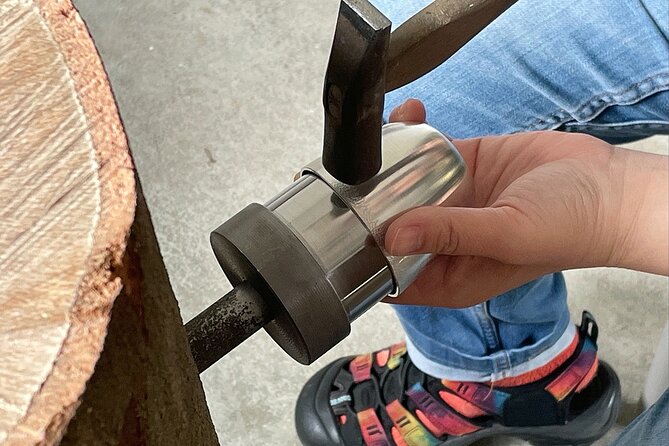
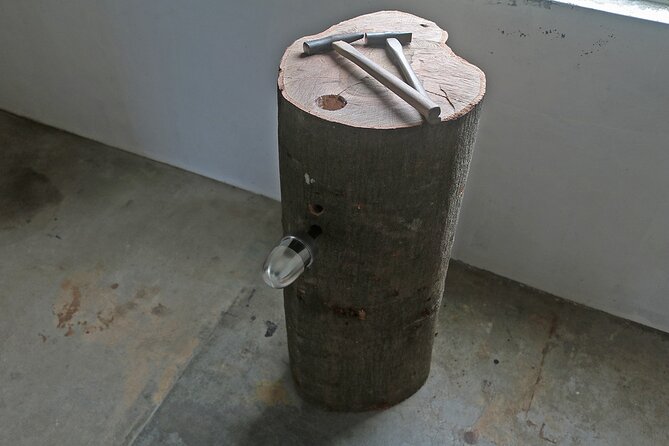
- Hammer your own pattern: Use your preferred hammer to create the surface design on a prepared pewter cup.
- Personalize the base: Add letters, numbers, initials, or a date without an extra engraving fee.
- Work with Kanako: The artisan gives clear instruction in English or Japanese and handles the final rotary-machine polish.
- Keep the group tiny: Private sessions allow up to four participants, making this a good choice for solo visitors, couples, or close friends.
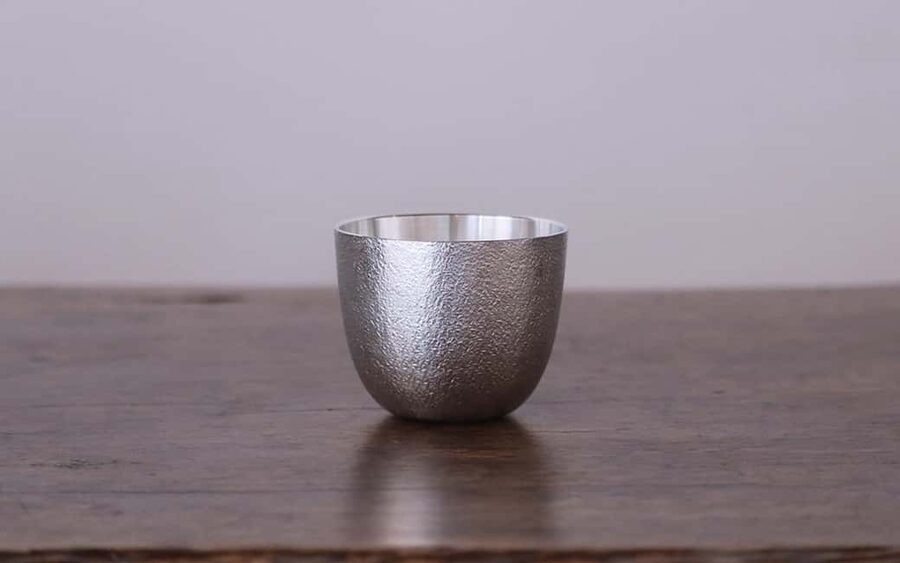
- Take home a useful souvenir: The cup holds about 90 ml, or up to 115 ml filled to the rim, and comes in a paulownia box.
- Pair it with the Eizan Railway: The workshop is an eight-minute walk from Ichihara or Ninose Station, with the Tunnel of Autumn Leaves between the two stops.
Why this pewter cup is more than a souvenir
Pewter has been used in Japan since the eighth century, first among nobles and temples. From the seventeenth century, it became more common in household objects, especially sake and tea utensils.
That background gives the workshop a clear purpose. You are working with a material tied to Japanese dining and drinking traditions, rather than making a random decorative object. Many people also believe sake tastes smoother in a pewter cup. You can test that claim at home with your own drink, though the real pleasure is likely to be remembering the work behind the cup.
The activity also gives you a closer look at a craft that is easy to miss in a regular Kyoto visit. You see the artisan’s workshop, an area normally closed to the public, and learn how a simple metal form becomes a finished drinking vessel.
More Private Sake Bookings in Kyoto:
- Private Tea Ceremony and Sake Tasting in Kyoto Samurai House
★ 5.0 · 163 reviews - Private Sake Tasting in Central Kyoto with Sake Sommelier
★ 5.0 · 32 reviews - Private Pewter Sake Cup Experience with a Kyoto Artisan
★ 5.0 · 31 reviews
Arriving at Craft Gallery SALUK
The meeting point is Craft Gallery SALUK at 35-2 Shizuichinonakachō in Kyoto’s Sakyo Ward. It is an eight-minute walk from either Ichihara or Ninose Station on the Eizan Railway, across from Cafe & Bar Ayahana.
This is not a workshop in central Gion or beside the major temple sights. You need to allow time for the ride out to this part of Kyoto, but that distance is part of the appeal. The Eizan Railway offers a quieter change of pace from the city center.
If you arrive via Ninose Station, you can enjoy the railway’s Tunnel of Autumn Leaves between Ninose and Ichihara. The route is especially attractive in autumn, though the workshop itself is available beyond the fall season. Check your starting time carefully and aim to arrive before the session begins. If you will be more than 10 minutes late, contact the workshop.
The activity ends back at the same meeting point. That makes it easy to plan a return journey, though you should not assume the two and a half hours includes extra time for a meal or a long railway stop.
A calm two-and-a-half-hour workshop
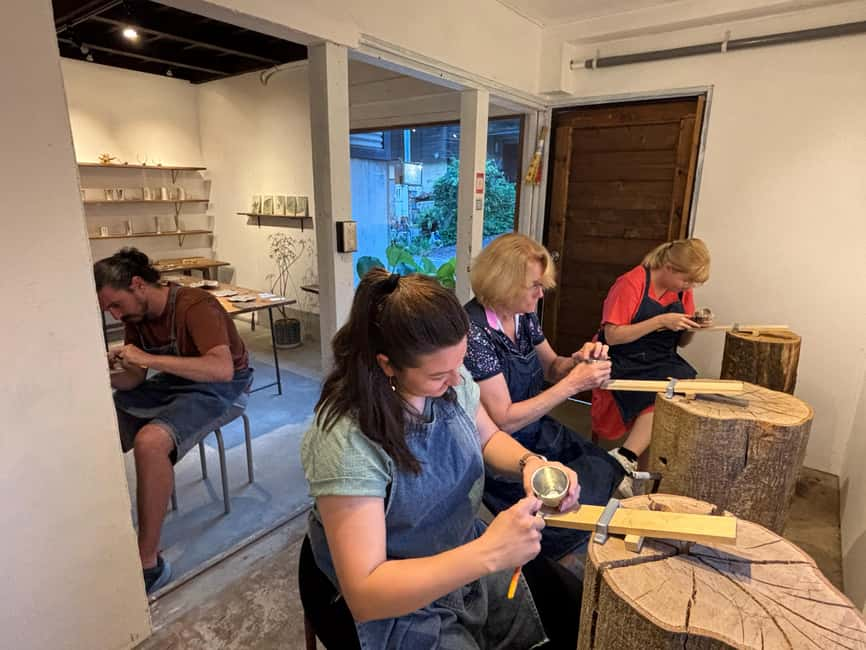
The session lasts 150 minutes, a useful length for learning the process without rushing. Since the group is private and capped at four people, you can ask questions and work at a comfortable pace.
No previous metalworking experience is needed. Kanako provides personal instruction, and the tools and materials are included. The tone is practical rather than intimidating. You are not expected to arrive with a design plan or technical skill.
An apron is provided, but wear clothes that can handle a little dirt. That is sensible advice for any hands-on workshop. You will be handling tools and metal, so comfortable clothing is more useful than anything delicate or dressy.
Children under six cannot participate. The workshop also does not accept anyone who is heavily intoxicated or under the influence of drugs. Those rules are straightforward and make sense in a room where tools and machinery are being used.
Hammering the pattern into the metal
Your cup begins as a prepared pewter form. The first main task is to use a hammer to emboss a pattern into its surface.
This is where the experience becomes personal. The hammer you choose affects the marks you create, and the repeated strikes give the cup a handmade character. You do not need to produce a perfect, factory-like finish. Small variations are part of the point.
Kanako guides you through the metalworking process, helping you understand how much force to use and where to place the marks. Follow those instructions closely. The safety information makes clear that the artisan cannot take responsibility for injuries caused by ignoring directions.
The patterning stage is also likely to be the most satisfying part for people who enjoy making things with their hands. You can see the surface change as you work. For someone who prefers simply watching a demonstration, this may feel more demanding, but the activity is designed for participation.
More Sake Tours in Kyoto:
- 3-Hour Kyoto Insider Sake Brewery Tour with Tastings & Pairings
★ 5.0 · 917 reviews - Kyoto: Insider Sake Brewery Tour with Sake and Food Pairing
★ 5.0 · 704 reviews - Kyoto Sake Brewery & Tasting Walking Tour
★ 5.0 · 623 reviews - 1.5-Hour Kyoto Insider Sake Experience with 7 Tastings & Pairings
★ 5.0 · 297 reviews
Add initials, a date, or a private message
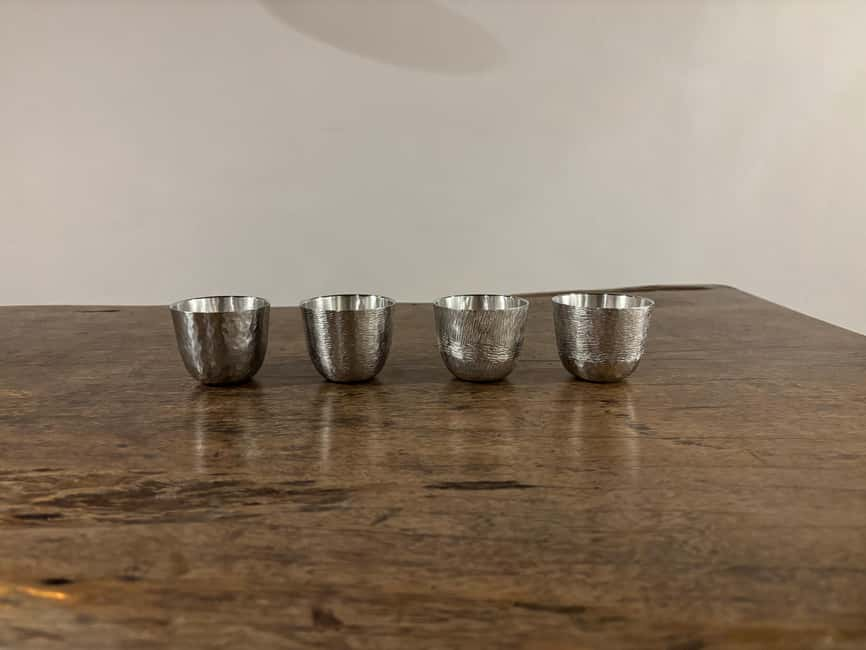
You may add letters, numbers, initials, or a date to the base of the cup at no extra charge. This is one of the best details for anyone choosing the workshop as a gift or marking a special trip.
Keep the inscription simple. The cup is small, measuring about 64 millimeters in diameter and 53 millimeters high, so the base does not offer much space. Initials, a year, or a short date are more practical than a long message.
This option also gives the object a stronger connection to your visit. A shop-bought sake cup can be attractive, but a cup with your own chosen marking has a clear personal history. The free engraving is a modest feature, yet it adds real value to the finished piece.
Filing the height and shaping the rim
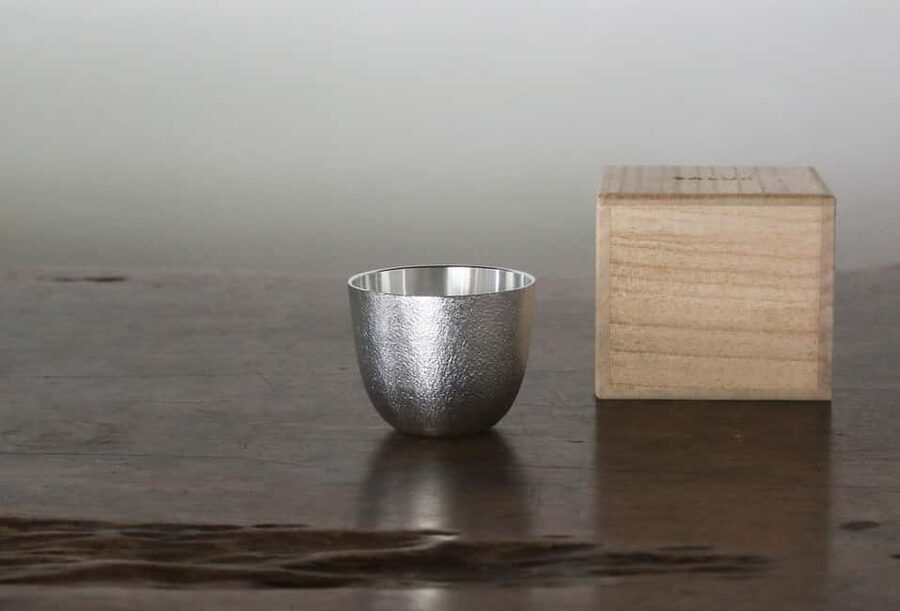
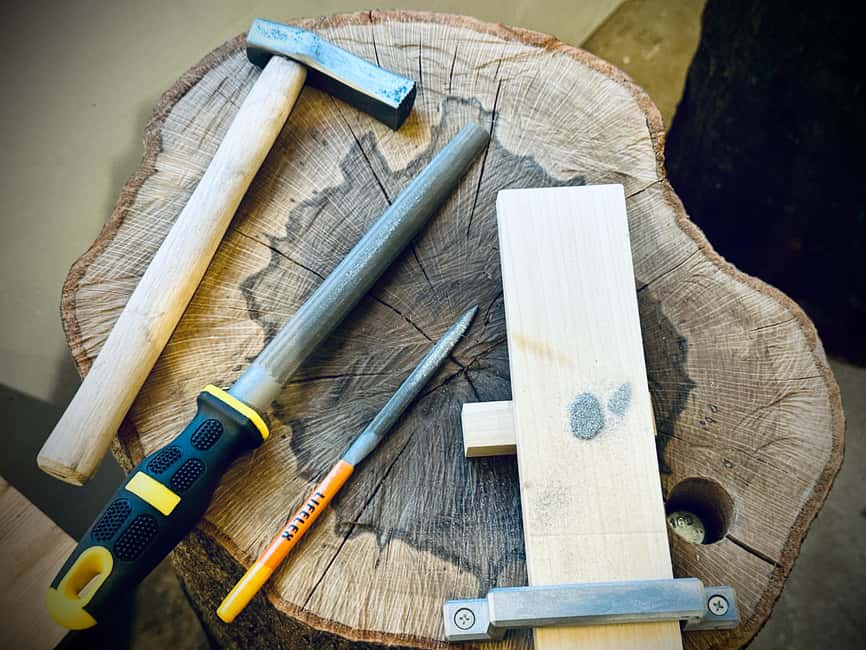
After the surface work, you adjust the cup’s height with a file. This is a hands-on step, but it is more controlled than the hammering. You are helping shape the final proportions of the cup rather than simply decorating it.
You also chamfer the rim. In plain terms, you smooth and angle the edge so it feels more comfortable against your lips. That detail matters because this is a drinking vessel, not just a display item.
The finished size is compact. It holds about 90 milliliters in normal use and up to 115 milliliters when filled to the rim. That makes it suitable for sake, whiskey, or chilled green tea. Do not expect a large tumbler. This is a small tasting cup, designed for measured pours.
The final rotary-machine polish is handled by the artisan. This is a sensible safety choice and also protects the quality of the final finish. You do the creative and shaping work, while Kanako takes care of the machine-assisted step that requires more control.
What Kanako adds to the experience
The workshop depends heavily on instruction, and Kanako’s role is central. She is described as both a skilled instructor and a warm host, with careful attention to detail and plenty of time for the work.
That matters in a private craft session. A large class might leave you waiting for help or wondering if you are using the tools correctly. With no more than four participants, the guidance can stay personal.
The workshop is offered in English and Japanese. The available information does not promise a full lecture in both languages, but it does confirm instruction in either language. If clear communication matters to you, mention your preferred language when arranging the session.
The strongest praise for the experience centers on Kanako’s patience, kindness, and careful instruction. That is especially useful for beginners. You are not paying only for access to metal and tools. You are paying for someone to help you turn those materials into a cup you can actually use.
Seeing the working studio
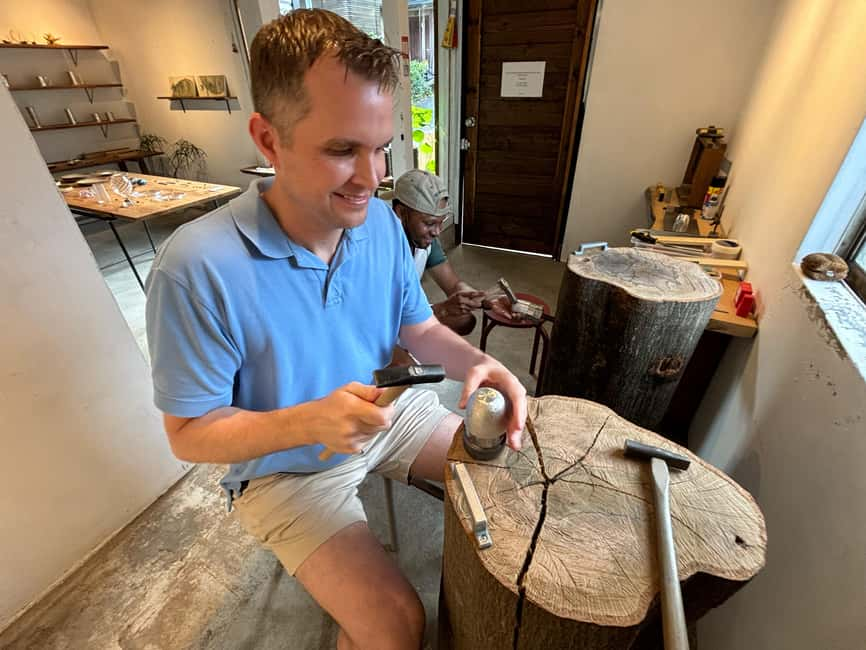
The chance to see inside the pewter workshop adds something that a standard craft class may not offer. You are not working in a generic activity room. You are visiting the artisan’s own working environment, normally closed to the public.
The supplied information does not describe every tool or stage in the studio, so do not expect a formal museum tour. The value is more direct. You can see where this type of work happens and gain a better sense of the practical setting behind the finished object.
For me, this is an important distinction. A craft experience feels more meaningful when you understand that the object comes from a real practice rather than a one-off tourist demonstration. The workshop visit helps connect your small cup to the wider tradition of pewter work in Japan.
The finished cup and its paulownia box
At the end, your cup is polished and ready to take home. It comes in a traditional paulownia wood box, which protects the object and makes it easier to give as a present.
The box also improves the value of the experience. Without suitable packaging, a handmade metal cup could be awkward to carry in luggage. The box gives it a proper home and makes the result feel finished.
Think about the cup’s purpose before booking. It is ideal if you want a personal souvenir, a small sake vessel, or a useful reminder of Kyoto. It is less suitable if you want to produce a large object, a complex sculpture, or several gifts in one session.
You make one cup during the workshop. The personal nature of that single object is part of the appeal, but it also means the cost per item is high if you judge the activity only by the amount you take home.
Is $148 a fair price?
At $148 per person, this is not a budget activity. You can buy a drinking vessel for less, and Kyoto offers many less expensive cultural experiences.
The better comparison is with a private lesson. Your fee covers 150 minutes, personal instruction from an artisan, all materials, tool use, the metalworking session, the final machine polish, and the paulownia box. You also receive access to a private group experience of no more than four people.
I would consider it good value for someone who places a high price on personal instruction and handmade objects. It is also easier to justify for a couple, family group with older children, or small circle of friends who want a shared activity and a lasting item.
It is harder to justify if you are watching every yen or mainly want to see Kyoto’s major sights. In that case, a free temple visit or a less expensive cultural activity may serve you better.
The free personalization helps. So does the fact that you are not just observing a demonstration. You actively shape the cup, and the finished object is practical. Still, book this for the experience and connection to the craft, not because it is the cheapest way to obtain a sake cup.
Who should book this workshop?
I would recommend it most strongly to:
- Solo visitors who want a focused activity with personal guidance.
- Couples looking for a shared keepsake from Kyoto.
- Small groups of up to four who prefer a private session over a busy class.
- Beginning crafters who want to try metalwork without prior experience.
- People who value useful souvenirs more than mass-produced shopping.
- Sake, whiskey, or tea drinkers who will actually use a small cup at home.
It may not suit young children, since participants under six are not allowed. It is also not ideal for anyone who dislikes hands-on work, gets frustrated by slow careful tasks, or wants a quick activity near central Kyoto.
The workshop requires attention. You will use a hammer and file, follow safety instructions, and take part in several stages. That is its strength, but it is also the main commitment.
Practical planning for the Eizan Railway
Plan the railway ride and the eight-minute walk before your appointment. The meeting point is across from Cafe & Bar Ayahana, which gives you a useful landmark once you leave the station.
Ninose and Ichihara are both nearby. If the Tunnel of Autumn Leaves is part of your plan, getting off at Ninose lets you enjoy the railway section between Ninose and Ichihara. Build that into your day rather than trying to squeeze it in after the workshop.
Since the activity ends where it begins, you can return by the Eizan Railway afterward. Keep in mind that seasonal scenery and transport timing can affect how much spare time you have, so avoid scheduling another fixed activity immediately afterward.
Free cancellation is available up to 24 hours in advance, and you can reserve now while paying later. Those options help if your Kyoto schedule is still taking shape, but they do not replace the need to arrive on time.
Should you book the pewter sake cup experience?
Book it if you want a quiet, personal craft session and a souvenir with your own fingerprints in it. Kanako’s careful instruction, the four-person limit, the free inscription, and the paulownia box make this more substantial than a quick make-and-take activity.
Skip it if $148 feels too high for one small cup, if you prefer sightseeing in central Kyoto, or if you want a passive demonstration. The workshop asks you to give it two and a half hours and your full attention.
For the right person, that is exactly the appeal. You leave with a small object, but also with a clear understanding of how it took shape.
FAQ
Where is the pewter sake cup workshop held?
It is held at Craft Gallery SALUK, located at 35-2 Shizuichinonakachō, Sakyo Ward, Kyoto, 601-1122, Japan.
How long does the activity last?
The workshop lasts 150 minutes, or two and a half hours.
How many people can join each session?
The private workshop accepts a maximum of four participants.
Do I need previous metalworking experience?
No. The workshop is designed for beginners, and the artisan provides personalized instruction.
Which languages are available?
Instruction is available in English and Japanese.
What will I do during the workshop?
You will hammer a pattern into a prepared pewter cup, optionally add letters or a date to the base, adjust the height with a file, and chamfer the rim. The artisan handles the final rotary-machine polishing.
What size is the finished cup?
The cup measures about 64 millimeters in diameter and 53 millimeters in height. It holds around 90 milliliters, or up to 115 milliliters when filled to the rim.
Can children take part?
Children under six cannot participate. Participants should also follow all safety instructions and must not be heavily intoxicated or under the influence of drugs.
What is included in the price?
The price includes the pewter cup workshop, artisan instruction, materials, tool rental, metalworking experience, and a traditional paulownia wood box for the finished cup.
How far is the meeting point from the railway stations?
Craft Gallery SALUK is about an eight-minute walk from Ichihara or Ninose Station on the Eizan Railway.
Can I cancel the booking?
You can cancel up to 24 hours in advance for a full refund.
Newly added around Kyoto
- Nishiki Market, Private Sushi class & Sake Tasting in Townhouse★ 5.0 · 6 reviews
- Kyoto Food and Sake Tour Experience★ 4.0 · 5 reviews
- Kyoto Luxury Sake, Whisky and Cocktail Tour★ 5.0 · 4 reviews
- Kyoto: Sake Tasting Journey to Two Iconic Breweries★ 3.0 · 2 reviews
- Experience of pairing sake tasting with snacks in Kyoto★ 5.0 · 4 reviews
- Fushimi Kyoto Walking Tour with Sake Tasting and Canal Boat Ride★ 4.0 · 5 reviews
- Kyoto: Newly Opened Sake Tasting – Sanjo Chasuian★ 5.0 · 7 reviews
- Kyoto Sake Brewery Tour★ 3.3 · 5 reviews
Kyoto Sake Tours, compared.

3-Hour Kyoto Insider Sake Brewery Tour with Tastings & Pairings
Read our review →
Insider Sake Brewery Tour with Sake and Food Pairing
Read our review →
Insider Sake Experience with 7 Tastings and Snacks
Read our review →
Private Tea Ceremony and Sake Tasting in Kyoto Samurai House
Read our review →
Gion Evening Walk with Hidden Gems, Geisha & Sake
Read our review →Browse the lists this tour appears in