
Reviewed · SAKE TASTING
Kyoto: Insider Sake Experience with 7 Tastings and Snacks
Kyoto sake can look simple on a menu, but the choices quickly become puzzling. This 90-minute class makes the subject clear through seven generous tastings, bottle-reading practice, and small Japanese snacks. Guides such as Mayo, Kotaro, Kiyomi, and Greg explain the brewing process in plain English, with plenty of room for questions.
I especially like the practical focus: you learn how rice polishing, sweetness, dryness, and brewing choices affect flavor. I also like the food pairing, since a sake you do not enjoy alone may work beautifully with a savory bite. The main drawback is that this is a tasting, not a meal, so arrive with something in your stomach.
Key points
- Seven sake tastings: Compare dry, crisp, sweet, fruity, and other styles side by side.
- Bottle-reading practice: Learn how to spot useful information on sake labels and menus.
- Food pairing lesson: Taste sake first on its own, then with Japanese otsumami to see how the flavor changes.
- Friendly English instruction: Guides including Mayo, Kotaro, Kiyomi, and Greg explain the subject with humor and patience.
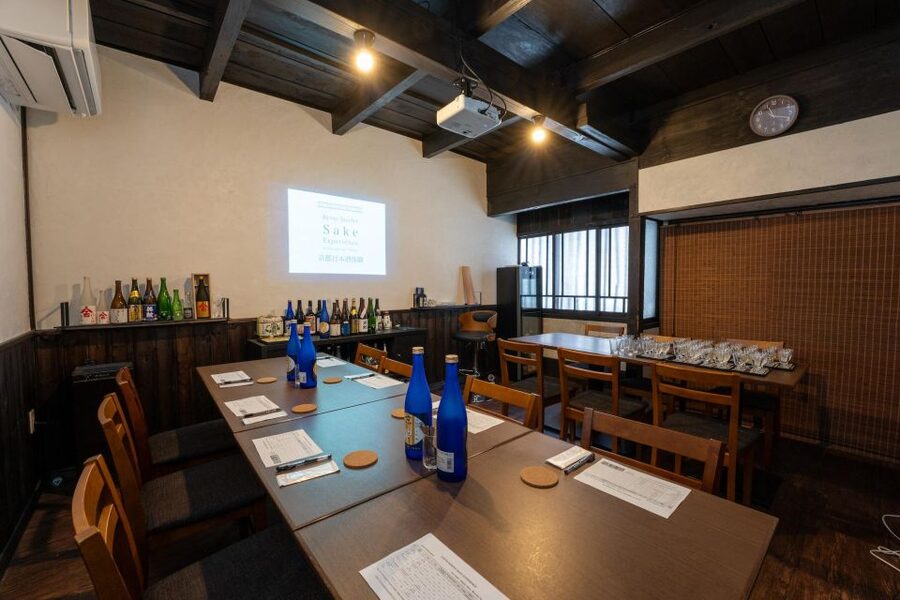
- Small, dedicated setting: The tasting takes place in a cozy room designed for discussion rather than a quick drink at a crowded bar.
- Useful take-home aid: A sake cheat sheet and tasting notes help you choose bottles after the class.
Why this Kyoto sake class is useful for beginners
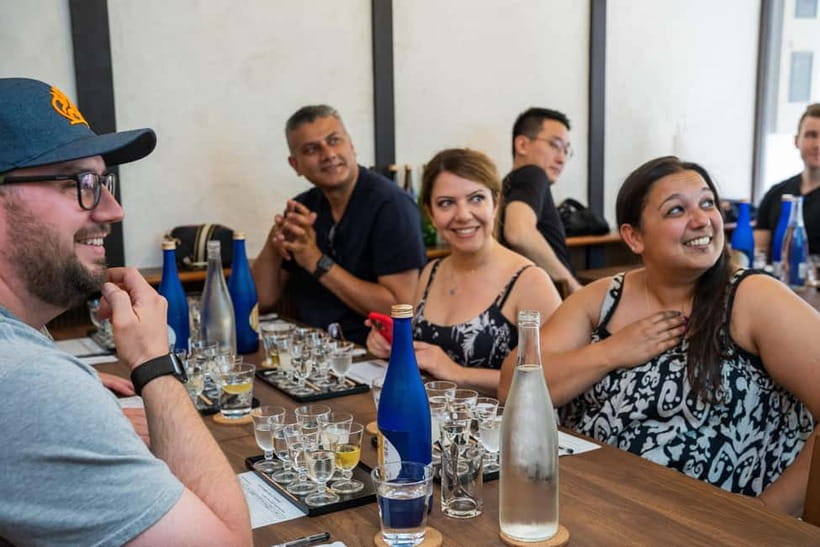
This experience is aimed at people who like the idea of sake but do not know where to start. That includes first-time drinkers, people who have tried one or two bottles, and anyone who has stared at a Japanese menu without knowing what junmai, polishing percentages, or sweetness numbers mean.
The lesson gives you a simple framework. Instead of treating sake as one single drink, you compare several styles and notice what changes from glass to glass. You may prefer a dry, clean pour, a soft and fragrant one, or a sweeter style with fruit-like notes. The point is not to memorize every technical term. It is to learn what your own palate likes.
I find that approach far more useful than a lecture about famous breweries. By the end, you should have a better answer to practical questions: Should you order sake cold or warm? Which bottle suits sushi? What information on a label actually matters? How can you ask for something similar to a sake you enjoyed?
The class is taught in English, and the guides use a relaxed style. Mayo is repeatedly praised for making technical points funny and easy to follow. Kotaro is described as friendly and clear, while Kiyomi receives high marks for her warmth and patience. Other guides, including Greg, Rieko, Shogo, Mai, and Yui, also lead sessions, so the exact personality depends on the date of your booking.
More Sake Tastings in Kyoto:
- 3-Hour Kyoto Insider Sake Brewery Tour with Tastings & Pairings
★ 5.0 · 917 reviews - Kyoto Sake Brewery & Tasting Walking Tour
★ 5.0 · 623 reviews - 1.5-Hour Kyoto Insider Sake Experience with 7 Tastings & Pairings
★ 5.0 · 297 reviews
Entering the dedicated tasting room
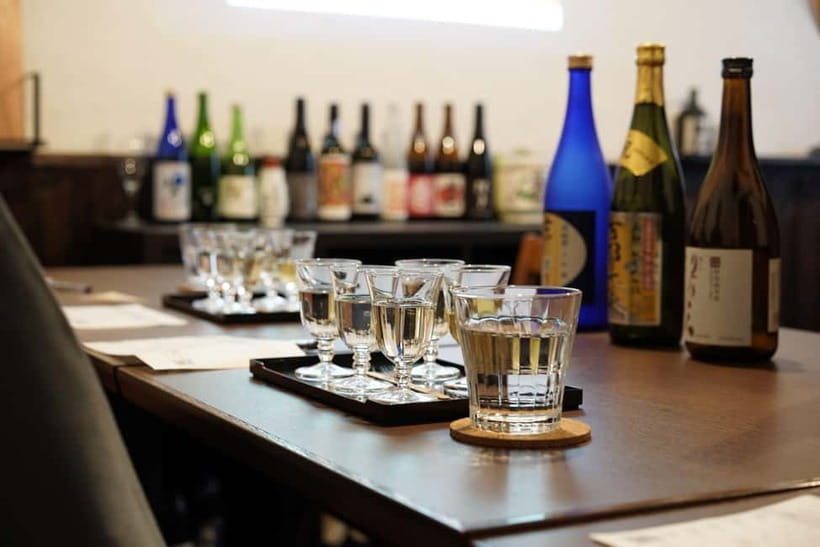
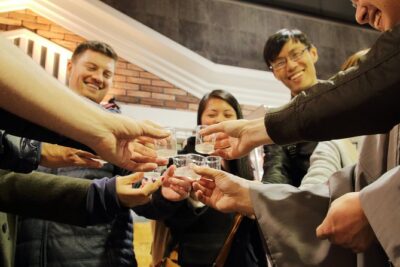
You meet the staff at the counter on arrival, then move into the dedicated tasting room. The setting is described as warm, intimate, cozy, and easy to find, which suits this kind of class. You are there to talk, taste, and ask questions, not simply stand at a bar while someone pours.
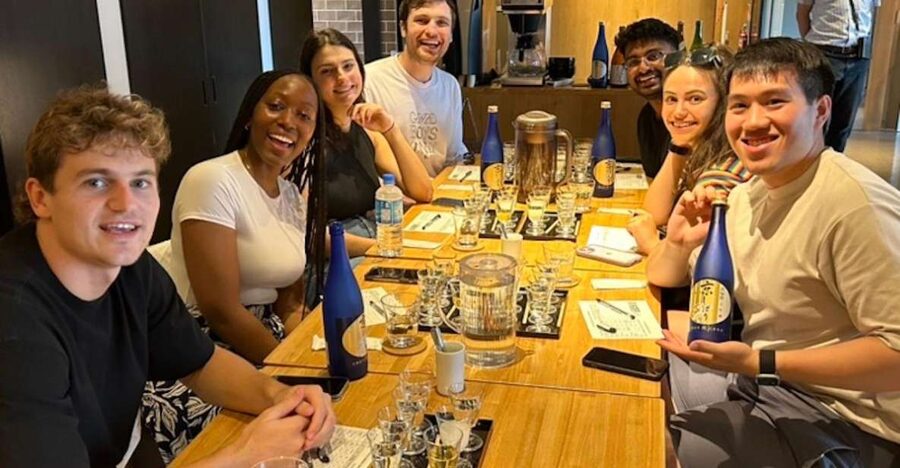
The room matters because sake is easier to understand when you can compare glasses in front of you. You can listen to the guide, look at the bottles or rice samples, and make notes as you go. One small-group session had only four people, creating a personal feel, although the exact group size is not specified for every booking.
Arrive early. If you are more than 20 minutes late, the booking is canceled, and there is no promise that you can join later. Strong fragrances are not allowed, a sensible rule when the aroma of the sake is part of the lesson.
You also need to arrive without driving or cycling. For safety and legal reasons, alcohol is not served to anyone who arrives by car or bicycle. Non-alcoholic drinks are available, but the booking is not refunded if you cannot take part in the sake tasting.
The first lesson: how sake is made
The session begins with an introduction to sake production before the tasting gets fully underway. This order is helpful. Once you understand what goes into the drink, the differences between the glasses make more sense.
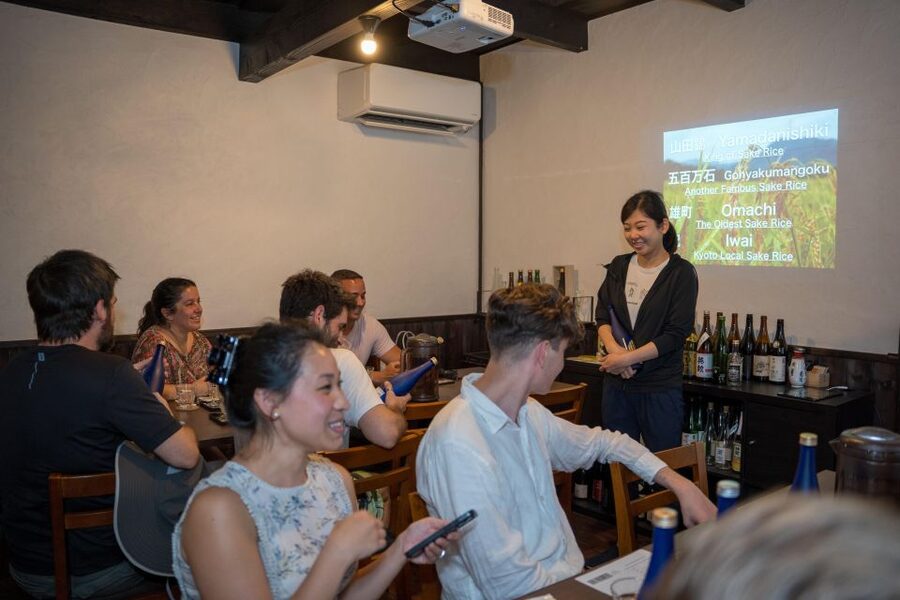
The guide explains the basic ingredients and the brewing process, along with regional differences and the role of rice polishing. Some sessions include physical examples showing how much of the rice grain has been polished away. That visual lesson helps turn a technical label detail into something you can understand.
Rice polishing affects how much of the outer grain is removed before brewing. You do not need to become a sake specialist, but seeing the refinement of the rice gives you a reason to pay attention to the polishing information on a bottle. The class connects that process with texture, aroma, and flavor rather than presenting it as a fact to memorize.
You also learn that sake style depends on several choices, not just one number. Brewing methods, ingredients, regional character, and serving temperature all help shape the final drink. The explanations are designed for newcomers, so you can ask basic questions without feeling out of place.
That structure received strong approval from people who had never tasted sake before. It also works for someone who already drinks it, because the class gives you a clearer way to compare what is in your glass.
Seven pours that show the range of sake
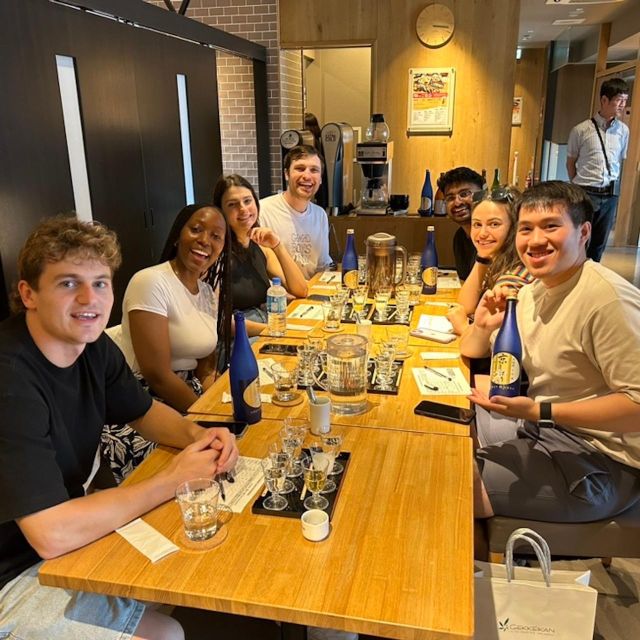
The central part of the experience is the tasting flight. The standard description promises seven tastings, and several sessions are described as offering generous pours. The included selection is drawn from more than 10 types chosen by a certified sake sommelier, so the exact bottles can vary.
The range is more important than any individual label. You taste different styles side by side, from dry and crisp to sweet and fruity. This lets you identify contrasts quickly. A sake that seems too sharp on its own may make sense once you try a softer style. A fragrant pour may appeal to you more than a restrained one, or the reverse.
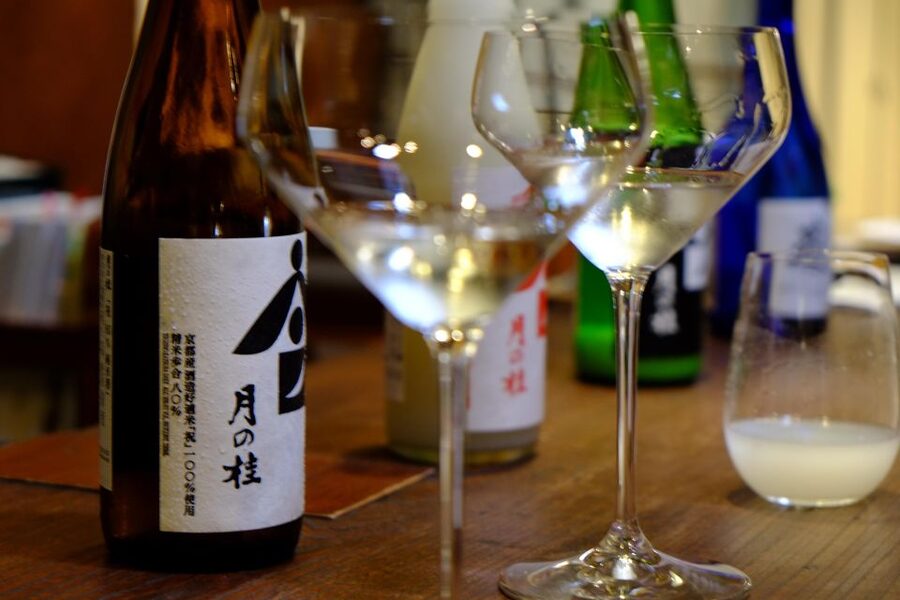
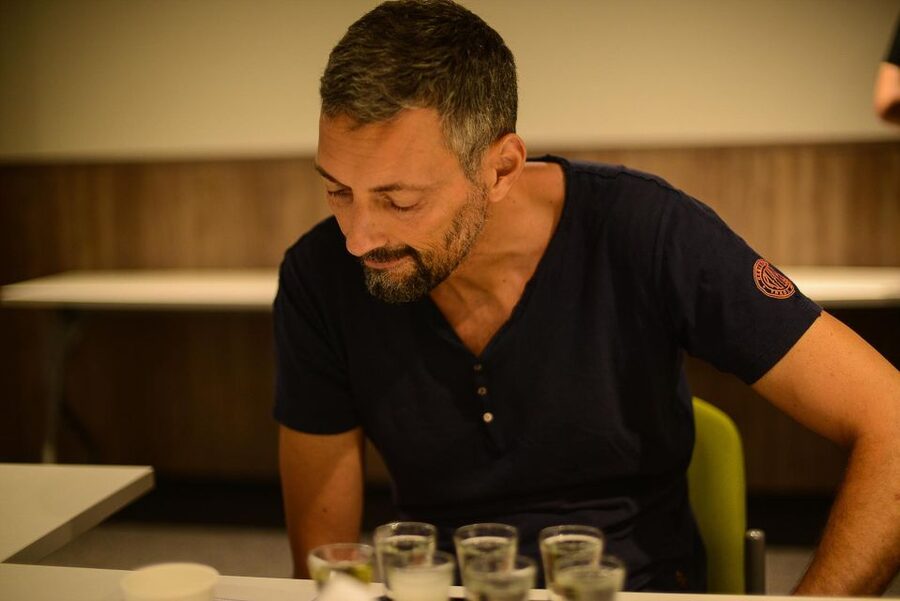
The guide introduces each selection and encourages you to notice what you smell and taste. You can use the tasting notes to record your response, rather than relying on memory after seven pours. That is a worthwhile detail because sake names are not always easy to remember, especially when several glasses are on the table.
A particularly useful exercise involves learning to find key information on a bottle. You practice reading labels and connect that information with what is in your glass. This changes the class from a passive sampling session into a practical skill lesson.
Do not expect every pour to become a new favorite. That is not a weakness. The value is in finding your own preferences and learning the words that will help you order again. Several people finished the class feeling able to choose a bottle with more confidence because they knew what styles suited them.
More Sake Tours in Kyoto:
- Kyoto: Insider Sake Brewery Tour with Sake and Food Pairing
★ 5.0 · 704 reviews - Private Tea Ceremony and Sake Tasting in Kyoto Samurai House
★ 5.0 · 163 reviews - Kyoto: Sake Brewery and Tasting Tour in Fushimi
★ 4.8 · 55 reviews - Advanced Kyoto Insider Sake Tasting Experience
★ 5.0 · 44 reviews
Why the otsumami pairing is more than a snack
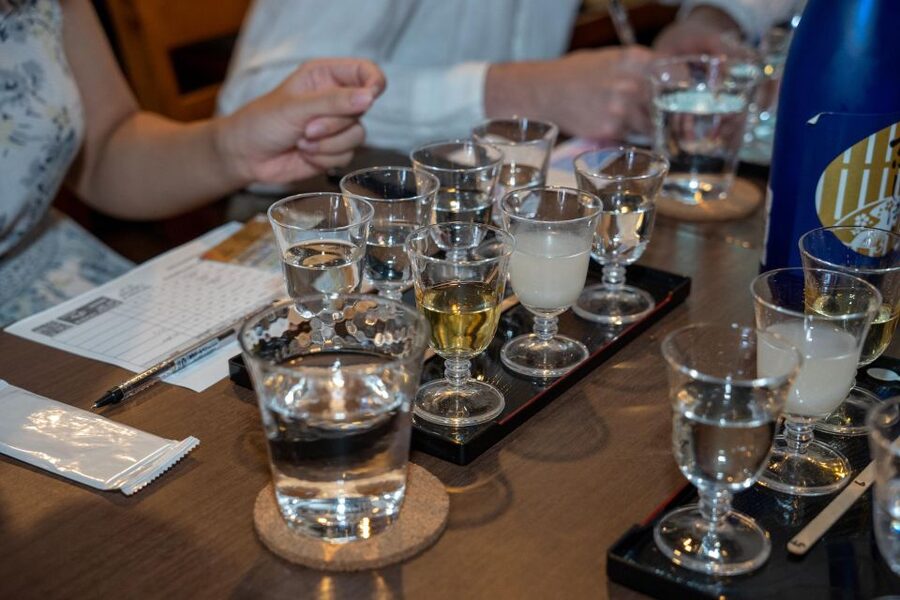
The food pairing is one of the best parts of the class. Otsumami means small Japanese appetizers served with drinks, and these bites are used as tasting tools rather than as a full lunch.
First, you taste the sake without food. Then you try it with the provided snacks and notice how the flavor shifts. This is a simple but convincing demonstration. A sake you would not choose on its own can taste rounder, cleaner, or more balanced alongside food.
The pairings may include savory items such as teriyaki chicken, and vegetarian substitutions are available if you request them at the site. The vegetarian option has been praised as a satisfying replacement, but you should still tell the guide about food preferences or allergies when you arrive.
This section also gives you useful information for later meals. You learn which kinds of sake work well with sushi and how food can change your impression of sweetness, dryness, and strength. The lesson is not a rigid list of rules. It helps you make a sensible choice when ordering at a restaurant.
Do eat something before the class. The tasting includes food, but the portions are small and the experience includes several alcoholic pours. One participant specifically advised having a snack beforehand so the sake would be easier to enjoy.
Learning when to drink sake hot or cold
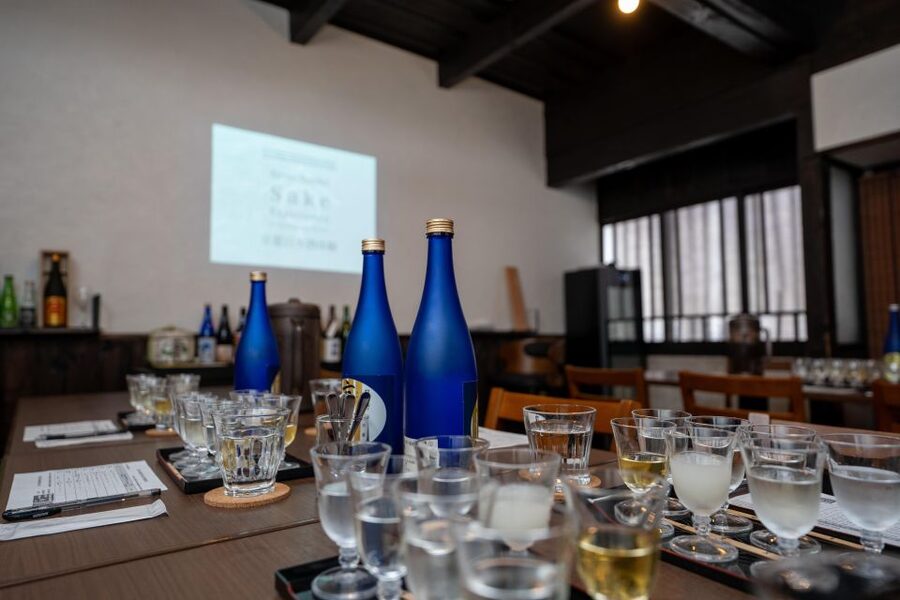
Temperature is another practical topic. Sake is not served in only one way, and the best choice depends on the style and the setting. The guide explains when to drink it chilled and when warm service may suit it better.
This is useful because visitors often assume that every sake should be cold. The class gives you a starting point for making a better choice without pretending there is one universal rule. You learn to ask what suits the bottle and the food rather than ordering by habit.
The guide also explains how to order with confidence in Japan. You receive a sake cheat sheet and tasting note to keep, giving you a reference for the terms and styles introduced during the lesson. It will not replace a full sake book, but it is the right size for practical use at a restaurant or shop.
I like this take-home element because the class would be less useful if everything disappeared once the last glass was cleared. You can compare your notes with a menu later and use your preferred flavor profile to guide your next order.
The pace, teaching style, and group atmosphere
The 90-minute length is well judged for an introductory tasting. There is enough time for a production lesson, seven samples, food pairing, and questions without turning the session into a long academic class.
The pace can vary slightly by guide and group. One earlier session lasted closer to two hours, but the stated duration is 90 minutes, so plan around that when arranging your day. The teaching style is consistently described as clear, structured, friendly, and fun.
The strongest teaching comes from guides who connect each fact to something you can taste. Mayo is praised for enthusiasm and humor. Kiyomi is noted for being patient and engaging. Kotaro explains the subject clearly and creates an easy atmosphere. Greg is described as thorough and attentive, especially with first-time sake drinkers.
That personal style matters. Sake has unfamiliar vocabulary, but you are encouraged to ask questions and work out your own preferences. The session does not require prior knowledge, and it is suitable even if you are unsure whether you like sake at all.
The class also works well for pairs and small groups. One parent and college-age son considered it a highlight of a ten-day Japan trip, while other groups used it as a calm, intimate activity between sightseeing stops. You should expect conversation with the guide and other people rather than a quiet private tasting.
What the $66 price includes
At $66 per person, the experience is not the cheapest way to drink sake in Kyoto. You could order a single glass at a restaurant for much less. But that comparison misses the main value.
The price includes a certified sake expert, seven tasting pours from a selection of more than 10 types, otsumami, the lesson on brewing and labels, and the cheat sheet. You are paying for guidance and comparison, not just alcohol.
For a beginner, that can be good value. A few unplanned drinks may tell you that you like one bottle, but they will not necessarily explain why. Here, you sample styles in a planned order, test them with food, and leave with a method for making future choices.
The value is especially strong if you plan to eat at several Japanese restaurants during your trip. Knowing how to read a menu and describe what you like can save you from ordering at random. You may also be able to purchase a favorite bottle after the session.
Still, keep your expectations clear. The snacks are tasting portions, not dinner, and transportation to the venue is not included. You need to make your own way there and back.
Who should book this experience
I would recommend it most strongly if you meet one of these descriptions:
- You have never tried sake and want a gentle introduction.
- You enjoy Japanese food but feel unsure about ordering drinks.
- You have tasted sake before but cannot explain the differences between styles.
- You want a short indoor activity with English instruction.
- You like food pairings and hands-on learning more than a simple bar tasting.
- You want to buy a bottle in Japan but need help choosing one.
It is less suitable if you want a full meal, a brewery visit, or a long tour through Kyoto’s sake district. The experience takes place in a dedicated tasting room, and transportation to attractions is not part of the booking.
It is also not suitable for children under three, pregnant people, or people under 19. Japan’s legal drinking age is 20, and people under 20 receive only non-alcoholic drinks. Unreserved people, including children and non-drinkers, cannot simply join the session, so every participant needs a booking.
Booking details worth knowing before you go
The activity is offered in English and lasts 90 minutes. Starting times vary, so you need to check availability for your date. The meeting instruction is simple: speak with the staff at the counter when you arrive.
Tell the guide about allergies or food preferences on site. Vegetarian pairings have been accommodated successfully, but it is still wise to raise the request before the food is served.
Avoid cycling or driving to the activity. Bikes are not allowed, and alcohol will not be served to someone who arrives by bicycle or car. Also avoid strong perfume, since aroma is part of the tasting.
Free cancellation is available up to seven days in advance. That gives you some flexibility, but late arrival is less forgiving, so allow time to find the counter and settle in.
Should you book the Kyoto sake experience?
Yes, if you want more than a few random drinks. The class gives you a useful vocabulary, a clear comparison of styles, practical bottle-reading skills, and a convincing lesson in food pairing. The guides are the heart of it, and names such as Mayo, Kotaro, Kiyomi, and Greg are associated with an easy, friendly teaching style.
The main caution is simple: this is an educational tasting, not a meal or a brewery tour. Eat beforehand, arrange transportation that does not involve driving or cycling, and book every person who plans to attend.
At $66, I consider it a fair buy for anyone who wants to order sake with less guesswork during the rest of a Japan trip. If you are curious but inexperienced, this is a smart Kyoto introduction. If you already know sake well, you may prefer a more advanced class, but the food pairing and broad style comparison can still make the session worthwhile.
FAQ
How long does the Kyoto sake experience last?
The stated duration is 90 minutes. One earlier session took closer to two hours, so leave a little flexibility in your schedule.
How many sake tastings are included?
The experience includes seven sake tastings. The selections are chosen from more than 10 types by a certified sake sommelier, and the exact bottles may vary.
Is the experience taught in English?
Yes. The live guide leads the tasting in English.
Are food pairings included?
Yes. Traditional Japanese otsumami are included so you can taste the sake alone and then see how food changes its flavor. Tell the guide about allergies or food preferences at the venue.
Can people under 20 participate?
People under 20 are served only non-alcoholic drinks. The experience is not suitable for people under 19, and children and non-drinkers still need a reservation to attend.
What happens if I arrive by bicycle or car?
For safety and legal reasons, alcohol will not be served to anyone who arrives by car or bicycle. Non-alcoholic drinks are available, but there is no refund if you cannot take part in the sake tasting.
Newly added around Kyoto
- Japanese Sake Breweries Tour in Fushimi Kyoto★ 5.0 · 10 reviews
- Kyoto: Fushimi Sake District Tour with Boat Ride★ 4.6 · 10 reviews
- Private Sake Tasting in Central Kyoto with Sake Sommelier★ 5.0 · 13 reviews
- Kyoto Sake Brewery Tour with Lunch★ 4.5 · 12 reviews
- KYOTO Sake Tasting Tour at Local Breweries(tasting fee included)★ 5.0 · 16 reviews
- Japanese Sake Breweries Tour in Kyoto Fushimi★ 4.3 · 13 reviews
- Private Nishiki Market Food & Sake Tour by Young Local Guides★ 5.0 · 12 reviews
- 3 Hours Kyoto Insider Sake Experience | Tasting Konteki★ 5.0 · 24 reviews
Sake Tasting, compared.

3-Hour Kyoto Insider Sake Brewery Tour with Tastings & Pairings
Read our review →
Sake Tasting Masterclass in Shinjuku (8+ Varieties with a Pro)
Read our review →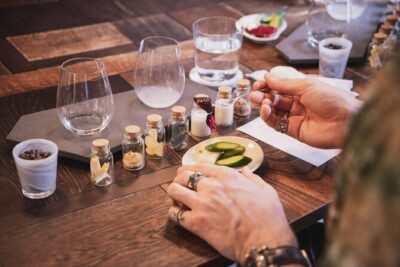
Sake Omakase in Tokyo: Guided Tasting by Certified Sommeliers
Read our review →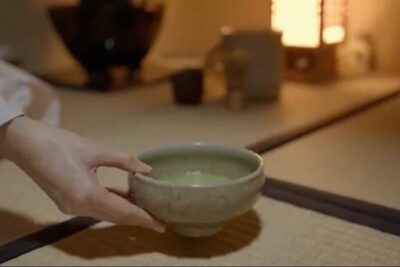
Private Tea Ceremony and Sake Tasting in Kyoto Samurai House
Read our review →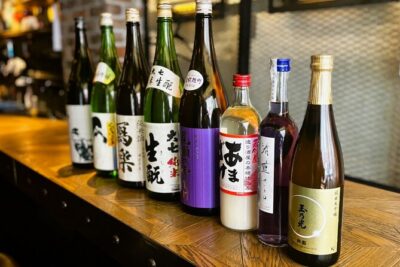
Casual Japanese SAKE tasting and snack experience in Kabukicho
Read our review →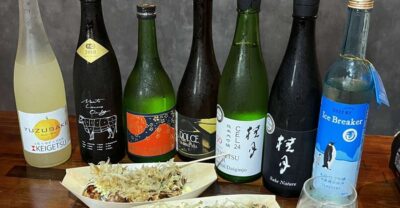
KOBE Sake Tasting Tour at Breweries (tasting fee included)
Read our review →Browse the lists this tour appears in