
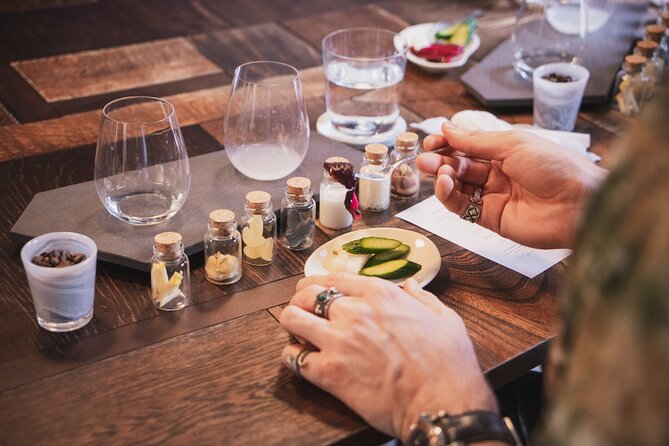
Reviewed · SAKE TASTING
Sake Omakase in Tokyo: Guided Tasting by Certified Sommeliers
Tokyo has no shortage of sake bars, but this two-hour tasting in Kanda gives you a clear way into a drink that can seem mysterious at first. Seven Japan-only sakes arrive in four themed courses, with the pours changed by temperature, food pairing, infusion, or glassware. It is less about knocking back drinks and more about learning why one sake suits you while another does not.
I like the small group of six, which gives you room to ask direct questions, and I like the relaxed teaching style praised by guests who worked with Eric, Aaron, Frank, and Phillip. The main consideration is simple: seven sakes with free-flow refills can add up quickly, so eat a proper meal beforehand and plan a calm rest of the day.
Key points at a glance
- Seven Japan-exclusive sakes: Taste a broad range rather than one house pour.
- Four themed courses: Compare rice, serving temperatures, seasonings, and vessels.
- Small groups of six: The format leaves time for personal advice about your palate.
- English-speaking certified sommeliers: Guides explain brewing and flavor in clear, practical terms.
- Food with every course: Pickles, cheeses, cured meats, and dessert help show how sake works with food.
- Central Tokyo setting: Meet at Linden House in Kanda, near public transportation.
A thoughtful introduction to sake in central Tokyo
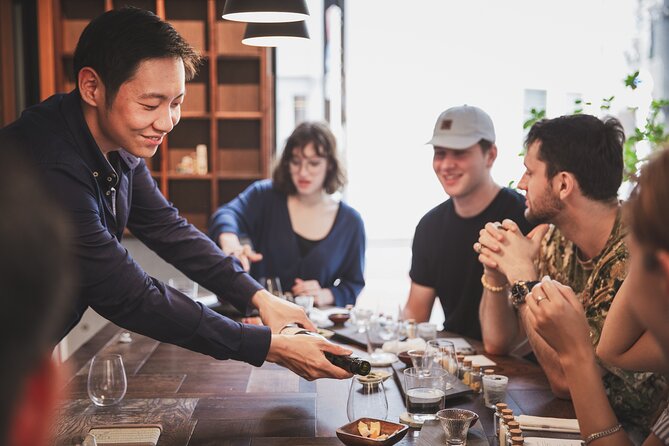
Sake can be hard to order with confidence. Labels carry unfamiliar terms, the flavor range runs from dry and crisp to sweet and fragrant, and the same bottle can taste different when served cold or warm. This experience tackles those problems in a useful order.
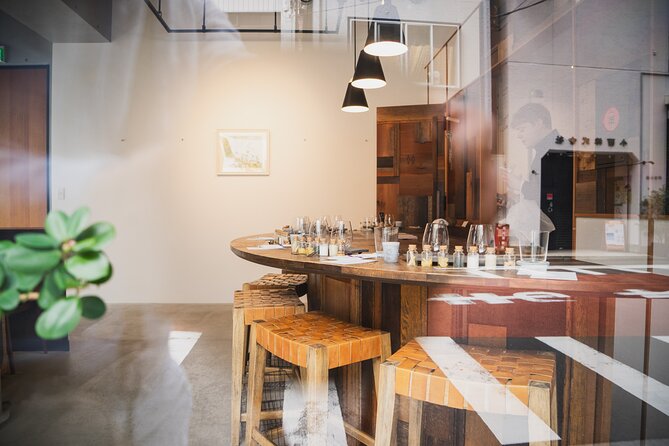
You begin in a designer tasting room centered on a handsome table made from reclaimed wood from a Showa-era building. The room is part of the appeal, but the setting also serves a practical purpose. With a maximum of six people around one table, you can watch the pours, compare notes, and ask questions without shouting across a crowded bar.
The hosts have conducted more than 2,500 tasting sessions, and the focus is on contemporary sake rather than a stiff lecture about old customs. I like that balance. You receive enough information to understand what is in your glass, but the session stays social and approachable.
More Sushi and Sake Tours in Tokyo:
- Ramen and Sushi Cooking Class with Sake Pairing Set in Tokyo
★ 5.0 · 291 reviews - Tsukiji: Outer Market Walking Tour & Sake Tasting Experience
★ 4.9 · 81 reviews - Tokyo: Sushi and Ramen Cooking Class with Sake Pairing Set
★ 5.0 · 81 reviews
Four courses that change how sake tastes
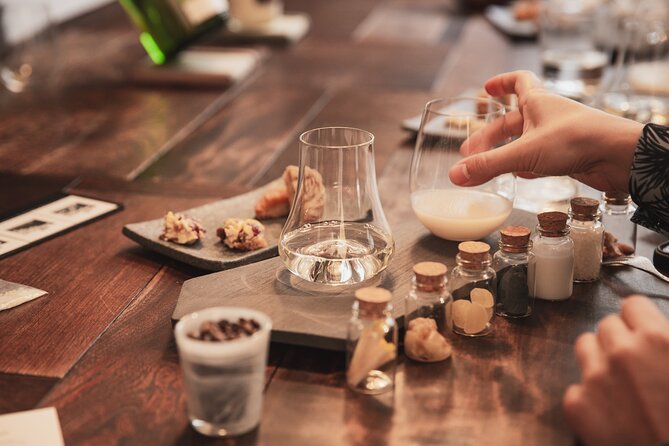
The four-course plan is the heart of the experience. The exact bottles can change, but the themes are designed to show how sake responds to different conditions. That makes the tasting more useful than simply sampling seven unrelated drinks.
Rice comparison
Rice is not just a background ingredient in sake. Different rice choices affect aroma, texture, body, and finish. A comparison course gives you a chance to notice those differences side by side, instead of trying to remember one glass from ten minutes earlier.
This is a good starting point for beginners. You do not need to know technical brewing terms. Your job is simply to notice which glass feels lighter, rounder, sharper, sweeter, or more fragrant.
Five serving temperatures
Sake is often treated as a drink that must be served cold. That is too simple. Some styles show more aroma when chilled, while others become softer and more expressive at warmer temperatures.
This course is especially valuable because it turns a common assumption into something you can test yourself. The same sake style may feel quite different as the temperature changes. If you already have a favorite bottle at home, the lesson may help you decide how to serve it next time.
More Sake Tastings in Tokyo:
- Sake Tasting Masterclass in Shinjuku (8+ Varieties with a Pro)
★ 5.0 · 271 reviews - Casual Japanese SAKE tasting and snack experience in Kabukicho
★ 5.0 · 159 reviews - Tasting All Types of Sake with Sommelier
★ 5.0 · 151 reviews - Tokyo Wagyu & Sake Pairing Tasting Experience with Local Flavors
★ 5.0 · 108 reviews
Spice and herb infusions
Infusions bring a playful turn to the session. Spices and herbs can highlight certain aromas or create a new contrast with the sake’s texture. This is not a traditional sake flight in the narrowest sense, but it helps explain how bartenders and modern sake makers are widening the drink’s appeal.
The course also helps if you are unsure about sake’s flavor. You may discover that you prefer a clean base with herbal notes, or that a more aromatic style works better with food.
Drinking vessels
The vessel in your hand can affect aroma and the way a drink reaches your palate. A small cup, a glass, or another shape can change what you notice first.
This is a useful lesson for anyone who plans to keep exploring sake after the tour. It also shows why the experience is not just seven quick samples. Each course asks you to pay attention to one variable at a time.
The small bites are part of the lesson
Food arrives with each course, including pickles, cheeses, cured meats, and dessert. These are not meant to replace dinner, but they give the sake a job to do.
A salty pickle can make a dry sake feel different. Cheese and cured meat may bring out a fuller texture, while dessert offers a way to test sweeter or more aromatic styles. The pairings also make the tasting more comfortable than drinking alcohol on its own for two hours.
One useful point is that the food is served in small portions. You should still eat beforehand, particularly if you plan to accept refills. One past participant specifically advised arriving after a small meal, and that is sensible advice. The included bites support the tasting, but they are not a full lunch or dinner.
Guides who teach without making it feel like school
The hosts speak English, Japanese, and Chinese, and the experience is designed for visitors who may know very little about sake. Eric is praised for being thorough and easygoing, while Aaron and Frank are described as making the group feel at ease. Phillip and Aaron are also noted for explaining brewing methods and sake types clearly.
Names can vary by session, so I would not book this expecting one specific host. The important point is the teaching approach. You can ask what a label means, why a sake tastes dry, which bottle suits a certain dish, or how to find similar styles later.
That personal guidance is one of the strongest reasons to choose this tasting over simply ordering a flight at a bar. A bar can give you good sake. Here, you also get a framework for understanding your preferences.
Why the six-person limit matters
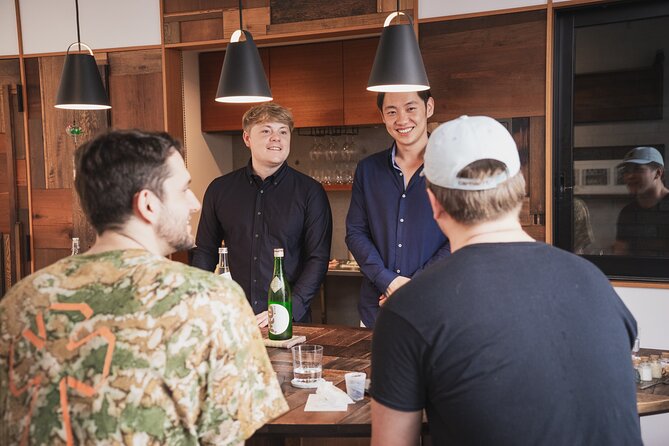
A maximum of six people keeps the format personal. You are not lost in a large group, and the host has a reasonable chance to respond to individual tastes.
This matters most during the question period. If you dislike sweet drinks, prefer clean and dry sake, or want something with a stronger aroma, the sommelier can help connect those preferences to the next pour. You also have a better chance to compare impressions with the other people at the table.
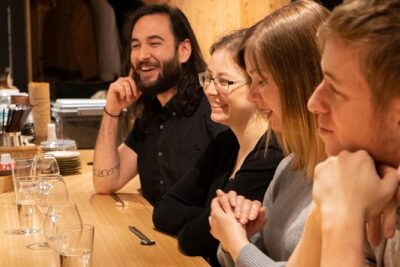
The small size can make the session feel social, too. The experience is built around one shared table, and several guests described making new friends. That is not guaranteed, but the setup encourages conversation.
The tradeoff is that a very private experience is not promised. You are joining a small shared group, not booking a private class. If you prefer to taste alone, this may not be your ideal format.
What the $79.52 price really covers
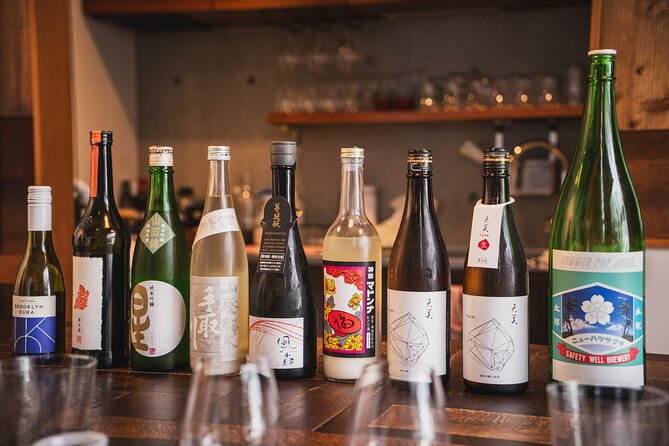
At $79.52 per person, this is not the cheapest way to drink sake in Tokyo. You can certainly find a less expensive glass at a restaurant or convenience store. The value here comes from the combination of seven selected sakes, free-flow service, four tasting themes, food pairings, and a trained guide.
The unlimited-refill detail needs a little common sense. It adds value if you want to compare a favorite pour or revisit a style, but you do not need to treat it as a drinking challenge. The best use of the option is to return to a sake that changed with temperature or paired especially well with a bite.
For a first introduction, the price is reasonable if you would otherwise spend time ordering random bottles without knowing what you are tasting. It is also useful for experienced drinkers who want new Japan-only selections and a chance to test temperature, food, and vessel effects.
I would be less enthusiastic about the price if your main goal is simply to consume as much sake as possible. The strength of the session is the guided learning, not volume.
Location, timing, and the practical details
The meeting point is Linden House at 1-chome-9-9 Kanda Ogawamachi, Chiyoda City, Tokyo 101-0052. The area is near public transportation, but transportation to and from the experience is not included, so you will need to make your own way there.
The session lasts about two hours and ends back at the meeting point. That makes it easy to fit into a day of sightseeing, though I would avoid placing it immediately before a demanding activity. You may feel the effects of seven sake styles, especially if you use the refill option.
A mobile ticket is provided, and confirmation arrives at booking. The activity is open to most participants, but it is not recommended for anyone with an alcohol allergy. The experience requires a minimum number of participants, so if that minimum is not reached, you will be offered another date or experience, or a full refund.
Free cancellation is available until 24 hours before the start time. Cancellations or changes inside that window are not refunded or accepted, so check your Tokyo plans before booking.
Who will get the most from this tasting
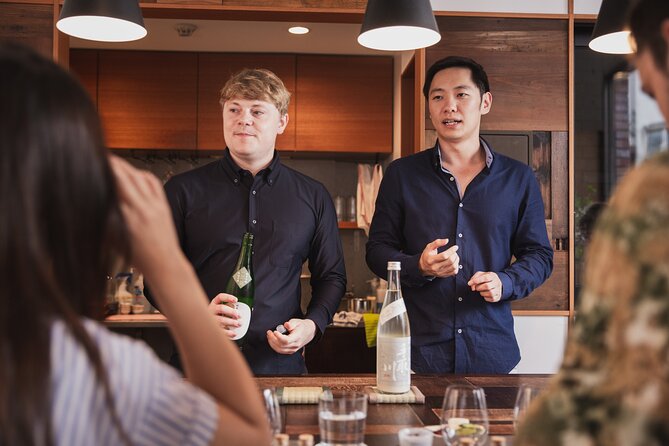
This is a strong choice if you have tried sake once or twice but cannot yet describe what you like. The four themes give you a way to move from I like this one to a more useful understanding of why you like it.
It also suits sake fans who want unusual bottles that are exclusive to Japan. The language support makes the experience practical for international visitors, and the hosts can discuss both basic and more advanced questions.
Food-focused visitors should enjoy the pairing format. The snacks are modest, but they show how sake can work with salty, rich, sharp, and sweet flavors. If you are planning a food tour or want to order sake confidently at Japanese restaurants, the lessons carry over well.
I would hesitate to recommend it to someone who does not drink alcohol, dislikes group activities, or wants a full meal. It is also not the right pick if your only priority is visiting a famous brewery, since this is a tasting-room session in Tokyo rather than a brewery tour.
A better way to use the two hours
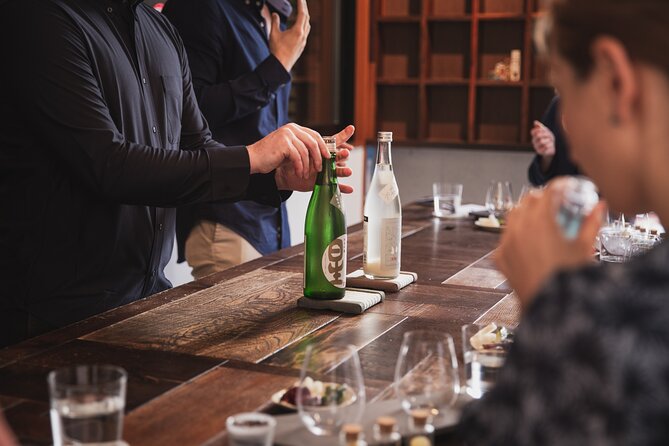
Arrive having eaten something, but leave your palate reasonably fresh. You do not need special sake knowledge. Come ready to compare, ask questions, and admit when one style is not for you.
Take mental notes on three things: aroma, texture, and finish. Then notice how those change with food or temperature. You do not need to memorize every label. The more useful result is learning a few words that describe your taste.
Use the sommelier’s advice at the end. Ask what to order in a restaurant, what style to search for in a bottle shop, or how to explain your preference. That final conversation may be more valuable than simply finding one favorite pour.
Should you book Sake Omakase in Tokyo?
Book it if you want a friendly, structured introduction to sake, especially if you are curious about flavor but do not know where to begin. The strongest features are the six-person limit, the four clear tasting themes, the Japan-only selections, and the chance to ask an experienced sommelier what fits your palate.
Plan around the alcohol, eat beforehand, and treat the free refills as a chance to compare rather than a challenge. At $79.52, you are paying for guidance, food, variety, and a polished setting. For that purpose, this is a well-focused use of two hours in Tokyo.
FAQ
How long does the sake tasting last?
The experience lasts approximately two hours.
Where does the activity begin and end?
It begins at Linden House, 1-chome-9-9 Kanda Ogawamachi, Chiyoda City, Tokyo 101-0052, Japan, and ends back at the same meeting point.
How many sakes are included?
Seven sommelier-selected, Japan-exclusive sake varieties are included.
Are refills included?
Yes. The sake is served free-flow across four themed courses, with unlimited refills.
What food is included?
Small bites are provided with each course, including pickles, cheeses, cured meats, and dessert.
How large is the group?
The activity has a maximum of six participants.
Is the experience available in English?
Yes. The sommeliers guide the session in English, Japanese, and Chinese.
Newly added around Tokyo
- Japanese Sake Tasting & Wagyu Sukiyaki Cooking Class in Tokyo★ 5.0 · 10 reviews
- Tokyo Sake Tour with a Local Guide, Private & Tailored to Your Taste★ 4.0 · 12 reviews
- 7 Kinds of Sake Tasting with Complementary Foods★ 5.0 · 11 reviews
- Wagyu Beef & Sake Pairing Foodie Tour in Tokyo★ 5.0 · 16 reviews
- Private Tour: Tokyo’s Oldest Sake Brewery and Riverside Walk★ 5.0 · 25 reviews
- Wagyu & Sake 8 Course Tasting Dinner in Shinjuku★ 4.9 · 20 reviews
- Luxury Tokyo Sake, Cocktail, Whisky and Pairing Tour★ 5.0 · 18 reviews
- Sake & Food Pairing with Sake Professional★ 5.0 · 28 reviews
Sake Tasting, compared.

3-Hour Kyoto Insider Sake Brewery Tour with Tastings & Pairings
Read our review →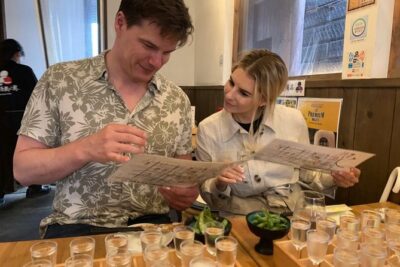
Sake Tasting Masterclass in Shinjuku (8+ Varieties with a Pro)
Read our review →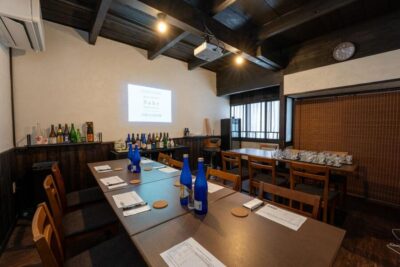
Insider Sake Experience with 7 Tastings and Snacks
Read our review →
Private Tea Ceremony and Sake Tasting in Kyoto Samurai House
Read our review →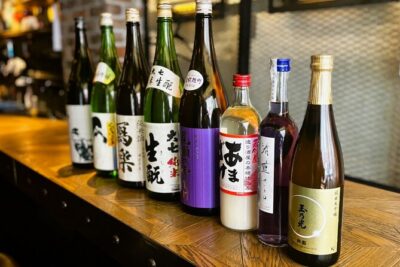
Casual Japanese SAKE tasting and snack experience in Kabukicho
Read our review →
KOBE Sake Tasting Tour at Breweries (tasting fee included)
Read our review →Browse the lists this tour appears in