
Reviewed · SAKE & FOOD PAIRING TOURS
Make Otsumami + Sake Pairing (Includes 6-Course Meal)
Osaka’s food culture comes alive at the cutting board in this six-course cooking class. You work with a local chef, prepare Japanese snacks from scratch, and sit down to eat them with three types of sake. This is less a quick demonstration than a hands-on meal with useful kitchen skills attached.
I like the small maximum of six people, which gives the class a personal feel, and I like the range of dishes. You move from potato salad and octopus with vinegar to crispy fish, simmered yellowtail, and onigiri. Chef Yuki is named as the host, and the class is designed to keep the cooking relaxed and approachable.
The main consideration is the meeting point in Yoshita, Higashiosaka, rather than a clearly identified central Osaka landmark. Check the route before booking, and remember that the activity lasts about three hours. It is also a BYOB event for wine and beer, even though the planned sake pairing is included.
Key points to know before booking
- Six dishes make this a real meal: You prepare five food courses, then finish with three sake pours.
- Chef Yuki leads the class: The instruction centers on practical Japanese snack-making and sake preparation.
- The group is capped at six: That is a useful size for asking questions and getting hands-on help.
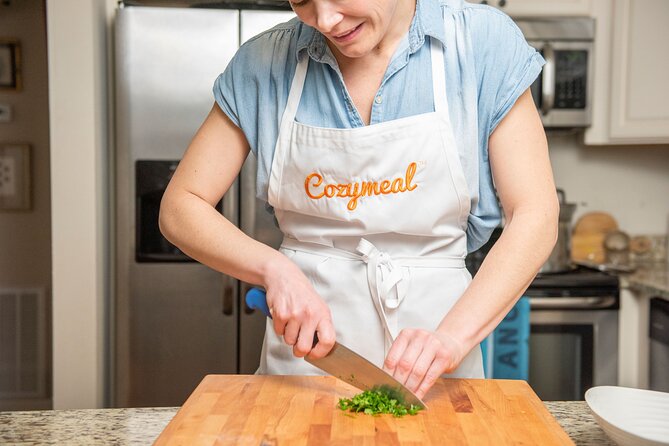
- The menu covers several Japanese techniques: You will work with vinegar dressing, frying, simmering, rice shaping, and sake service.
- Dietary needs can be discussed ahead of time: Contact the provider in advance so the menu can be adjusted where possible.
- The price is $117.18 per person: That is a fair value if you want a full meal and active instruction, not simply a tasting.
Why this Osaka class feels different from a standard food tour
A food walk lets you sample Osaka one bite at a time. This class asks you to slow down and make the food yourself. That change matters because you see how a dish is built, not just how it tastes at the table.
The menu also avoids relying on one famous Japanese food. There is no single headline dish doing all the work. Instead, you handle everyday-style preparations: a seasoned potato salad, a vinegar salad, fried fish, simmered yellowtail, and rice shaped into onigiri.
That mix gives you a better sense of how Japanese meals balance texture and flavor. You get creamy potato, crisp vegetables, chewy octopus, crisp fish, tender cooked fish, and compact rice. Sake then adds another layer, with two chilled servings and one warm serving.
I especially like the small class format here. Six people is small enough for the chef to watch your technique and answer questions without turning the session into a private lesson priced for one household. It also gives the class a social side without the noise and distance of a large group.
The tone appears to be relaxed rather than formal. That is useful if you are new to Japanese cooking or unsure about handling ingredients such as octopus, yellowtail, or shimeji mushrooms. The class is meant to make the recipes feel manageable.
More Sake and Food Pairings in Japan:
- 3-Hour Kyoto Insider Sake Brewery Tour with Tastings & Pairings
★ 5.0 · 917 reviews - Kyoto: Insider Sake Brewery Tour with Sake and Food Pairing
★ 5.0 · 704 reviews - 1.5-Hour Kyoto Insider Sake Experience with 7 Tastings & Pairings
★ 5.0 · 297 reviews
Meeting Chef Yuki in Yoshita, Higashiosaka
The class begins and ends at Yoshita, Higashiosaka, Osaka 578-0924. The experience is described as being in the heart of Osaka, but the supplied meeting details point to a specific address in Higashiosaka, so I would not treat this as a class automatically beside Dotonbori or Osaka Castle.
Give yourself time to reach the meeting point. The information provided does not include a station name, walking directions, or hotel pickup, so you should confirm the exact location after booking and plan your route using the address.
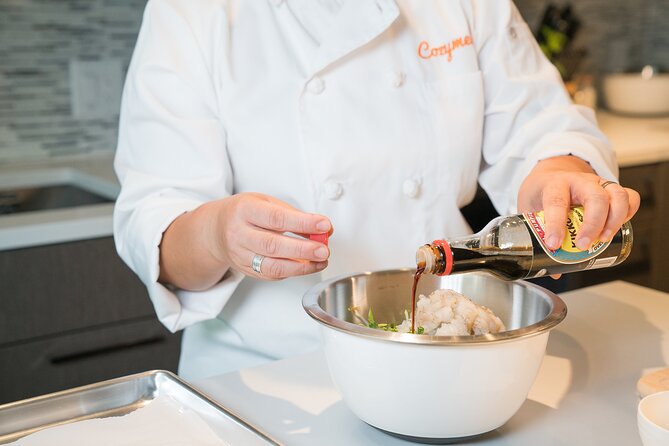
Once there, expect a hosted cooking session rather than a restaurant meal. You will work through the menu with Chef Yuki, then eat what you have prepared. The three-hour length leaves room for instruction, cooking, the meal, and the sake pairing without forcing every course into a rushed schedule.
The class ends back at the meeting point. That makes it easy to continue your Osaka plans afterward, though you should avoid scheduling something with a fixed start time immediately after the class. Cooking times can vary, especially when a small group is learning together.
First course: wasabi garlic potato salad
The opening dish combines potato, wasabi, and garlic. It is a familiar base with two sharper Japanese accents, so it gives you an easy first lesson in balancing a mild ingredient with stronger flavors.
Potato salad may sound simple, but it is a useful choice for a cooking class. You can focus on seasoning and texture before moving into seafood and cooked fish. The wasabi adds heat, while garlic gives the dish a savory edge.
This course also sets the tone for the class. You are not only preparing restaurant-style specialties. You are learning how a few ordinary ingredients can be shaped into a snack that fits a Japanese meal.
If you are sensitive to wasabi, tell the chef about your preference when you arrive. The class can accommodate a range of dietary needs when you provide notice, but the available information does not promise that every ingredient can be removed or replaced.
Second course: octopus, cucumber, and seaweed
Next comes an octopus and cucumber vinegar salad with seaweed. This is a cool, crisp dish that brings a clean contrast to the potato salad.
The interesting part is the play of texture. Cucumber provides crunch, octopus gives a firmer bite, and seaweed adds a distinctly Japanese note. The vinegar dressing keeps the dish light and sharp.
This course is also a good reason to choose the class over a basic beginner session focused only on rice or noodles. You get to work with an ingredient that many people might hesitate to prepare at home, then learn how it fits into a simple salad.
The octopus course may be less comfortable for people who avoid seafood or have a strong texture preference. Dietary requests should be sent ahead of time. The provider specifically asks you to share restrictions in advance so the chef can try to tailor the menu.
More Sake Tours in Japan:
- 1-Day Snow Monkeys, Zenko-ji Temple & Sake in Nagano
★ 5.0 · 1,020 reviews - Nagano: Snow Monkeys, Zenkoji Temple & Sake Day Trip
★ 4.9 · 833 reviews - Kyoto Sake Brewery & Tasting Walking Tour
★ 5.0 · 623 reviews - Düsseldorf: Sushi, Sake & Japanese Lifestyle Tour
★ 4.6 · 539 reviews
Third course: crispy fish tatsuta-age with scallion sauce
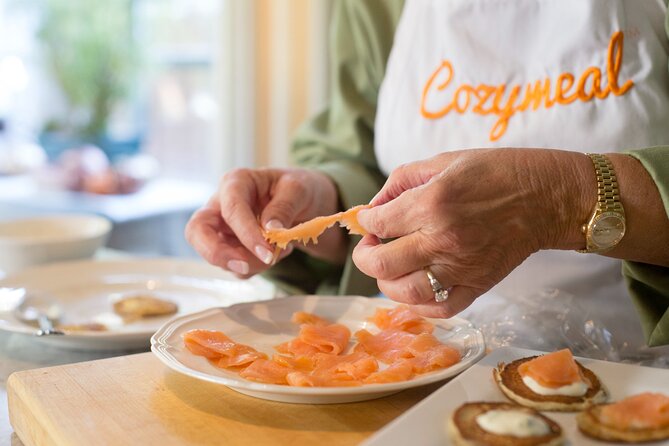
Fish tatsuta-age is fried fish with a crisp exterior. It comes with scallion sauce, adding a fresh, savory finish to the richer fried coating.
This is one of the most useful techniques in the class because it shows how Japanese cooking handles contrast. The fish is tender inside, while the outside brings crunch. The scallion sauce keeps the bite from feeling too heavy.
You will also get a clearer sense of the difference between cooking fish gently and cooking it at high heat. That becomes important later when the menu shifts to simmered yellowtail.
One detail worth noting is that a separate description of the cooking experience refers to tempura vegetables and grilled chicken skewers. The main menu for this class lists fish tatsuta-age, not those dishes, so you should book based on the six-course menu above rather than expecting additional skewers or tempura.
Fourth course: simmered yellowtail and daikon
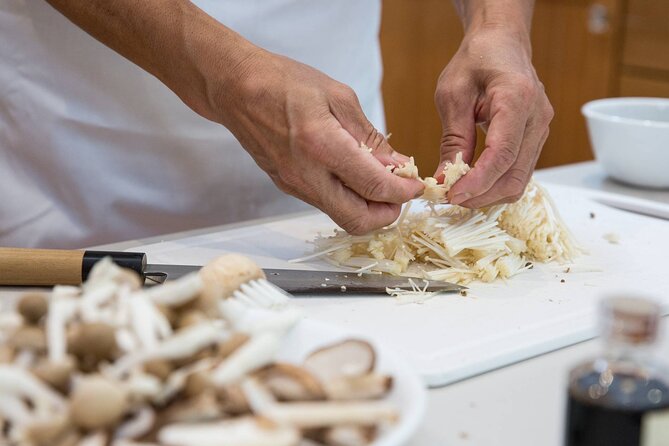
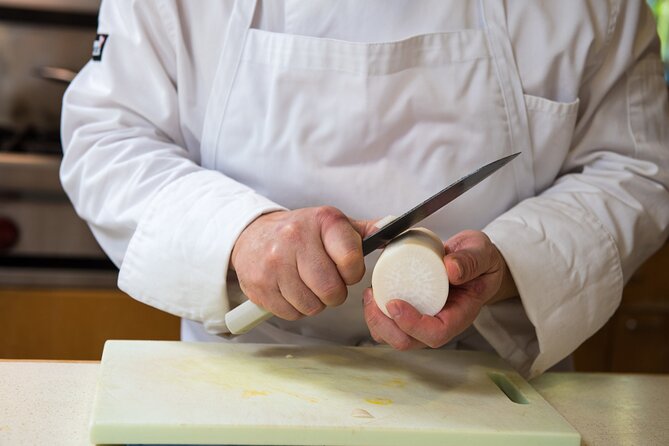
The fourth course changes direction with simmered yellowtail and daikon radish. Instead of crispness, this dish is about slow cooking and the way a firm vegetable absorbs the flavor of its cooking liquid.
Yellowtail gives the meal a substantial seafood course, while daikon adds a mild, earthy partner. Simmering is a central Japanese home-cooking method, and learning it alongside fried fish helps you compare two very different treatments of seafood.
This course may be the most useful for anyone who wants to take Japanese cooking ideas home. Simmered dishes reward patience and careful seasoning rather than complicated equipment. The class gives you a chance to see how a few ingredients can produce a comforting main course.
The menu does not specify the exact simmering time or seasoning ingredients. That is something you can ask Chef Yuki during the session. With only six people, questions like that should be easier to fit into the class than in a large demonstration.
Fifth course: mixed-rice onigiri
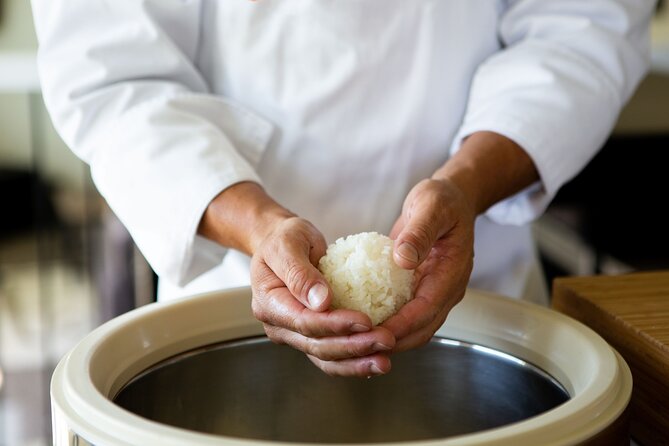
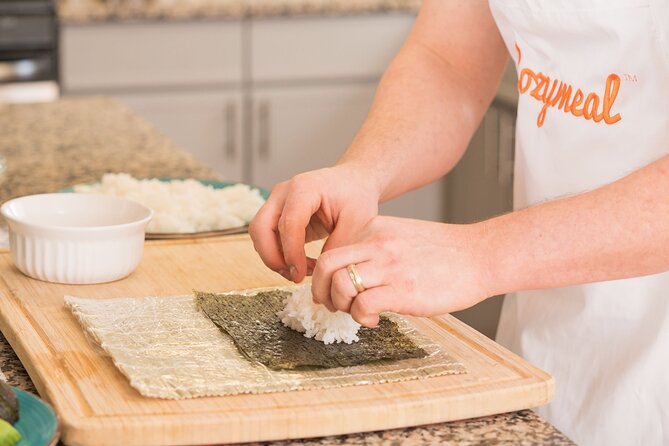
The fifth course is mixed rice onigiri with carrots and shimeji mushrooms. Onigiri is one of Japan’s most practical foods: seasoned rice shaped into a portable snack or small meal.
Here, the filling and flavor come from the rice mixture itself. Carrots add sweetness and color, while shimeji mushrooms contribute an earthy note. Shaping the rice by hand also gives you a simple skill you can repeat at home.
Onigiri is a particularly good choice for a visitor because it connects the cooking lesson with daily Japanese food culture. It is not just a ceremonial dish. It is an accessible way to use cooked rice and a few savory ingredients.
Be careful with hot rice and wet hands during the shaping step. The class is hands-on, so you will not simply watch the chef form each one. If you enjoy practical instruction, this is likely one of the most rewarding parts of the menu.
The sake pairing: two chilled pours and one warm
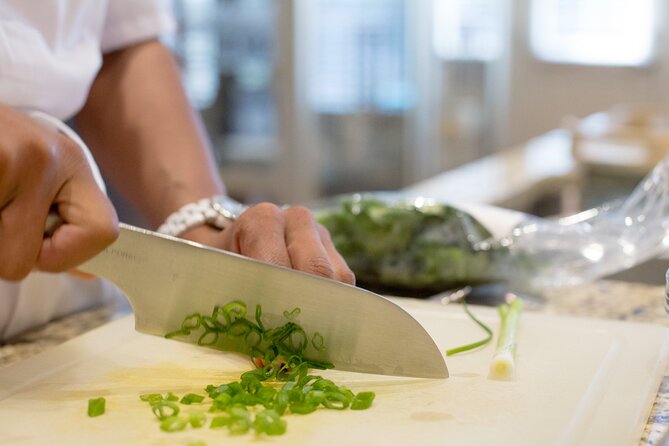
The final course is a sake pairing with three types of sake: two served chilled and one served warm. This is a tasting with a clear comparison built into it, rather than one glass poured throughout the meal.
Serving temperature can change the way sake tastes. The chilled pours may feel lighter and more direct, while the warm serving can seem softer and fuller. The point is not to memorize technical terms. It is to notice how the same broad drink category can vary with style and temperature.
The experience description also refers to preparing your own sake selections. Read that as a guided introduction to sake service and pairing, not as a full brewery visit or a lesson in brewing alcohol from raw ingredients. The class takes place in a cooking setting and pairs the drinks with the food you make.
You can bring wine and beer because this is a BYOB event. That is a useful extra for people who want another drink with the meal, but it is not a substitute for the planned sake course. The three sake servings are part of the six-course menu.
If you do not drink alcohol, ask about the options before booking. The supplied information confirms the sake pairing but does not list nonalcoholic alternatives.
What the $117.18 price gets you
At $117.18 per person, this is not the cheapest way to eat in Osaka. You can find excellent food for much less if your only goal is a meal.
The value improves when you count what is included: about three hours, a five-dish cooking session, a full meal, three sake servings, instruction from a local chef, and a small class capped at six people. You are paying for food plus time, guidance, and the chance to practice.
I would compare it with the cost of a typical food activity rather than with a single restaurant dinner. If you want to sit down, eat quickly, and move on, this class may feel expensive. If you want to learn techniques and spend part of your Osaka visit doing something active, the price is easier to justify.
The class is also a good fit for couples and small groups who want a shared activity. The included meal means you do not need to book a separate dinner immediately afterward, though appetites vary and no exact portion sizes are provided.
Who should book this experience
I would recommend this class to you if you enjoy food, want direct contact with a local cook, and prefer a small group. It is also a good choice if you regularly book cooking classes while traveling and want more than a basic sushi-rolling lesson.
The menu suits people who want variety. You will handle vegetables, seafood, rice, frying, simmering, and sake. That range makes the three hours feel purposeful.
It may also work well for a couple. One firsthand account describes taking the class with a partner and enjoying the relaxed pace, the fish tatsuta-age, octopus salad, onigiri, and sake pairing. That combination suggests a social experience as much as a technical one.
I would hesitate to recommend it if you dislike seafood, want a central Osaka meeting point with simple hotel access, or prefer a short tasting with no cooking. The class asks you to participate, and the menu is built around fish, octopus, and sake.
The dietary policy is helpful, but do not wait until the day of the class to raise an allergy or restriction. Send the information in advance and ask what substitutions are possible.
Booking, cancellation, and group details
You receive confirmation at the time of booking, and the activity accepts mobile tickets. Service animals are allowed. The maximum group size is six, which is one of the strongest practical features.
Cancellation is free up to 24 hours before the local start time. If you cancel within 24 hours, the payment is not refunded, and changes inside that window are not accepted.
The class also requires a minimum number of participants. If that minimum is not reached and the provider cancels, you will be offered another date or experience, or a full refund.
Those rules are standard enough, but the timing matters if your Osaka schedule is tight. Book it on a day when you have some flexibility, especially since the exact route to Yoshita is not detailed in the available information.
Should you book the Osaka sake and snack class?
Book it if you want an active food experience with a real meal at the end. The small group, named chef, wide menu, and three-part sake pairing give it more substance than a quick demonstration.
I would give it extra weight if you enjoy learning techniques you can repeat at home. The onigiri, vinegar salad, potato salad, fried fish, and simmered yellowtail each offer a different takeaway.
Skip it if you only want a cheap dinner, do not eat seafood, or need a meeting point clearly located beside Osaka’s main sights. For everyone else, $117.18 is a reasonable spend for three hours of cooking, eating, and guided sake tasting, provided you confirm the Yoshita location and share dietary needs before arrival.
FAQ
How long does the cooking class last?
The activity lasts approximately three hours.
Where does the class begin?
It begins at Yoshita, Higashiosaka, Osaka 578-0924, Japan.
Where does the activity end?
The class ends back at the meeting point.
How many people can join the class?
The maximum group size is six people.
What food will I prepare?
The menu includes wasabi garlic potato salad, octopus and cucumber vinegar salad with seaweed, fish tatsuta-age with scallion sauce, simmered yellowtail with daikon radish, and mixed-rice onigiri with carrots and shimeji mushrooms.
Is sake included?
Yes. The sixth course includes a sake pairing with three types of sake, two served chilled and one served warm.
Can I bring my own alcohol?
Yes. This is a BYOB event, and you may bring wine and beer to enjoy during the class.
Can dietary needs be accommodated?
The class is designed to accommodate a variety of dietary needs. Tell the provider about your preferences or restrictions in advance so the menu can be tailored where possible.
What is the cancellation policy?
You can cancel at least 24 hours before the local start time for a full refund. Cancellations or changes made less than 24 hours before the start are not refunded or accepted.
Newly added around Japan
- Wagyu BBQ & Sukiyaki with Sake Pairing Experience near Ginza★ 5.0 · 2 reviews
- Tokyo Sake Tasting Tour with a Sake Expert★ 5.0 · 7 reviews
- Sake Tasting and Cherry Blossom Fun in Tokyo!★ 5.0 · 4 reviews
- Private Sake Tasting at 300 Years Old Sake Brewery in Tokyo★ 5.0 · 3 reviews
- Tokyo: Serene Sakura & Sake: An Exclusive Brewery Pairing Lunch★ 5.0 · 2 reviews
- Sake Pairing Workshop with Japanese Food in Shinjuku★ 5.0 · 5 reviews
- Nagano: Snow Monkey and Zenkoji Temple Free Sake Taste Day Tour★ 4.5 · 8 reviews
- Japanese Sake Tasting and Masu Crafting Experience in Tokyo★ 5.0 · 9 reviews
Sake & Food Pairing Tours, compared.

3-Hour Kyoto Insider Sake Brewery Tour with Tastings & Pairings
Read our review →
Insider Sake Brewery Tour with Sake and Food Pairing
Read our review →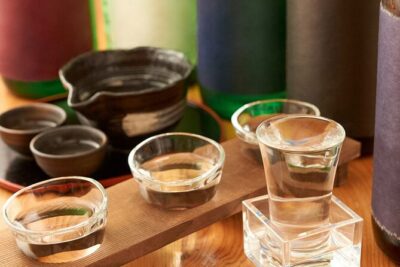
Ramen and Sushi Cooking Class with Sake Pairing Set in Tokyo
Read our review →
Wagyu & Sake Pairing in Shinjuku – Steak, Shabu-Shabu & More
Read our review →
Tokyo Wagyu & Sake Pairing Tasting Experience with Local Flavors
Read our review →
Cozy Tokyo Class: Ramen, Sushi, Sake Pairing & Cultural Exchange
Read our review →
Wagyu Beef and Sake Pairing Foodie Tour in Tokyo
Read our review →
7 Kinds of Sake Tasting with Japanese Food Pairings
Read our review →Browse the lists this tour appears in