
Reviewed · SAKE & FOOD PAIRING TOURS
Ramen and Sushi Cooking Class with Sake Pairing Set in Tokyo
Tokyo’s food culture comes into focus in this three-hour class, where you make sushi, prepare savory ramen broth, and pair the finished dishes with sake. The setting is small, relaxed, and personal, with no more than eight people in the room. Instructors such as Sato and Ryushi are known for keeping the mood warm while still teaching useful kitchen skills.
I like two things right away: you eat what you make, and the class gives you techniques you can repeat at home. The sushi gets the most hands-on attention, while the ramen lets you adjust elements to your taste. Sake is included, and several sessions have featured pleasant river views.
The main consideration is that this is not a full-day food tour or a restaurant crawl. It is one focused class, and the ramen portion may be less hands-on than the sushi work. Still, at $79.59, the meal, drinks, instruction, and small group make the price reasonable for Tokyo.
Key points at a glance
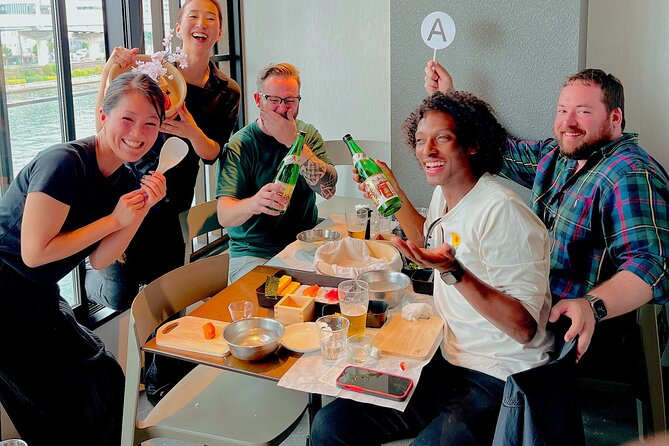
- Maximum eight people: You get close guidance rather than a crowded demonstration.
- Three Japanese staples: Make sushi, prepare ramen broth, and taste sake with the meal.
- Sushi is the most practical lesson: You get direct help with shaping and assembling your pieces.
- Ramen offers room to customize: The broth is prepared from scratch, though some steps are less hands-on.
- Instructors keep things friendly: Sato, Ryushi, Alex, Taka, and Kaori are among the team members associated with the class.
- Tsukishima location: The class meets at HAUS Tsukishima, with some sessions offering views toward the river.
Why this Tokyo cooking class works so well
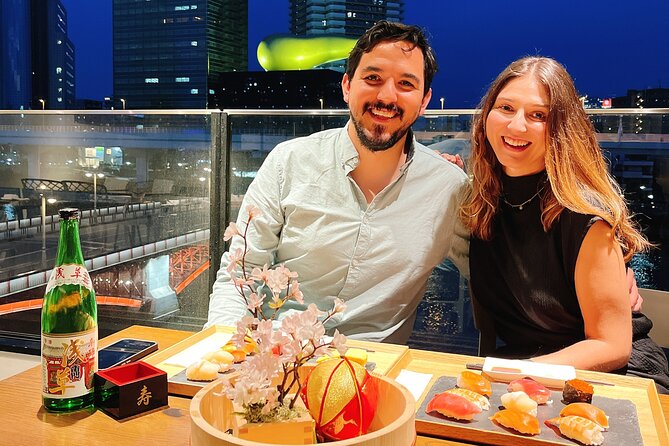
A good cooking class should leave you with more than a full stomach. It should help you understand why the food is prepared in a certain way, and it should give you enough practice to try it again at home.
That is the appeal here. You are not simply watching an instructor assemble a plate. You take part in the process, ask questions, and learn the small corrections that are hard to pick up from a video. One particularly useful feature is the personal guidance during sushi preparation. If you have tried making sushi at home and ended up with loose rolls or uneven pieces, close instruction can save a lot of frustration.
The class also includes stories and explanations about Japanese food culture. A quiz about sushi and ramen has been part of the fun in some sessions, adding a little structure without making the class feel like school. You get facts, technique, and a meal in one sitting.
The mood matters, too. The instructors are described as smiling, polite, and easy to approach. That is important if you are nervous about handling unfamiliar ingredients or feel unsure about your cooking skills. You do not need to arrive as a home chef. The format is built for beginners and curious food lovers.
More Sushi and Sake Tours in Tokyo:
- Sake Omakase in Tokyo: Guided Tasting by Certified Sommeliers
★ 5.0 · 239 reviews - Tokyo: Sushi and Ramen Cooking Class with Sake Pairing Set
★ 5.0 · 81 reviews - Tsukiji: Outer Market Walking Tour & Sake Tasting Experience
★ 4.9 · 81 reviews
Arriving at HAUS Tsukishima
The meeting point is HAUS Tsukishima, at Japan, 104-0051 Tokyo, Chuo City, Tsukuda, 2-chōme 13-5. You should allow enough time to find the building and arrive ready for the scheduled start, since the class lasts about three hours and changes within 24 hours of the start time are not accepted.
The activity begins and ends at the same location. There is no hotel pickup or drop-off, so you handle your own transport to Tsukishima. The meeting point is near public transportation, which makes the class practical to add to a day in central Tokyo.
The location adds a pleasant sense of place. Some participants have enjoyed views overlooking the river, which gives the cooking room a calmer feel than a windowless demonstration kitchen. The view is a bonus, not the main reason to book, but it can make the three-hour session feel more relaxed.
The group limit of eight is one of the strongest features. In a larger class, you might spend much of the time watching from a distance. Here, the instructor can see how you are holding the knife, shaping the sushi, or assembling the dish, then offer a quick correction.
Making sushi with close guidance
The sushi portion is likely to be the most hands-on part of the class. You work through the process with the instructor, rather than simply receiving a finished plate. That makes a real difference for anyone who wants to repeat the meal after returning home.
The instructors focus on practical technique and clear steps. You learn how to handle the ingredients, assemble the sushi, and create pieces that hold together. The exact menu details are not specified, so you should not expect a particular fish selection or a fixed sushi style beyond the class description. What is clear is that the ingredients and the meal are included.
This part suits beginners especially well. Sushi can look simple until you try to make it yourself. Rice texture, proportion, pressure, and neat assembly all matter. A small correction from Sato, Ryushi, Alex, Taka, or Kaori can be more useful than watching several online tutorials.
You then eat the sushi you prepared. That sounds obvious, but it gives the lesson a satisfying purpose. You can see how your work turned out, compare your pieces with the instructor’s method, and enjoy the meal while the preparation is still fresh in your mind.
The class also works well for couples, siblings, and friends. One account describes only a few people in the room, allowing the chef to offer personal help. That smaller setup can make the experience feel social without becoming noisy or impersonal.
Building ramen broth from scratch
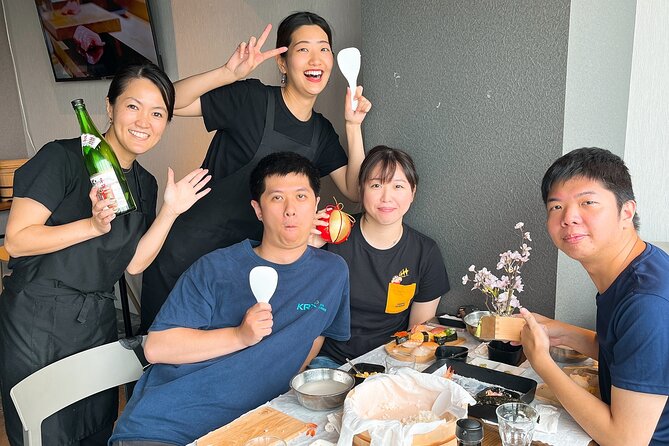
The ramen section adds a different kind of lesson. Sushi rewards careful shaping and assembly, while ramen depends more on broth, toppings, balance, and personal preference.
You prepare savory broth from scratch and learn about the parts that give ramen its character. The exact broth formula is not provided, so I would not book this expecting a detailed recipe for a specific regional style. The useful point is that you work with the building blocks of the dish rather than simply eating a bowl made in advance.
The ramen work may be less hands-on than the sushi preparation. Some steps can involve preparation by the teaching team, while you have more say in how the final bowl comes together. That is not a serious flaw, but it is worth knowing if your main goal is to spend every minute cooking.
You can adjust elements to your preference, which adds a bit of freedom to the meal. Pork belly has been singled out as a memorable part of the ramen in one session. Again, the ingredients may vary, so treat that as an example rather than a guarantee.
Ramen is also a good counterpoint to sushi. The class does not focus on one narrow technique. You leave with experience preparing a fresh, assembled dish and a warm noodle bowl, plus a better sense of how Japanese meals balance texture and flavor.
More Sake and Food Pairings in Tokyo:
- Wagyu & Sake Pairing in Shinjuku – Steak, Shabu-Shabu & More
★ 5.0 · 112 reviews - Tokyo Wagyu & Sake Pairing Tasting Experience with Local Flavors
★ 5.0 · 108 reviews - Cozy Tokyo Class: Ramen, Sushi, Sake Pairing & Cultural Exchange
★ 5.0 · 74 reviews - Wagyu Beef and Sake Pairing Foodie Tour in Tokyo
★ 5.0 · 71 reviews
Sake pairings with the meal
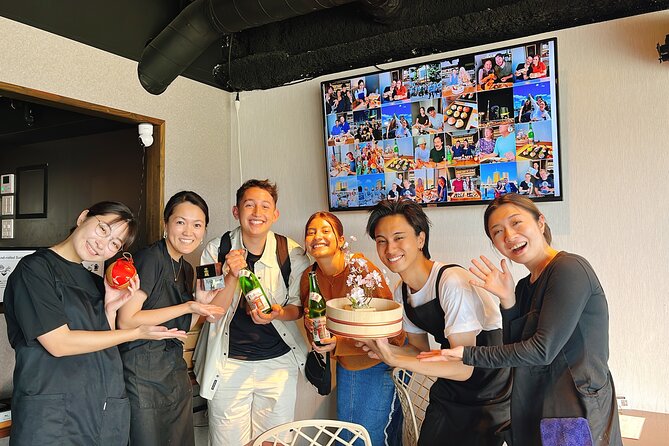
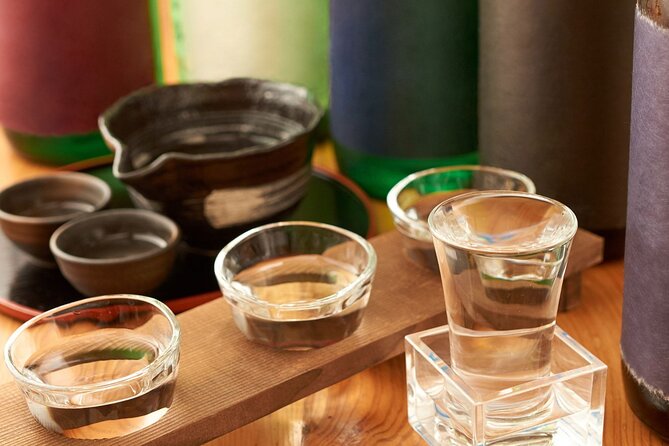
Sake is included, and the class pairs selected drinks with the food you prepare. This makes the activity more than a cooking demonstration. You get to consider how the drink works with sushi and ramen, rather than tasting sake separately with no food context.
The sake has been described as smooth and high quality in past sessions. The details of the labels and number of pours are not provided, so you should not assume this is a formal tasting with extensive technical instruction. Think of it as a food pairing built into the meal.
All drinks are included, which helps the $79.59 price feel easier to judge. A similar class with separate drink charges could cost more than expected. Here, you can take part in the central food and drink experience without adding a surprise beverage bill.
If you do not drink alcohol, confirm the arrangements before booking, since the included package specifically mentions sake and all drinks but does not describe nonalcoholic alternatives. Service animals are allowed, and the activity is near public transportation.
The teaching style and group atmosphere
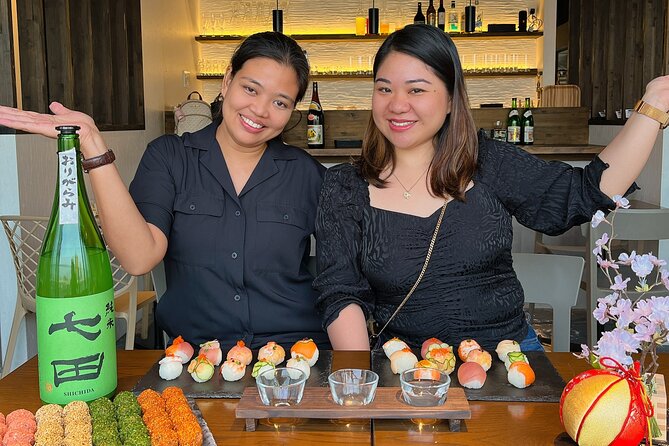
The strongest part of the experience is the human side of the class. The teaching team aims for a friendly, relaxed room, with plenty of smiles and conversation. You can expect instruction in English and an atmosphere that does not require perfect cooking skills or prior knowledge of Japanese cuisine.
Sato and Ryushi are among the instructors connected with the class, while Alex, Taka, and Kaori have also led or appeared in sessions. The exact instructor depends on the date, but the overall approach is personal and encouraging.
That matters for a hands-on class. You want someone to notice when your sushi is too loose, when an ingredient is being handled awkwardly, or when you need the next step repeated. With eight people or fewer, the instructor has a fair chance to do that.
The class also leaves room for laughter. This is not a silent technical workshop. The relaxed tone makes it a good choice for an afternoon activity, a date, or a family outing. You can learn something useful without feeling tested.
Is $79.59 a fair Tokyo food experience price?
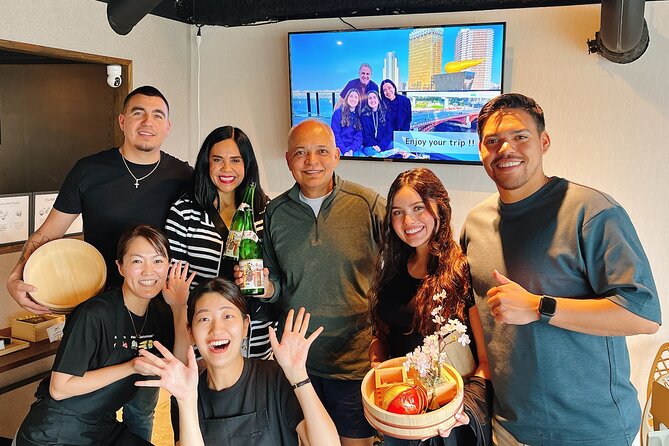
At $79.59 per person, the cost is not the cheapest way to eat ramen or sushi in Tokyo. You could find a very good bowl of ramen for much less, and sushi restaurants offer meals across a wide range of prices.
But that comparison misses the point. You are paying for ingredients, a three-hour activity, an English-speaking instructor, a prepared meal, included drinks, and direct help in a group capped at eight. The value is strongest if you want a skill-based experience rather than another restaurant meal.
The price also covers two major Japanese dishes and sake in one session. If you were considering separate sushi and cooking activities, this combined format could be more efficient. It also gives you a memorable break from sightseeing, especially if you have spent several days moving through busy parts of Tokyo.
I would consider it good value for first-time visitors, food lovers, and anyone who likes to bring home a practical memory. It is less useful for an experienced Japanese cook seeking advanced knife work, specialist recipes, or a long technical workshop, since the class is designed as a welcoming introduction.
Who should book this class?
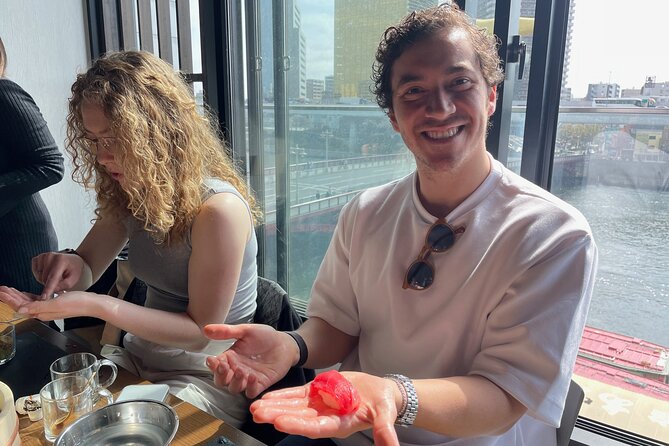
You should consider booking if you want a social activity with a real meal at the end. It works particularly well for couples and small groups, but solo participants can also fit comfortably into a group of eight.
This is a strong choice for:
- First-time visitors who want a direct connection to Japanese food culture
- Beginners who learn better by doing than watching
- Food lovers who want sushi, ramen, and sake in one activity
- Families or friends looking for a shared afternoon
- Visitors who want an English-language class
- Anyone who enjoys a relaxed setting rather than a large tour
You may want to choose something else if your priority is a restaurant-focused tasting, a market tour, or advanced culinary training. The ramen preparation is not described as fully hands-on at every stage, and the menu details are not fixed in the information provided.
The class is also not ideal if you need hotel transport. You must make your own way to Tsukishima and return from the same meeting point.
Timing, cancellation, and practical details
The activity lasts approximately three hours. It includes the English-speaking instructor, cooking ingredients, the meal, and all drinks. Hotel pickup and drop-off are not included.
Confirmation is provided when you book, and the ticket is mobile, so you do not need a printed voucher. The activity has a maximum of eight people, and service animals are allowed.
Free cancellation applies when you cancel at least 24 hours before the scheduled start time. A cancellation within 24 hours is not refunded, and changes within that period are not accepted. The cut-off follows Tokyo local time, so keep that in mind if you are booking from another country.
Final call: should you book it?
I would book this class if you want to do more than take pictures of Japanese food. The small group, personal sushi instruction, made-from-scratch ramen broth, included sake, and friendly teaching style give the experience real substance.
The best reason to choose it is the balance. You get instruction without a stiff classroom mood, a meal without merely sitting at a restaurant, and cultural context without a long lecture. The river view and warm staff add to the setting, but the practical sushi guidance is the real draw.
At $79.59, it is a fair buy for a three-hour Tokyo activity that includes food and drinks. Just remember that ramen may involve more customization than hands-on cooking, and that you will need to reach HAUS Tsukishima on your own. If those points suit your plans, this is an easy way to spend an afternoon making, eating, and understanding two of Japan’s most recognizable dishes.
FAQ
How long does the ramen and sushi cooking class last?
The class lasts approximately three hours.
Where does the class meet?
It meets at HAUS Tsukishima, Japan, 104-0051 Tokyo, Chuo City, Tsukuda, 2-chōme 13-5.
Where does the activity end?
The activity ends back at the meeting point.
What food and drinks are included?
The ingredients, the meal, and all drinks are included. The class covers sushi, ramen broth, and sake pairings.
Is an English-speaking instructor included?
Yes. An English-speaking instructor leads the class.
How many people can join the class?
The maximum group size is eight people.
Is hotel pickup and drop-off included?
No. You must make your own way to the meeting point, and hotel transportation is not included.
Are service animals allowed?
Yes, service animals are allowed.
What is the cancellation policy?
You can cancel at least 24 hours before the start time for a full refund. Cancellations made less than 24 hours before the start time are not refunded, and changes during that period are not accepted.
More Cooking Classes with Sake in Tokyo
- Tokyo: Sushi Cooking Class with Sake Tasting
★ 4.8 · 55 reviews - Tokyo Sushi Making Class : Sake Ceremony & Matcha Experience
★ 5.0 · 44 reviews - Japanese Sake Tasting & Wagyu Sukiyaki Cooking Class in Tokyo
★ 5.0 · 10 reviews - Osaka Sake Tasting with Takoyaki Cooking
★ 5.0 · 156 reviews
Newly added around Tokyo
- Japanese Sake Tasting & Wagyu Sukiyaki Cooking Class in Tokyo★ 5.0 · 10 reviews
- Tokyo Sake Tour with a Local Guide, Private & Tailored to Your Taste★ 4.0 · 12 reviews
- 7 Kinds of Sake Tasting with Complementary Foods★ 5.0 · 11 reviews
- Wagyu Beef & Sake Pairing Foodie Tour in Tokyo★ 5.0 · 16 reviews
- Luxury Tokyo Sake, Cocktail, Whisky and Pairing Tour★ 5.0 · 18 reviews
- 10 kinds Sake Tasting Experience in Tsukiji with local!!★ 5.0 · 19 reviews
- Sake & Food Pairing with Sake Professional★ 5.0 · 28 reviews
- Private Tour: Tokyo’s Oldest Sake Brewery and Riverside Walk★ 5.0 · 25 reviews
Sake & Food Pairing Tours, compared.

3-Hour Kyoto Insider Sake Brewery Tour with Tastings & Pairings
Read our review →
Insider Sake Brewery Tour with Sake and Food Pairing
Read our review →
Wagyu & Sake Pairing in Shinjuku – Steak, Shabu-Shabu & More
Read our review →
Tokyo Wagyu & Sake Pairing Tasting Experience with Local Flavors
Read our review →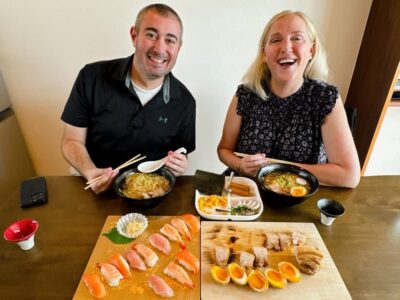
Sushi and Ramen Cooking Class with Sake Pairing Set
Read our review →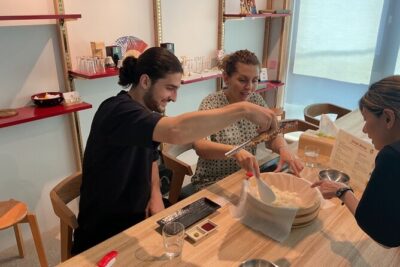
Cozy Tokyo Class: Ramen, Sushi, Sake Pairing & Cultural Exchange
Read our review →
Wagyu Beef and Sake Pairing Foodie Tour in Tokyo
Read our review →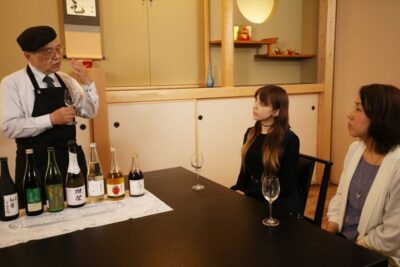
7 Kinds of Sake Tasting with Japanese Food Pairings
Read our review →Browse the lists this tour appears in