
Reviewed · SAKE TASTING
Tokyo: 7 Kinds of Sake Tasting with Japanese Food Pairings
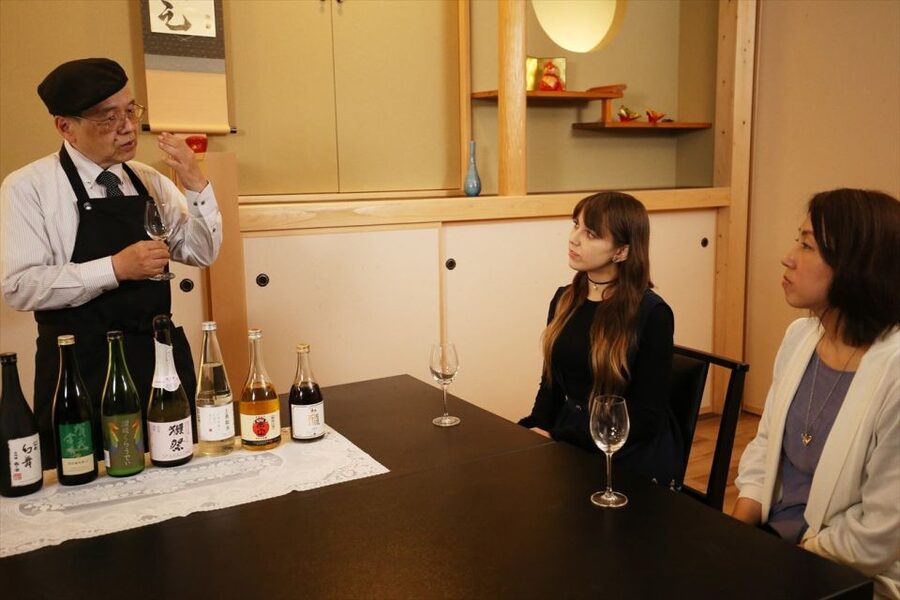
The best part of this Tokyo tasting is the seven-step sake lineup. You move from sparkling and sweet pours to savory styles and finish with dessert sake, with a small food pairing for every sample. It gives you a useful map of sake instead of leaving you with one glass and a vague idea that all rice wine tastes alike.
I like the intimate group size, which is capped at 10 and may be smaller. I also like the practical food matches, including Japanese cheese, crudités, duck, and hot dishes prepared during the session. The main drawback is the meeting point: the Kikai Shinko Kaikan building can be hard to spot and the tasting room is in the basement, so allow extra time to find it.
Key points to know before booking
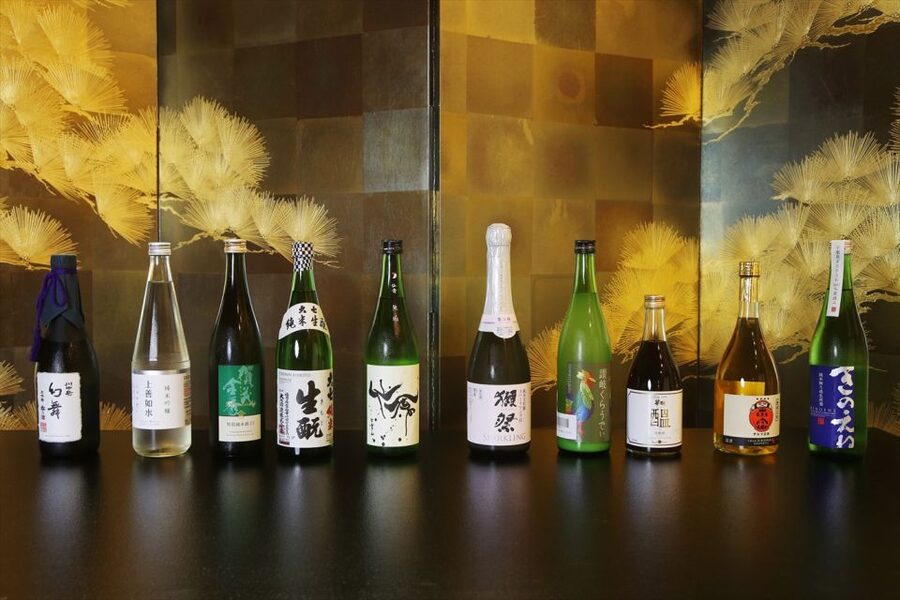
- Seven sake styles in 75 minutes: You taste a broad range, including sparkling, sweet, savory, and dessert-style sake.
- Seven food pairings: Each pour comes with a bite, including Japanese and Western dishes selected to show how food changes the drink.
- English instruction from an accredited guide: The session covers sake production, varieties, serving, and its place in Japanese religion and tradition.
- Small groups capped at 10: The format leaves room for questions and can feel quite personal when attendance is low.
- A basement teaching kitchen near Tokyo Tower: The setting is practical rather than scenic, but some food is cooked in front of you and served hot.
- Meeting instructions matter: Start at the main entrance on the first floor, and use True Japan Tour, Room B109, downstairs if you cannot find the instructor.
Seven sake styles, not just seven glasses
This tasting is built around comparison. That matters because sake can vary widely in sweetness, aroma, texture, and finish. If you have only tried one bottle at a restaurant, seven samples let you notice how different production choices affect the final drink.
The selection includes sparkling sake, sweeter styles, savory pours, and a dessert sake. The exact brands and order may vary, but the point is clear: you are not being served seven near-identical samples. The session moves across the sake spectrum.
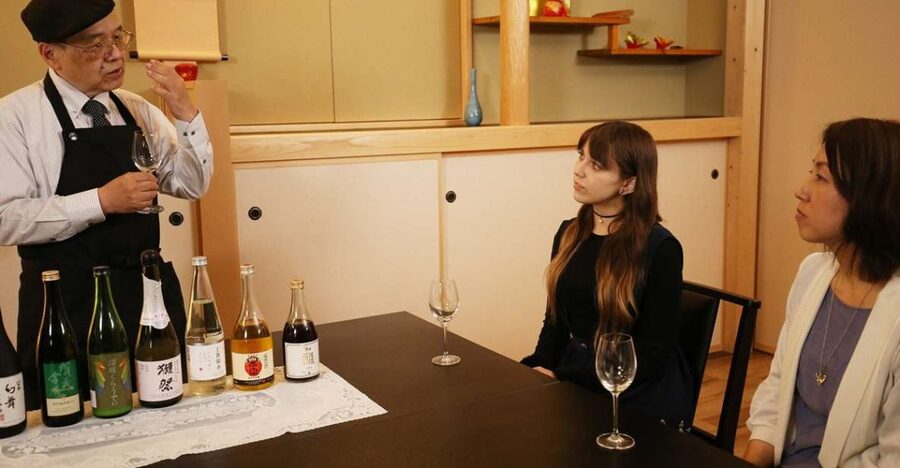
Your instructor explains how sake is made and why different varieties taste the way they do. The lesson includes the role of rice, production methods, and the types of sake available in Japan. You do not need prior knowledge. The format is designed to help you taste first, then connect what you notice with the explanation.
That makes this more useful than a simple bar flight. You can ask why one sake feels lighter, why another seems sweet, or why a particular pour works better with duck than with cheese. The small-group setting also means questions are part of the experience rather than an interruption.
More Sake and Food Pairings in Tokyo:
- Ramen and Sushi Cooking Class with Sake Pairing Set in Tokyo
★ 5.0 · 291 reviews - Wagyu & Sake Pairing in Shinjuku – Steak, Shabu-Shabu & More
★ 5.0 · 112 reviews - Tokyo Wagyu & Sake Pairing Tasting Experience with Local Flavors
★ 5.0 · 108 reviews
What happens during the 75 minutes
The experience takes place in Minato City, across from Tokyo Tower. You meet your instructor at the main entrance of the Kikai Shinko Kaikan building on the first floor. The tasting itself takes place in a basement room used as a demonstration kitchen and lunch space for cooking classes.
That setting may surprise you. You are not entering a grand sake brewery or a traditional restaurant. Instead, you sit in a functional teaching room where the food and drink can be explained side by side. For this particular activity, that is a fair trade. The room supports the lesson, and some dishes are prepared in front of you.
The session begins with an introduction to sake and its place in Japan. Sake has been part of Japanese culture for more than 1,000 years and is tied to religious ceremonies and tradition as well as everyday dining. This context helps explain why the drink is more than a Japanese version of table wine.
From there, the tasting moves through seven pours. Each one comes with a food pairing, so you are constantly comparing the drink on its own and alongside food. Some bites are served cold, while others may be cooked during the session and brought to you hot.
The final sample is dessert-style sake. Ending with a sweet pour gives the tasting a clear progression and helps show how sake can work with dessert, not only savory Japanese dishes.
Why the food pairings make a difference
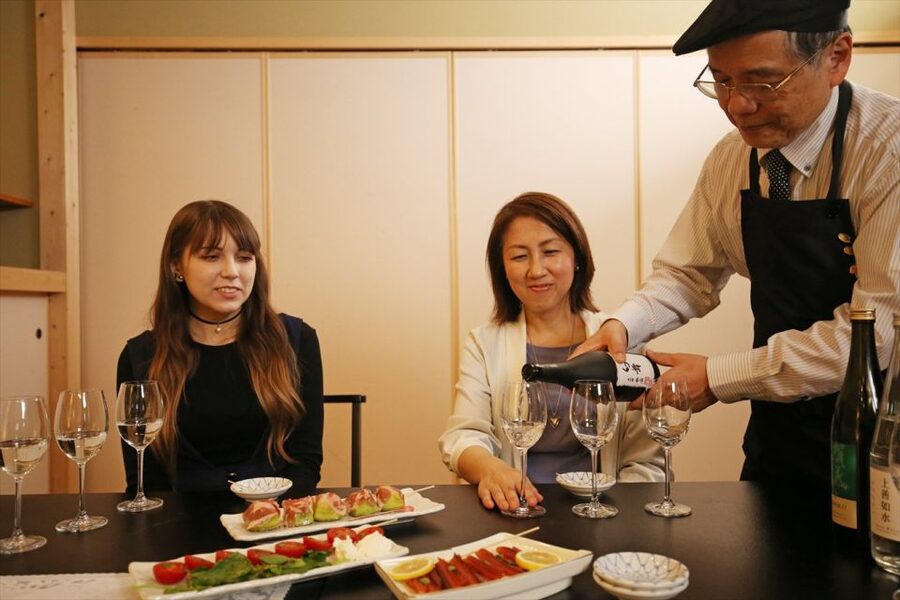
The food is not just a snack between drinks. It is the teaching tool that makes the tasting easier to understand.
A bite of Japanese cheese can bring out a sake’s sweetness or soften a sharper edge. Crudités give you a clean, fresh comparison. Duck offers a richer pairing, while hot dishes add a different texture and aroma. The pairings include both Japanese and Western food, which makes the lesson useful after you leave Japan. You can think about matching sake with familiar foods at home, not only sushi or tempura.
I especially like the inclusion of cooked items. A dish prepared in front of you and served warm feels more substantial than a plate of packaged nibbles. The meal is still a tasting rather than a full lunch or dinner, but the seven bites make the $106 price easier to assess.
Do not expect seven large servings of food. The focus is guided tasting, and the portions are designed to pair with each sample. You should arrive ready to taste and learn, not expecting a long restaurant meal.
The teaching style and the people leading it
The instruction is in English and comes from a nationally accredited sake instructor. The strongest feature here is the human scale of the session. With a maximum of 10 people, the instructor can explain the differences among the pours and respond to individual questions.
Guides identified in the experience include Tanaka-san and Taka-san. The session can also be led by a training sake sommelier, depending on the guide assigned. That wording should not concern you. The format is built around instruction, and the guide can explain production, tasting, and the kinds of sake sold in Japan.
The tone is friendly rather than formal. You can expect a lesson with conversation, not a lecture delivered from a distance. Several bookings have had only two people in attendance, creating something close to a private tasting. You should not count on that, but the small maximum keeps the group from becoming unwieldy.
This works especially well for curious beginners. You can ask basic questions without feeling out of place, while people who already enjoy sake can focus on regional differences, serving styles, and food matches.
More Sake Tastings in Tokyo:
- Sake Tasting Masterclass in Shinjuku (8+ Varieties with a Pro)
★ 5.0 · 271 reviews - Sake Omakase in Tokyo: Guided Tasting by Certified Sommeliers
★ 5.0 · 239 reviews - Casual Japanese SAKE tasting and snack experience in Kabukicho
★ 5.0 · 159 reviews - Tasting All Types of Sake with Sommelier
★ 5.0 · 151 reviews
A practical meeting point near Tokyo Tower
The building is directly opposite Tokyo Tower, which gives you a useful landmark. The entrance itself is less obvious than the tower. Some people have circled the building before finding the correct door, and the basement location can feel unexpected if you are looking for a bar or restaurant.
Use these instructions:
- Go to the main entrance of Kikai Shinko Kaikan on the first floor.
- Look for your instructor there.
- If you cannot find the instructor, visit True Japan Tour in Room B109 on the basement level.
- Allow extra time for the building search, especially if you are arriving shortly before the start.
The room number has caused confusion in the past, so check your current booking details and do not rely only on a quick glance at the building exterior. The activity provider is True Japan Tour, and the basement office is the fallback point.
There is no hotel pickup or drop-off. You need to reach Minato City on your own. Since the activity lasts only 75 minutes, arriving late would take a noticeable bite out of the tasting.
Is $106 a fair price?
At $106 per person, this is not a cheap way to drink sake. It is also not simply a seven-glass flight. The fee includes seven samples, seven food pairings, an English-language lesson, and an accredited instructor. The value depends on how much you want to understand the drink rather than just sample it.
For a sake fan, the price is easier to justify because you get comparison, guidance, and food. You can learn which styles appeal to you before buying bottles in Japan. That can save money later, especially when a shop presents dozens of unfamiliar labels.
For a first-time drinker, the cost makes sense if you want a structured introduction in English. You receive enough range to discover whether you prefer sweet, sparkling, savory, or dessert-style sake. If you only want one drink near Tokyo Tower, this is more than you need.
The food also adds value. Cheese, vegetables, duck, and other prepared bites turn the experience into a short tasting meal. Still, keep the scale in mind. Seven pairings mean seven small portions, not a seven-course dinner.
Who will enjoy this most
I would recommend this to you if sake is already on your list for Japan, or if you want a clear introduction before ordering it elsewhere. It suits couples, solo visitors, and small groups who like food lessons with their sightseeing.
It is also a good choice for people who enjoy Japanese culture beyond temples and shopping. The discussion of sake’s role in religion and tradition gives the drink a place in daily life and ceremonial practice. You leave with a better sense of why sake matters in Japan, not just how it tastes.
The experience is less suitable if you dislike alcohol, want a large meal, or prefer a scenic outdoor activity. The room is a basement teaching space, and the session is compact. You are there to taste, listen, compare, and ask questions.
Participants must be at least 20 years old. The activity is wheelchair accessible, which is useful to know given the indoor setting, though you should still confirm current access details when booking if you have specific mobility needs.
Small details that improve the experience
Arrive early. The location is the clearest weakness, and a few extra minutes can prevent a rushed start.
Eat lightly beforehand. The seven pairings provide food, but they are tasting portions. You want enough in your stomach for seven samples without arriving too full to notice the differences.
Take mental notes. You may taste a style you would never choose from a menu because the label is unfamiliar. Pay attention to what you like with food, not only which sake tastes best by itself.
Ask about serving and buying. The lesson covers the types of sake available in Japan, so this is your chance to ask how to recognize a style you enjoyed. The more specific your question, the more useful the session becomes.
Finally, plan your sightseeing around the tasting. Tokyo Tower is directly opposite the building, so the activity fits neatly into a Minato City visit. The tasting itself is short enough to combine with other plans, but do not schedule it so tightly that a difficult building entrance causes stress.
Should you book this sake tasting?
Book it if you want a friendly, focused introduction to sake with real food attached. The strongest reasons are the seven-style range, the seven pairings, and the small group format. The English instruction also removes much of the guesswork for first-time drinkers.
Think twice if you are seeking a traditional setting, a full meal, or a simple scenic drink. The basement teaching room is practical, and finding the entrance takes more effort than it should.
For most food-and-drink lovers, this is a good use of 75 minutes in Tokyo. You taste widely, learn how sake is produced, and finish with a dessert pour that gives the session a satisfying close. Just mark the meeting instructions clearly and treat the $106 fee as payment for a guided lesson and tasting meal, not seven ordinary drinks.
FAQ
Where does the sake tasting take place?
The meeting point is the main entrance of the Kikai Shinko Kaikan building on the first floor, directly opposite Tokyo Tower in Tokyo’s Minato City. The tasting room is in the basement.
What should I do if I cannot find the instructor?
Go to True Japan Tour in Room B109 on the basement level of the Kikai Shinko Kaikan building.
How many sake samples are included?
Seven sake samples are included. The selection can include sparkling, sweet, savory, and dessert-style sake.
How many food pairings are included?
Seven food pairings are included, with Japanese and Western dishes served alongside the sake.
Is the activity conducted in English?
Yes. The instructor speaks English, and the session covers sake production, varieties, tasting, and cultural use.
How long does the experience last?
The tasting lasts 75 minutes.
Who can take part?
Participants must be at least 20 years old. The activity is wheelchair accessible, and the group is limited to 10 participants.
Newly added around Tokyo
- Japanese Sake Tasting & Wagyu Sukiyaki Cooking Class in Tokyo★ 5.0 · 10 reviews
- Tokyo Sake Tour with a Local Guide, Private & Tailored to Your Taste★ 4.0 · 12 reviews
- 7 Kinds of Sake Tasting with Complementary Foods★ 5.0 · 11 reviews
- Wagyu Beef & Sake Pairing Foodie Tour in Tokyo★ 5.0 · 16 reviews
- Wagyu & Sake 8 Course Tasting Dinner in Shinjuku★ 4.9 · 20 reviews
- Luxury Tokyo Sake, Cocktail, Whisky and Pairing Tour★ 5.0 · 18 reviews
- 10 kinds Sake Tasting Experience in Tsukiji with local!!★ 5.0 · 19 reviews
- Sake & Food Pairing with Sake Professional★ 5.0 · 28 reviews
Sake Tasting, compared.

3-Hour Kyoto Insider Sake Brewery Tour with Tastings & Pairings
Read our review →
Sake Tasting Masterclass in Shinjuku (8+ Varieties with a Pro)
Read our review →
Insider Sake Experience with 7 Tastings and Snacks
Read our review →
Sake Omakase in Tokyo: Guided Tasting by Certified Sommeliers
Read our review →
Private Tea Ceremony and Sake Tasting in Kyoto Samurai House
Read our review →
Casual Japanese SAKE tasting and snack experience in Kabukicho
Read our review →
Browse the lists this tour appears in