
Reviewed · SAKE COOKING CLASSES
Osaka Home Feast Cooking and Sake Experience
Osaka’s food culture makes the most sense when you cook it yourself. This three-hour evening begins with a local supermarket visit, then moves into a small kitchen for takoyaki, wasabi tuna, and chicken with mayo and ponzu. It feels less like a formal lesson and more like being welcomed into a friend’s kitchen.
I like the supermarket stop, because it shows you the ingredients before they are chopped and disguised in a recipe. I also like the small maximum of seven people, along with guides such as Chie and Nina, who can answer questions and adjust the mood for a couple, family, or solo guest.
The main consideration is timing. You meet at 4:30 pm and spend the full evening cooking and eating, so this is not a quick tasting or a polished restaurant meal. You will need to follow directions, share kitchen space, and be comfortable with a meal built around seafood, chicken, mayonnaise, ponzu, and sake.
Key points to know before booking
- A supermarket visit comes first: You shop for Japanese ingredients and help think up unusual takoyaki fillings before cooking.
- The menu is practical and very Osaka: You prepare crispy takoyaki, Mugen Cabbage, wasabi-marinated tuna, and chicken with green onion, mayo, and ponzu.
- Sake is part of the meal: Handpicked pairings accompany the food, with beer and soft drinks available too.
- The group is capped at seven: This gives the English-speaking guide room to talk with you and help at the stove.
- The evening has a home-drinking feel: The meal is served in a relaxed taku-nomi style rather than as a formal restaurant course.
- You receive recipes afterward: A downloadable recipe pack helps you repeat the dishes at home.
Why this Osaka cooking class feels different
Many cooking classes begin with premeasured ingredients waiting on a counter. This one begins before the apron goes on. You meet at the FamilyMart on the south side of Minamimorimachi Station and walk to a nearby Japanese supermarket with your guide.
That shopping trip gives the evening a useful sense of place. You can see the packaging, produce, sauces, seafood, and other ingredients as Japanese shoppers see them. You also get to think about takoyaki fillings before the cooking starts. That small choice matters, since takoyaki is not just a fixed recipe. The round batter snacks are a perfect canvas for playful fillings.
The supermarket visit also gives you a taste of ordinary Osaka life without turning the evening into a sightseeing lecture. One solo participant found the shopping especially interesting, including the local habit of shoppers bagging their own purchases. Details like this are easy to miss when you only eat in restaurants.
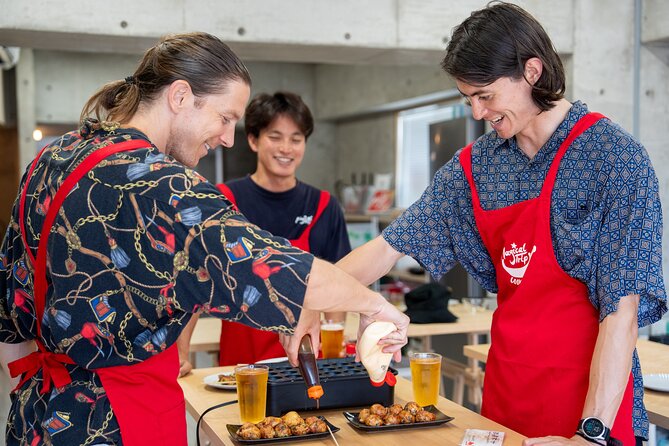
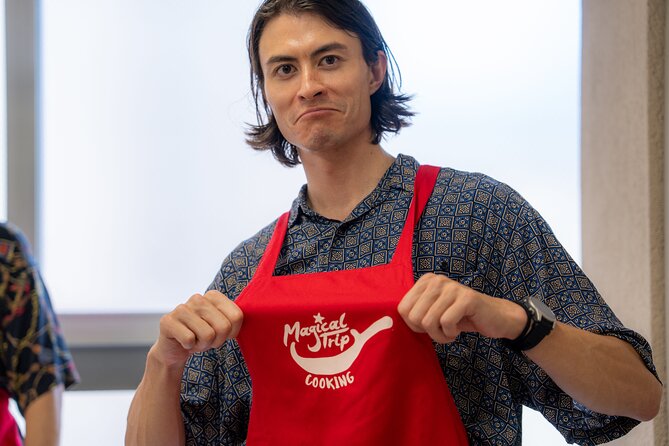
After shopping, you head to a cozy cooking studio and put on a MagicalTrip apron. The setting is designed for participation, not for sitting back while someone else cooks. You will handle ingredients, listen to the guide, and build the meal step by step.
More Cooking Classes with Sake in Japan:
- Ramen and Sushi Cooking Class with Sake Pairing Set in Tokyo
★ 5.0 · 291 reviews - Osaka Sake Tasting with Takoyaki Cooking
★ 5.0 · 156 reviews - Osaka Sake Tasting & Takoyaki Cooking Experience
★ 5.0 · 149 reviews
Meeting Chie, Nina, or another local guide
The activity uses an English-speaking local guide, and the individual guide can vary. Chie has led an evening that combined cooking with a broader conversation about Japan, answering questions along the way. Nina has also hosted a private-feeling class for a solo participant and made the experience work well even with only one person booked.
That flexibility is important. A class can feel awkward when the group is too large or the host sticks rigidly to a script. Here, the maximum is seven, and the available experiences suggest the guide can give attention to the people actually in the room.
You should still think of this as a social cooking class rather than a private chef lesson. You may share tasks and counter space with others. If you enjoy asking questions and eating together, that is a strength. If you want total control over the menu or a quiet one-on-one lesson, the format may feel less tailored.
The 4:30 pm start is well chosen for an Osaka evening. You shop before dinner, cook as the night settles in, and finish back at the same meeting point. The full experience lasts about three hours, so plan for an early evening rather than a short stop between major attractions.
Shopping for takoyaki ingredients in Minamimorimachi
The meeting point is the FamilyMart at Minamimorimachi Station, south side, in Kita Ward’s Tenjinbashi area. The precise meeting address is FamilyMart Minamimorimachi station South side, Tenjinbashi 2-chome 3-10, 1F, Osaka 530-0041.
You should allow enough time to find the store and arrive ready for a 4:30 pm start. The activity is near public transportation, which makes the meeting point practical, but the cooking experience ends back there rather than at a separate restaurant or sightseeing district.
At the supermarket, the guide helps you identify ingredients and discuss possible takoyaki fillings. This part is valuable because it connects the food to the way people shop and cook. You are not simply told that takoyaki is an Osaka specialty. You see the ingredients, consider combinations, and then turn them into dinner.
The exact fillings are not fixed in the details provided, so you should expect some choice without assuming a particular ingredient. That is a plus for adventurous eaters, but it also means anyone with strict dietary needs should ask before booking. The stated menu includes tuna, chicken, mayonnaise, ponzu, and sake, so you should check whether those suit you.
Cooking Mugen Cabbage and wasabi tuna
Once you reach the studio, the cooking begins with simpler dishes that give you something to eat while the main items come together. Mugen Cabbage and Wasabi Tuna Salad appear early in the meal.
Mugen Cabbage is a useful opening dish because it is quick, savory, and suited to a casual drinking table. The wasabi tuna brings a sharper Japanese flavor. It is not just a decorative side dish. The wasabi gives you a direct lesson in balance, especially when paired with a drink.
These early bites help the evening feel like an actual izakaya meal. In Japan, an izakaya is a casual drinking-and-eating place where small dishes arrive over time. You will not simply prepare one recipe, sit down, and leave. The food builds gradually while you sip and talk.
That format also makes the class easier for beginners. You can start eating before every dish is complete, and you get a chance to taste as you go. I like this more than a single final reveal because you learn how texture and seasoning change during the process.
More Sake Tours in Japan:
- 1-Day Snow Monkeys, Zenko-ji Temple & Sake in Nagano
★ 5.0 · 1,020 reviews - 3-Hour Kyoto Insider Sake Brewery Tour with Tastings & Pairings
★ 5.0 · 917 reviews - Nagano: Snow Monkeys, Zenkoji Temple & Sake Day Trip
★ 4.9 · 833 reviews - Kyoto: Insider Sake Brewery Tour with Sake and Food Pairing
★ 5.0 · 704 reviews
Making crispy Osaka takoyaki
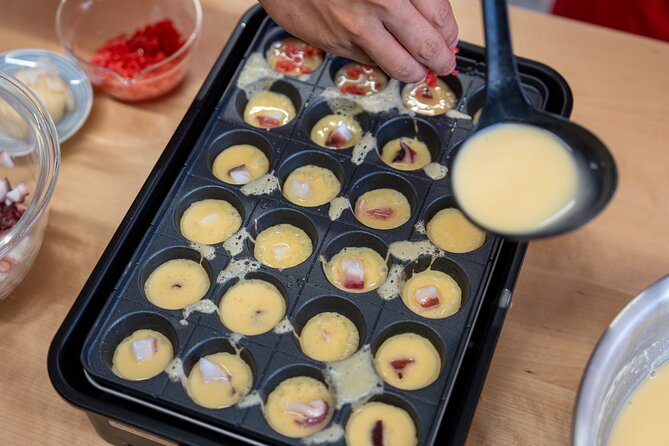
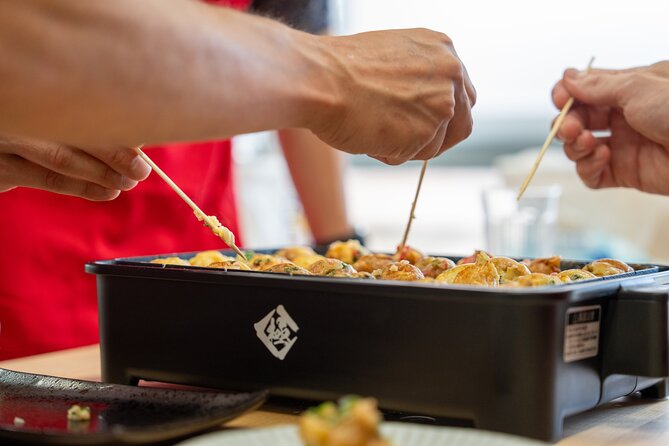
Takoyaki is the center of the experience. These small, round Osaka-style snacks are made from a loose batter and cooked in a special molded pan. The goal is a crisp outside with a soft center, which requires attention and a little practice.
The guide helps you work with the pan and fillings, then shape the cooking batter into neat balls. This is the hands-on part of the evening, and it may be the most entertaining for people who enjoy learning through trial and error. The word crispy matters here. The texture depends on timing and handling, not just on mixing ingredients.
You should not expect every takoyaki ball to look perfect on your first try. That is part of the point. A friendly class lets you learn the turning technique without the pressure of a professional kitchen. The supermarket visit also makes this course more personal, since you have already thought about what might go inside.
Takoyaki is also a dish you can recreate after returning home, provided you have access to a takoyaki pan. The downloadable recipe pack gives you a starting point, though the cooking equipment itself is not described as part of the takeaway. If you love Japanese food but rarely cook it, this is a good way to turn one Osaka meal into a repeatable project.
Preparing chicken with green onion, mayo, and ponzu
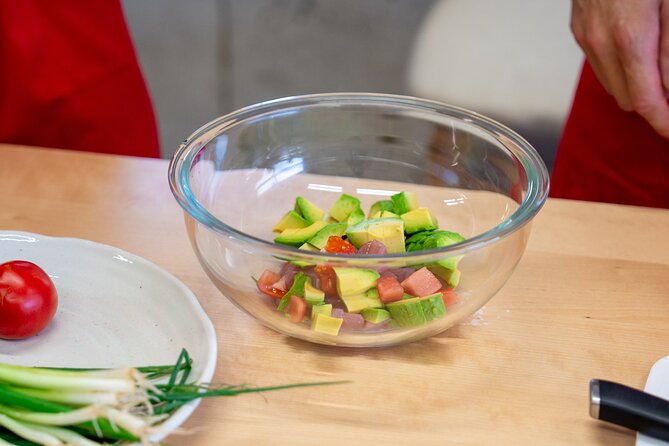
The chicken dish brings a different texture and flavor to the table. You prepare juicy chicken with green onion, mayonnaise, and ponzu. Ponzu adds a tart citrus note, while mayonnaise gives the dish a creamy finish.
This combination fits the izakaya style well: simple ingredients, strong flavor, and food made for sharing. It is also a useful home-cooking recipe because the ingredients are easier to find than some specialty Japanese products. The class does not promise restaurant-level plating, and that is fine. The value is in learning a dish you might actually make again.
The menu has a clear balance. You get the crisp and soft texture of takoyaki, the sharp bite of wasabi tuna, the fresh crunch of cabbage, and the savory chicken. That variety helps justify the cooking time, since you are not repeating one technique for three hours.
Pairing sake with a home-style Osaka meal
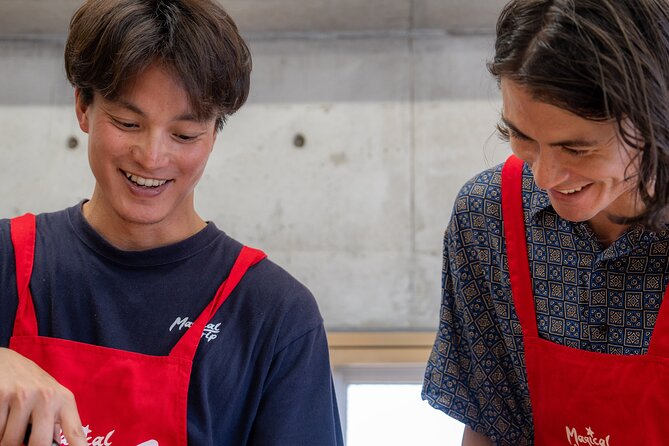
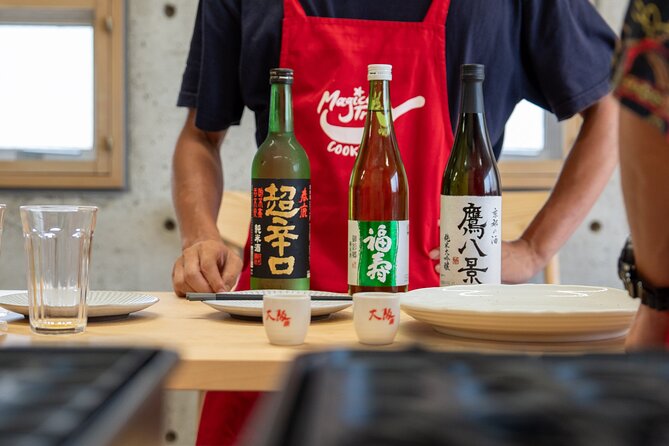
Sake is not an optional afterthought here. You sip handpicked sakes while cooking and pair them with the completed food. Beer and soft drinks are also available, so you do not need to be a sake drinker to take part.
The pairing is presented in a relaxed taku-nomi mood, which means home drinking. That phrase captures the tone better than a formal tasting would. You are learning how drinks work with small dishes, but you are not being asked to sit through a technical seminar.
I see this as a good fit if you want context with your meal. The guide can explain the dishes and answer questions about Japan while you eat. Chie, in particular, has combined the cooking with a broader history and culture discussion. The exact depth will depend on the guide and the group, but the setting leaves room for conversation.
If you do not drink alcohol, the experience still includes soft drinks. If you are hoping for a large sake tasting with detailed notes on breweries and production, keep your expectations modest. The focus is the shared meal, with sake used as part of the evening rather than as the sole subject.
What you get for the $91.04 price
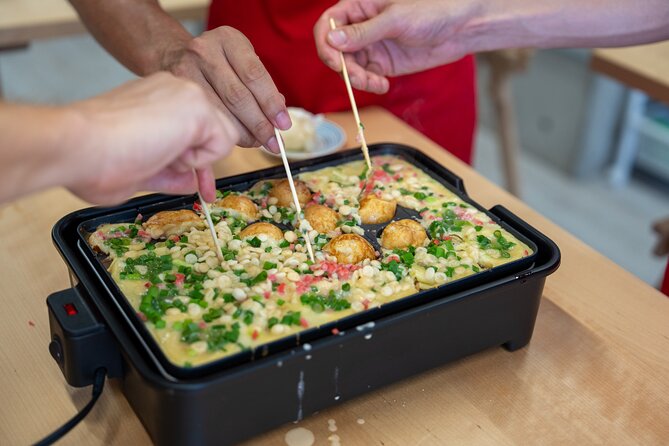
At $91.04 per person, this is not the cheapest way to eat dinner in Osaka. You could spend far less on street food, and you could probably find takoyaki without taking a class. The price makes more sense when you count the guide, supermarket visit, cooking instruction, several dishes, drinks, studio time, and recipe pack.
You are paying for access and participation, not just calories. The supermarket stop would be hard to arrange with the same ease on your own, especially if you do not read Japanese. The guide also turns unfamiliar ingredients into a meal and provides a setting where you can ask questions.
The small group limit improves the value. With no more than seven people, you have a better chance of getting help with the takoyaki pan and hearing the cooking explanations. The value is strongest for solo visitors, couples, and small groups who want a social evening with structure.
It is less compelling if your main goal is a long, formal sake education or a luxury dining experience. This is casual, friendly, and practical. You should book it for the human contact and the chance to cook Osaka food, not for elaborate presentation.
The activity is booked an average of 29 days ahead, so you should not leave it until the last moment if your Osaka schedule is fixed. Confirmation is provided when you book, and free cancellation is available up to 24 hours before the 4:30 pm start. Changes or cancellations inside that window are not accepted for a refund.
Who will enjoy this three-hour evening
I would choose this for you if you want to meet a local, learn a few dishes, and eat what you make. It suits curious first-time visitors, couples, solo food lovers, and small groups that prefer a shared table to a silent restaurant meal.
Families may also enjoy the hands-on format, though the provided information does not specify a minimum age. If children are joining, confirm suitability before booking, especially because the evening includes cooking equipment and sake service.
This is a good match for people who enjoy ordinary details. You will see how shopping works, examine Japanese ingredients, and learn how a casual home-style meal comes together. It offers more local contact than a simple food tour, but less sightseeing than a walking tour.
You may want to choose another activity if you dislike seafood, chicken, mayonnaise, ponzu, or alcohol-centered dining. The menu includes those flavors, and the experience is built around eating together. Dietary changes are not described, so ask the provider before paying if you need substitutions.
Should you book the Osaka Home Feast?
Book this experience if you want an evening that feels personal, useful, and distinctly Osaka. The supermarket visit, small group, changing takoyaki fillings, and relaxed sake pairing give the class more character than a standard recipe demonstration.
I especially like it for solo visitors. Nina’s one-person class shows that the format can still work without a large group, while Chie’s conversation about Japan suggests the guide can add cultural context as well as cooking help.
Skip it if you want a quick meal, a formal restaurant, or an advanced sake course. At three hours and $91.04, the commitment is real. But if you are happy to cook, chat, sip, and leave with recipes you can use at home, this is a strong way to spend an Osaka evening.
FAQ
Where does the Osaka Home Feast Cooking and Sake Experience begin?
It begins at the FamilyMart on the south side of Minamimorimachi Station, at Tenjinbashi 2-chome 3-10, 1F, Osaka 530-0041.
What time does the activity start?
The start time is 4:30 pm.
How long does the experience last?
The experience lasts approximately three hours.
Where does the activity finish?
It ends back at the original meeting point.
How many people can join the group?
The maximum group size is seven travelers.
What food will I prepare?
You will prepare dishes including Mugen Cabbage, Wasabi Tuna Salad, crispy takoyaki, and chicken with green onion, mayonnaise, and ponzu.
Are alcoholic and nonalcoholic drinks available?
Yes. The experience includes handpicked sake pairings, and beer or soft drinks are also available.
Do I receive the recipes after the class?
Yes. You receive a downloadable recipe pack so you can recreate the dishes at home.
Can I cancel for a full refund?
Yes. You can cancel at least 24 hours before the local start time for a full refund. Cancellations or changes made less than 24 hours before the start are not accepted for a refund.
Newly added around Japan
- Wagyu BBQ & Sukiyaki with Sake Pairing Experience near Ginza★ 5.0 · 2 reviews
- Tokyo Sake Tasting Tour with a Sake Expert★ 5.0 · 7 reviews
- Sake Tasting and Cherry Blossom Fun in Tokyo!★ 5.0 · 4 reviews
- Private Sake Tasting at 300 Years Old Sake Brewery in Tokyo★ 5.0 · 3 reviews
- Tokyo: Serene Sakura & Sake: An Exclusive Brewery Pairing Lunch★ 5.0 · 2 reviews
- Sake Pairing Workshop with Japanese Food in Shinjuku★ 5.0 · 5 reviews
- Nagano: Snow Monkey and Zenkoji Temple Free Sake Taste Day Tour★ 4.5 · 8 reviews
- Cherry blossom & Japanese Sake Tasting in Shinjuku★ 5.0 · 4 reviews
Sake Cooking Classes, compared.
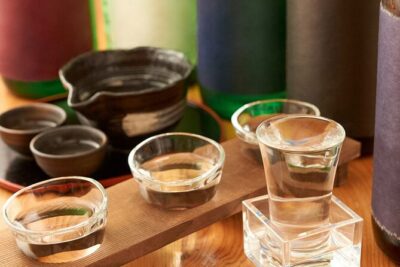
Ramen and Sushi Cooking Class with Sake Pairing Set in Tokyo
Read our review →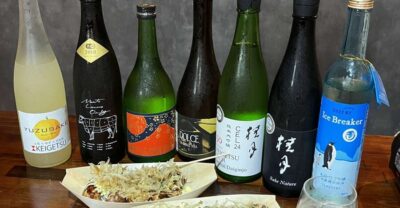
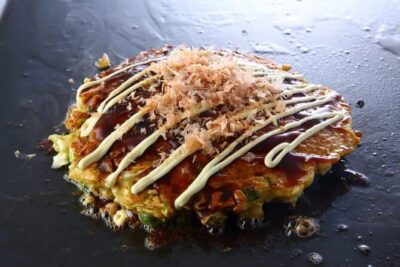
Osaka Cooking Class and Sake Tasting with Local Supermarket Visit
Read our review →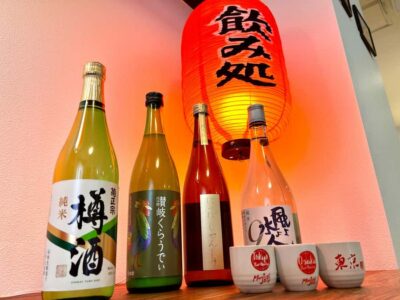
Tokyo Sushi Making Class : Sake Ceremony & Matcha Experience
Read our review →
Japanese Sake Tasting & Wagyu Sukiyaki Cooking Class in Tokyo
Read our review →
Beauty Vegan Dessert Cooking Class + Sake Kasu Hand Mask Trial!
Read our review →Browse the lists this tour appears in