
Reviewed · SAKE TASTING
Osaka Sake Tasting & Takoyaki Cooking Experience
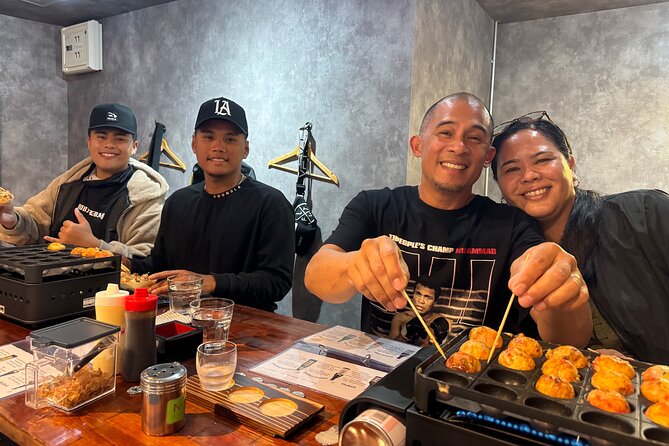
Osaka’s favorite street food becomes your dinner in this small, hands-on class. Momoko, also known as Momo, teaches you to make takoyaki from scratch, including the tricky part: turning the batter into neat little balls. You also taste several types of sake and learn how to order with more confidence at an izakaya or restaurant. I especially like the small group limit of six and the chance to try fillings beyond octopus, including wagyu and cheese. The main thing to consider is that this is a sake-focused evening, so you should be comfortable with alcohol and arrive ready to eat.
I like two things here. First, the tasting is not just a line of small cups: Momoko explains how sake is made, how styles differ, and how to read a label. Second, the cooking gives you something useful to do with your hands, rather than leaving you to watch a demonstration. The room is small, which helps create a friendly setting, but it may feel close if you prefer a large cooking studio.
Key points at a glance
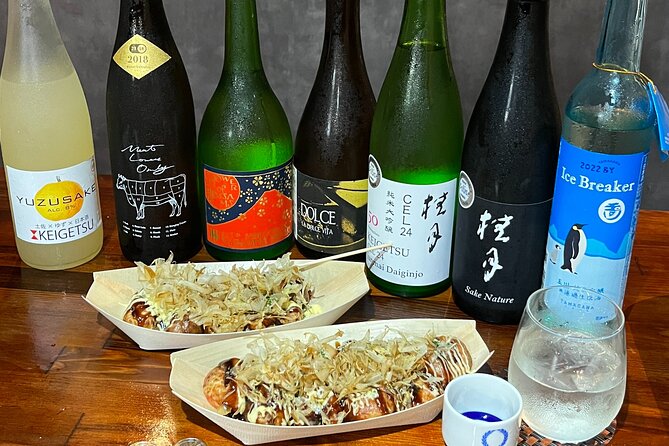
- Taste a wide range of sake: More than 10 varieties may be available, with seasonal choices selected by a sake specialist.
- Cook Osaka’s signature snack: Make takoyaki from batter to finished dish, with octopus, wagyu, cheese, and other fillings.
- Learn from Momoko: Your host is a certified sake sommelier with a background in sake making and clear English.
- Keep the group personal: The maximum is six people, making it easy to ask questions and get help with the cooking.
- Choose your timing: Afternoon and evening sessions suit different Osaka plans.
- Eat what you make: Ingredients, tools, fresh takoyaki, and alcoholic drinks are included for legal-age adults.
Why this Osaka class works so well
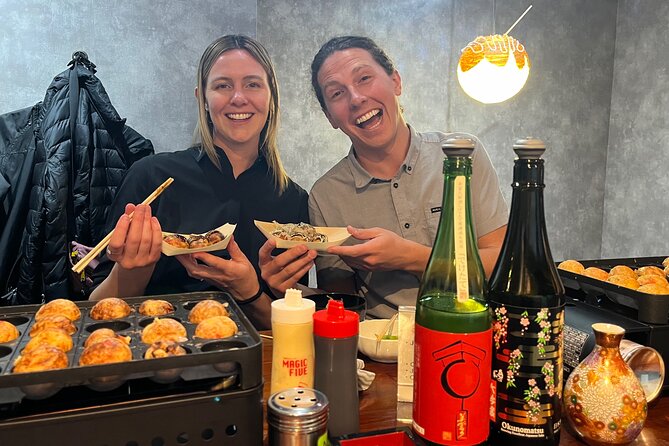
Many food activities in Osaka give you a plate and a quick explanation. This one asks you to take part. You mix batter, add fillings, handle the hot takoyaki pan, and learn how to rotate the pieces as they cook. That small act of turning each ball is where the class becomes more than a tasting.
I like the balance. The sake lesson gives the activity a cultural and practical side, while the takoyaki keeps things light and social. You do not need previous cooking skill or sake knowledge. Momoko guides you through both, and the small setting means you can stop to ask questions instead of trying to keep up with a large group.
The schedule also helps. With afternoon and evening options, you can fit the class between sightseeing plans or make it part of your night in Osaka. Since the activity lasts about two hours and ends at the same place where it begins, it is easy to plan around.
More Cooking Classes with Sake in Japan:
- Ramen and Sushi Cooking Class with Sake Pairing Set in Tokyo
★ 5.0 · 291 reviews - Osaka Sake Tasting with Takoyaki Cooking
★ 5.0 · 156 reviews - Tokyo: Sushi and Ramen Cooking Class with Sake Pairing Set
★ 5.0 · 81 reviews
Meeting Momoko at Higashishinsaibashi
The class takes place at MOMO to SAKE, at 1-chōme 6-22, Yoshiharu Kaikan 2F, Higashishinsaibashi, Chuo Ward, Osaka 542-0083. The venue is near public transportation, and you will need to make your own way there. Hotel pickup and drop-off are not included.
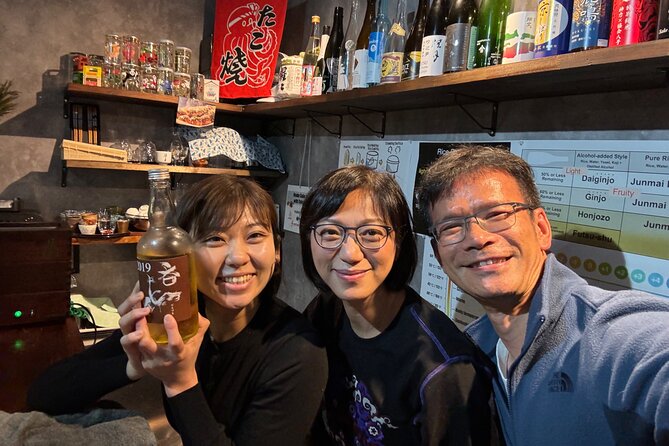
The setting is a compact second-floor kitchen rather than a large commercial school. That matters. You get more direct help, and the class feels closer to being invited into a local cooking space than joining a formal tour group. It also means the room can feel tight, especially with a full group of six.
Momo is central to the experience. Her English is described as very good, and she combines a friendly manner with serious sake training. She has a background in sake making and explains the subject in a way that works for beginners. I would expect plenty of chances to ask about the labels, flavors, and differences between bottles.
The sake lesson before the tasting
The sake portion covers the basics: history, culture, production, and the broad differences between types of nihonshu. This is useful if you have ever stared at a sake menu and had no idea what to order.
You learn how sake is made and get help reading the label. That practical skill may be the most valuable part of the lesson. Instead of remembering one bottle you liked, you gain a way to make a better choice at a sushi counter, fine-dining restaurant, or izakaya later in your trip.
The tasting selection changes, but more than 10 Japanese sakes may be available. The class includes a seasonal menu chosen by a sake specialist, and you select favorites based on your preferences. Some people have tasted around seven varieties during the class, though the exact number and selection can vary.
That range is important. Sake is not one single flavor. You may find differences in sweetness, dryness, fragrance, body, and serving style. The point is not to race through as many cups as possible. It is to notice which styles suit you and learn the words that help you order again.
Come prepared to taste alcohol, not simply sample one drink. The meal follows the cooking portion, and the sake is enjoyed with the takoyaki. You should also pace yourself. A selection of several sakes can add up quickly, especially in a small room where conversation makes the time pass fast.
Making takoyaki from batter to plate
Takoyaki is one of Osaka’s best-known foods: small, round pieces of batter cooked in a special pan, usually with octopus inside. The shape looks simple, but getting tidy balls takes practice.
Momoko provides the batter, ingredients, tools, and her own recipe. You take part in the cooking instead of merely watching her prepare a finished plate. The key job is learning when and how to turn the pieces so the outside cooks while the center stays soft.
The fillings make this class more varied than a standard octopus-only snack. Traditional takoyaki is available, along with additions such as wagyu beef and cheese. This is useful for mixed groups because not everyone has the same tastes. One person can enjoy octopus while another chooses a beef or cheese version.
The class also works for people who do not eat seafood. Momo has prepared non-seafood options, and a gluten-free version was arranged when advance notice was given. If you have a dietary need, contact the provider before the class rather than assuming substitutions will be ready on arrival.
The cooking is hands-on, but you are not left to figure it out alone. Momo shows you how to handle the pan and helps when the pieces resist turning. Expect a little unevenness at first. That is part of the fun, and the finished food is still yours to eat.
More Sake Tastings in Japan:
- 3-Hour Kyoto Insider Sake Brewery Tour with Tastings & Pairings
★ 5.0 · 917 reviews - Kyoto Sake Brewery & Tasting Walking Tour
★ 5.0 · 623 reviews - 1.5-Hour Kyoto Insider Sake Experience with 7 Tastings & Pairings
★ 5.0 · 297 reviews - Sake Tasting Masterclass in Shinjuku (8+ Varieties with a Pro)
★ 5.0 · 271 reviews
A full meal, not just a demonstration
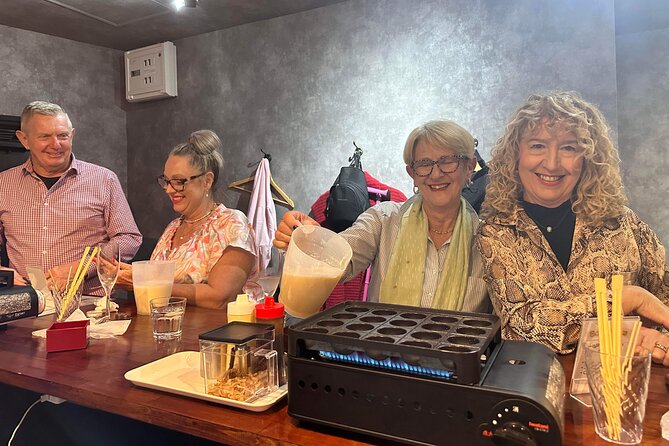
You should arrive hungry. The included food is the takoyaki you make, and the portion can serve as a proper light meal rather than a token taste. Several people have described leaving full, especially after making multiple pieces with different fillings.
The food is eaten after cooking with the sake. This order makes sense: you have time to focus on the lesson and prepare the food, then sit down to compare your favorite drink with what you made. It also gives the class a natural finish instead of ending immediately after the stove is turned off.
You do not need to buy extra ingredients or rent cooking tools. Meals, ingredients, equipment, and freshly made takoyaki are included. Public transportation and hotel transfers are not included, so those are the main extra costs to plan for.
What makes the small group useful
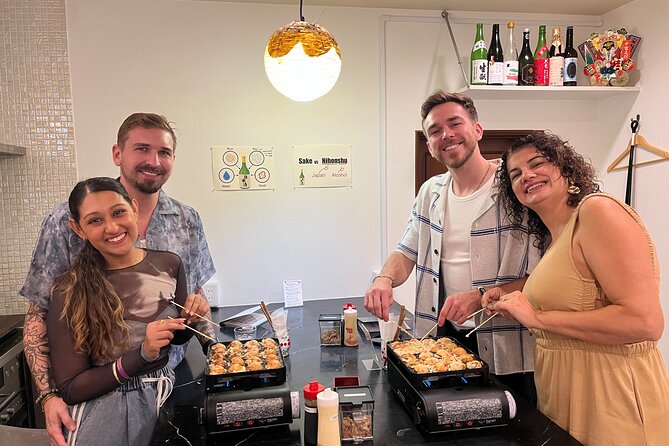
The group limit is six people. That is a strong feature for this kind of class. Takoyaki cooking is easier when you can see the pan clearly, hear the instructions, and get help before the batter overcooks.
A small group also changes the mood. You have a better chance to talk with Momo about sake preferences, Japanese food, and where the lesson fits into your Osaka visit. Solo visitors can join without needing to bring a companion, while couples and friends still have enough space to work together.
The tradeoff is the room itself. This is not a spacious school with multiple workstations and lots of room to move. If you want a polished, high-capacity cooking class, this will feel more intimate than formal. I see that as a benefit for most people, but it is worth knowing in advance.
Is the $72.67 price fair?
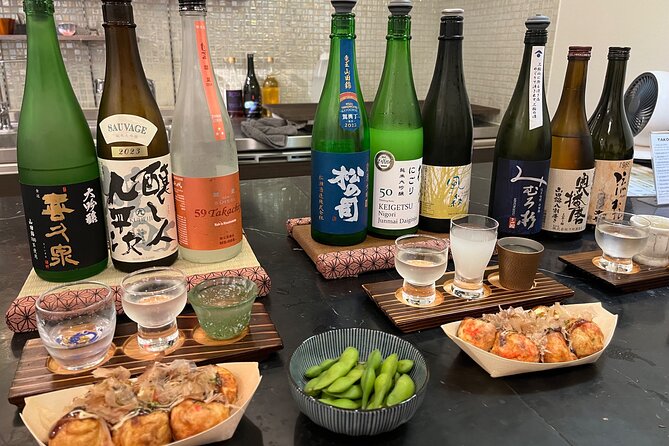
At $72.67 per person, the cost is higher than buying takoyaki from a street stand and ordering one sake at a bar. That comparison misses the point, though. You are paying for a two-hour lesson, several sake tastings, ingredients, tools, a meal, and direct time with a certified sake sommelier.
The value is strongest if you care about learning. The sake information can help you make better choices throughout the rest of your Japan trip, and the takoyaki lesson gives you a cooking skill you can remember and repeat. If you only want to eat Osaka street food cheaply, this is not the right purchase.
I also think the small group improves the value. You are not paying for a large room and a scripted talk. You get a chance to ask about specific bottles, food preferences, and cooking problems. The availability of afternoon and evening classes adds useful flexibility without changing the core activity.
The price includes alcoholic beverages, but only legal-age adults should take part in the sake tasting. The activity does not include transport or hotel service, so factor in your route to Higashishinsaibashi.
Who should book this activity?
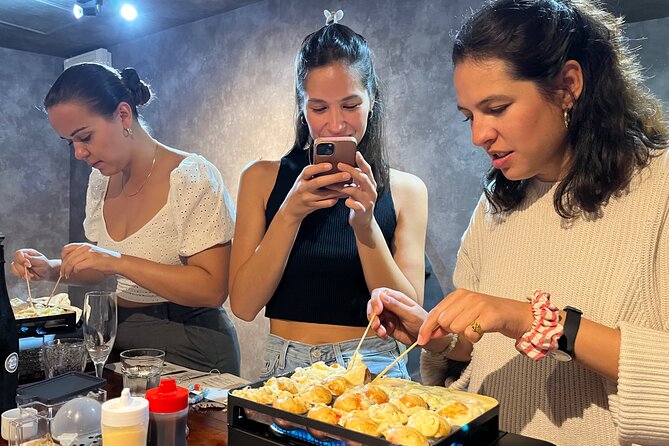
I would choose this for a first visit to Osaka if you want food and drink with some local context. It is especially good for people who have seen sake on menus but never learned how the styles differ.
It suits couples, friends, solo visitors, and small family groups with adults who can legally drink. The cooking makes it social without requiring advanced skill, and the range of fillings helps groups with different diets. Non-seafood and gluten-free needs may be accommodated, but arrange them ahead of time.
I would be more cautious if you dislike alcohol, have very limited mobility around a compact cooking space, or want a quiet meal with no participation. This is an active class. You will handle food, learn a technique, and taste several drinks.
The activity is also a good choice early in a Japan trip. The sake lesson gives you useful ordering advice for later meals, and the relaxed setting can help you get comfortable with Osaka food culture. Just remember that the class is not a substitute for a full restaurant dinner if you want a large, multi-course meal.
Practical details before you reserve
The activity lasts about two hours and ends back at the meeting point. Afternoon and evening sessions are offered, so choose the time that best matches your sightseeing plans and alcohol tolerance.
A mobile ticket is provided, and confirmation is sent when you book. Service animals are allowed. Free cancellation is available up to 24 hours before the local start time. Cancellations or changes made inside that window are not accepted for a refund.
The activity has a maximum of six people. That limit is worth checking when you book if you are traveling as a group. Since the class includes alcohol, arrive with enough time to find the second-floor venue without rushing.
Should you book MOMO to SAKE?
Book it if you want more than a snack stop. The strongest parts are the personal instruction from Momoko, the chance to taste several sake styles, and the hands-on work of making takoyaki with fillings such as wagyu and cheese.
I would skip it only if you do not drink, want a large professional kitchen, or are searching for the cheapest possible Osaka meal. For everyone else, $72.67 is a fair price for a small, two-hour food lesson that gives you both dinner and useful sake skills.
FAQ
How long does the Osaka sake and takoyaki class last?
The activity lasts approximately two hours.
Where does the activity start?
It starts at MOMO to SAKE, 1-chōme 6-22 Yoshiharu Kaikan 2F, Higashishinsaibashi, Chuo Ward, Osaka 542-0083, Japan.
Where does the activity end?
The activity ends back at the meeting point.
How many people can join the class?
The maximum group size is six people.
Are afternoon classes available?
Yes. The activity offers afternoon and evening class options.
Is sake included in the price?
Yes. Alcoholic beverages are included for legal-age adults, with more than 10 varieties of Japanese sake available to choose from.
Is food included?
Yes. Ingredients and tools are included, along with the takoyaki you make during the class.
Is hotel pickup included?
No. Public transportation and hotel pickup or drop-off are not included.
Can I cancel for a full refund?
Yes. You can cancel up to 24 hours before the experience start time for a full refund.
Are service animals allowed?
Yes. Service animals are allowed.
Newly added around Japan
- Nara: Sake Tasting Tour at the Birthplace of Japanese Sake★ 4.9 · 8 reviews
- Kobe: Sake Brewery Tour with Tasting and Kobe Beef Bites★ 5.0 · 11 reviews
- Kobe: Sake Brewery Tour with Tasting Sake★ 4.7 · 9 reviews
- Kyoto: Fushimi Sake District Tour with Boat Ride★ 4.6 · 10 reviews
- Nara – Craft Beer, Sake, and Food Walking Tour★ 3.5 · 9 reviews
- World Heritage Himeji Castle & Sake Breweries Private Tour★ 4.5 · 11 reviews
- Visit behind the Scenes: Hiroshima Saijo Sake Brewery Tour★ 5.0 · 9 reviews
- Sake Town Tour in Saijo Hiroshima★ 5.0 · 9 reviews
Sake Tasting, compared.

3-Hour Kyoto Insider Sake Brewery Tour with Tastings & Pairings
Read our review →
Sake Tasting Masterclass in Shinjuku (8+ Varieties with a Pro)
Read our review →
Insider Sake Experience with 7 Tastings and Snacks
Read our review →
Sake Omakase in Tokyo: Guided Tasting by Certified Sommeliers
Read our review →
Private Tea Ceremony and Sake Tasting in Kyoto Samurai House
Read our review →
Casual Japanese SAKE tasting and snack experience in Kabukicho
Read our review →
Browse the lists this tour appears in