
Reviewed · SAKE TASTING
Tasting All Types of Sake with Sommelier
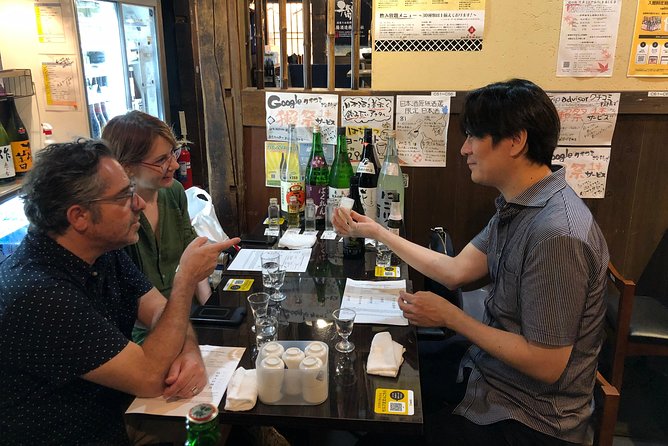
The most useful part of this Shinjuku experience is that it teaches you how to buy and order sake with confidence. Sommelier Aki explains how rice, brewing, pasteurization, sweetness, and serving temperature shape the drink, then pours six to seven different sakes, including types that can be hard to find outside Japan.
I like the clear label-reading lesson, which gives you a practical skill for the rest of your trip. I also like the relaxed setting and Aki’s easy humor. He answers questions about sake, Tokyo nightlife, and Japan in general. The main drawback is that the tasting can run close to two hours, and the amount of alcohol is substantial for a short afternoon. Eat before you arrive.
Key points to know before booking
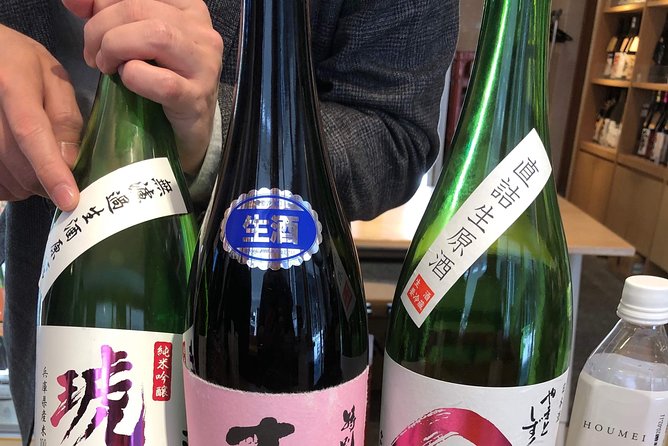
- Try a broad range of sake: Tastings can include sparkling, sweet, dry, hot, pasteurized, and unpasteurized styles.
- Learn how to read a bottle: Aki explains the terms and clues that help you choose sake in a shop or restaurant.
- Meet in central Shinjuku: The tour begins near Shinjuku San-chome and finishes at the same meeting point.
- Expect a small group: The maximum is 12 people, and some departures may feel almost private.
- Ask plenty of questions: Aki is happy to discuss sake, other spirits, Tokyo nightlife, and places to visit.
- Plan for a serious tasting: The official duration is about 1 hour 30 minutes, though some sessions last around two hours.
What makes this sake tasting useful
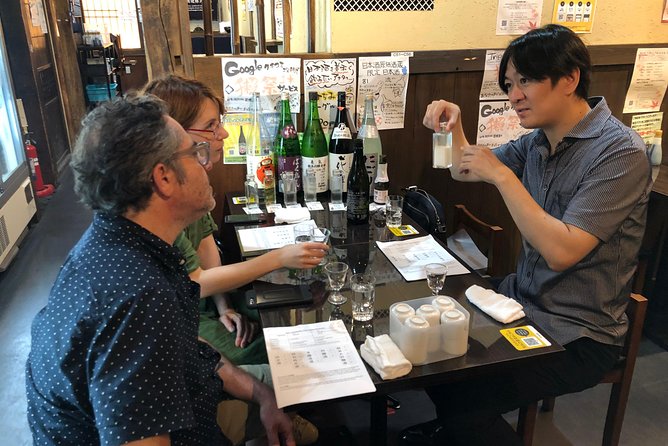
Many visitors first meet sake as a mystery drink served warm in a small cup. That is only one corner of the subject. Sake can be crisp, floral, sweet, dry, sparkling, creamy, or sharply aromatic. It can be served chilled, warm, or at room temperature, and the same bottle may taste different with food.
This session gives you a working introduction rather than a simple series of drinks. Aki talks through how sake is produced, what the main styles mean, and why the flavor can change so much from one bottle to the next. You receive a small handout covering sake production and types, which helps you follow the lesson and remember the basics later.
The label lesson is especially useful. Japanese sake bottles can include terms that mean little to a first-time buyer. By the end, you should have a better idea of what to look for when ordering in a restaurant or choosing a bottle at a shop. The tasting is still the main event, but the practical information gives it a purpose.
You should not expect a formal wine-school lecture with a printed technical sheet for every pour. The handout explains the wider subject, but it may not list each sake tasted with details such as acidity or pasteurization. If you want that level of record keeping, bring a phone or notebook and write down the bottles you like.
More Sake Sommelier Sessions in Tokyo:
- Private Sake Tasting in Central Kyoto with Sake Sommelier
★ 5.0 · 32 reviews - Private Food & Sake Tour in Central Kyoto with Sake Sommelier
★ 5.0 · 24 reviews - Private Sake Tasting in Central Kyoto with Sake Sommelier
★ 5.0 · 13 reviews
Meeting Aki near Shinjuku San-chome
The meeting point is in the Shinjuku San-chome area, near 3-chome-4-8 Shinjuku, and the start time is 4 p.m. The host first spends a few minutes discussing Shinjuku and then gives a short introduction to the immediate neighborhood. These opening minutes are not a major sightseeing stop, but they help set the scene before the tasting begins.
Shinjuku is a useful place for this kind of experience because it combines department stores, restaurants, bars, shopping, and late-night entertainment within a compact area. The meeting point is near public transportation, but Shinjuku can be confusing if you use the wrong station exit. Give yourself time to locate the address rather than arriving at the last minute.
Aki has received especially strong praise for being friendly, funny, and easy to understand in English. That matters here. Sake has its own vocabulary, and a stiff or overly technical presentation could make the subject feel like homework. Aki’s conversational style helps you ask basic questions without feeling awkward.
The group limit is 12 people. That is small enough for questions, though the experience will feel different depending on the day. A couple or a very small booking can receive a more personal session. A full group will have less time for one-on-one discussion, but the format still allows questions throughout.
A short walk through Shinjuku 3-chome
The itinerary includes a brief stop in Shinjuku 3-chome, where Aki explains the area before leading the group onward. This is more of a local orientation than a sightseeing tour. You are not signing up for a full neighborhood walk, so keep your expectations in check.
The value is in the transition. You get a quick sense of where you are before entering the sake bar, and Aki can connect the drink to the wider food and nightlife scene. If you have never visited Shinjuku, this also helps you understand how the daytime shopping district changes as evening begins.
The timing is sensible. Only about five minutes is assigned to this section, leaving most of the 90-minute experience for the tasting itself. I would rather have this short introduction than a long detour that cuts into the sake lesson.
The sake bar beside Louis Vuitton Shinjuku
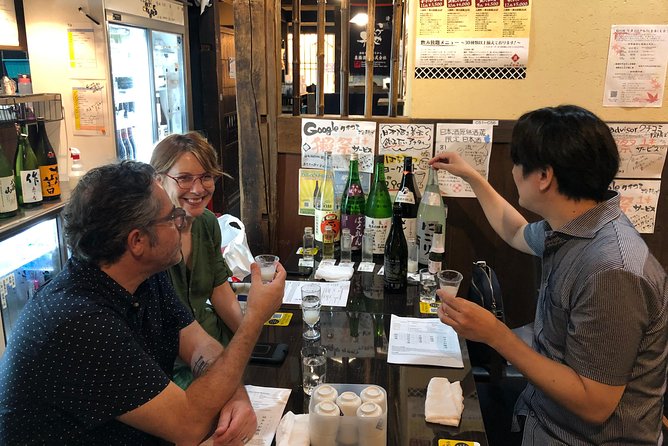
The main tasting takes place at a sake bar next to Louis Vuitton Shinjuku. The setting is small and focused, not a brewery visit or a large restaurant meal. That makes the session feel more like a guided bar tasting, with Aki controlling the order and explaining each drink as it arrives.
You will taste a variety of styles rather than six versions of the same basic sake. The pours can include sparkling sake, sweet and dry examples, hot sake, pasteurized sake, and unpasteurized sake. One person may receive a welcome sake in addition to six tasting pours, though the exact selection can vary.
This range is the heart of the experience. A first-time drinker can discover that sake is not simply hot or cold. Someone who already enjoys sake can try bottles that may not be available at home because unpasteurized products are difficult to ship. The tasting also gives you a useful comparison: instead of hearing that one style is dry and another is sweet, you can taste the difference side by side.
Aki describes what he notices in each sake and explains how to drink it. He also discusses the foods that work well with different styles. The information is not just technical. It helps you think about sake as part of a meal, not as an isolated drink.
You should ask questions as you go. The format is built for conversation, and Aki is comfortable discussing sake production, wine, whiskey, and other spirits. He also gives general suggestions about Tokyo, including nightlife and places worth visiting. Keep in mind that the main subject is still sake, so the amount of outside advice depends on the group and the questions asked.
More Sake Tastings in Tokyo:
- Sake Tasting Masterclass in Shinjuku (8+ Varieties with a Pro)
★ 5.0 · 271 reviews - Sake Omakase in Tokyo: Guided Tasting by Certified Sommeliers
★ 5.0 · 239 reviews - Casual Japanese SAKE tasting and snack experience in Kabukicho
★ 5.0 · 159 reviews - Tokyo Wagyu & Sake Pairing Tasting Experience with Local Flavors
★ 5.0 · 108 reviews
Understanding what is in your glass
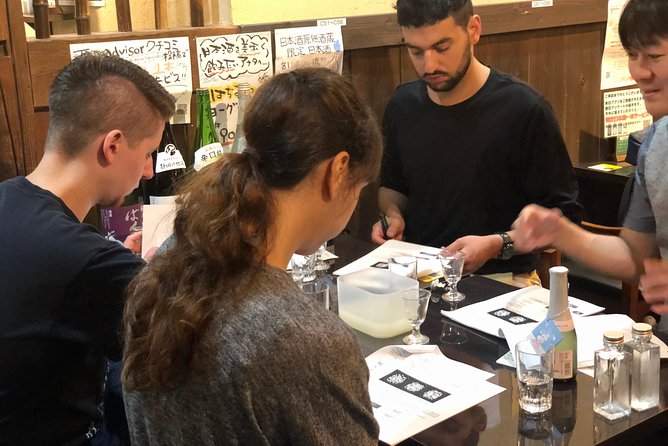
Aki’s explanation covers the basic path from rice to finished sake. You learn about ingredients, production, aging, and the reasons different bottles taste different. The session also introduces the effect of pasteurization, which is one of the less obvious distinctions for people new to the drink.
Unpasteurized sake can taste especially fresh and distinctive, but it is also less common outside Japan. That makes this tasting a good chance to try a style you might not see at home. Do not assume that every bottle served will be available for purchase in the same form after you return home.
The lesson also covers serving temperature. Warm sake is familiar to many people, but the tasting shows that temperature is not a simple quality marker. Some sake is better chilled, some can be served warm, and the right choice depends on the style and the food.
The tasting is designed for first-timers, but it has enough detail for an enthusiastic sake drinker. One participant described it as close to an introductory college class, which is a fair way to picture the amount of information. Aki enjoys the subject, and the session can become quite detailed when the group asks follow-up questions.
That detail is a plus if you want to understand what you are drinking. It may feel like a lot if you hoped to simply sit down for a few casual samples. This is not a quick bar crawl. It is a lesson with alcohol included.
Shinjuku, Kabukicho, and Golden Gai after the tasting
The tour also brings up Kabukicho and Golden Gai, two well-known parts of Shinjuku nightlife. The itinerary does not describe a separate, extended visit to each area. Instead, Aki talks about them during the experience and places the tasting within the wider night scene.
That context is useful because the tour ends in one of Tokyo’s best areas for continuing an evening. Golden Gai is known for its tiny bars, while Kabukicho is one of Shinjuku’s major entertainment districts. Aki can offer general advice about nightlife and what to avoid, though you should treat this as added conversation rather than a guided bar tour.
The 4 p.m. start works well for many schedules. You can spend the earlier part of the day sightseeing, take the tasting in the late afternoon, and then continue into dinner or evening drinks. If you are tired from a long day or still dealing with jet lag, the alcohol may hit harder than expected.
I would not make this the first activity of your arrival day if you are exhausted. On the other hand, booking it early in your Tokyo stay can be smart because you will use the label and ordering advice during the rest of your trip.
Is the $62.76 price fair?
At $62.76 per person, the value depends on what you want from a tasting. You are paying for 6 to 7 pours, a guided lesson, a handout, and access to a host who can explain the drink in clear English. You are not paying for a full meal, brewery transportation, or a long sightseeing tour.
For a casual drinker who only wants one glass of sake, the price may feel high. For someone who plans to order sake several times in Japan, the label guidance and style comparison can quickly prove useful. The session may also save you from buying a bottle based only on attractive packaging or a word you do not understand.
The price looks strongest for three types of people: a first-time visitor who wants a reliable introduction, a sake fan who wants to try Japanese-only bottles, and a couple or small group looking for an easy indoor activity in Shinjuku. It is less suitable if you dislike structured tastings or want a food-heavy evening.
The host’s time is part of the value. Aki does more than pour drinks. He explains production, answers questions, compares styles, and offers broader Tokyo advice. The exact number of pours and the pace may change, but the session is built around instruction rather than a fixed flight with no explanation.
Timing, group size, and practical points
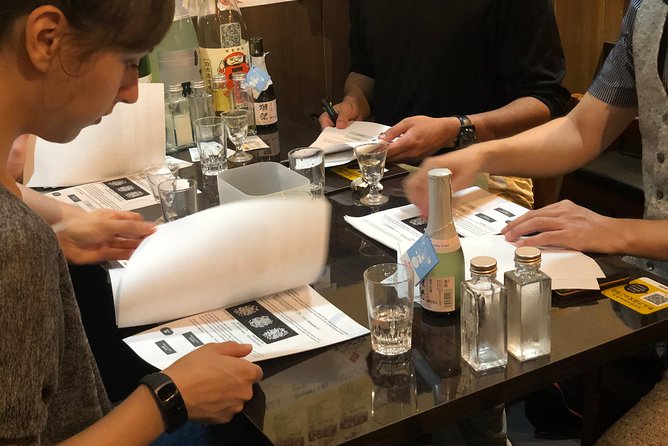
The official duration is approximately 1 hour 30 minutes. Some sessions have taken closer to two hours, so do not schedule a train departure or restaurant reservation immediately afterward. The activity ends back at the original meeting point.
Confirmation is sent when you book, and the experience uses a mobile ticket. The location is near public transportation, and most people can take part. The group maximum is 12.
Free cancellation is available up to 24 hours before the 4 p.m. start time for a full refund. Cancellations or changes made inside that 24-hour window are not accepted for a refund.
The most important preparation is simple: eat first, drink water, and avoid packing too much into the rest of your afternoon. Even small tasting pours add up when you try several styles. If you want to remember the bottles, note them as you go, since the general handout may not include every bottle-specific detail.
Who should book this experience?
I would recommend it to anyone who has tried sake but still cannot tell one style from another. It is also a strong choice for first-timers who want an explanation before ordering sake around Japan. Aki’s friendly manner helps keep the lesson welcoming, and the variety gives you a real sense of how broad the drink can be.
It works well for couples, families with adult children, and friends. One parent and daughter used it as part of a first Japan visit, while other small groups enjoyed the informal atmosphere. The maximum group size keeps it social without turning it into a large class.
Sake fans should consider it for the chance to try unpasteurized and Japan-only selections. Just understand that the experience is educational as well as social. If you want a quiet, highly technical tasting with detailed written notes for every pour, this may not be the perfect match.
Should you book the Shinjuku sake tasting?
Book it if you want more than a drink. The best parts are the broad range of sake, the useful label lesson, and Aki’s ability to make technical material feel relaxed. You leave with a better sense of what to order, how to compare styles, and why one bottle may suit a meal better than another.
Skip it if you are looking for a full dinner, a brewery visit, or a short tasting with no lecture. Also think twice if you are arriving in Tokyo exhausted, since six or seven samples can be a lot after a long flight.
For most visitors who enjoy Japanese food and want to understand sake instead of guessing, this is a smart Shinjuku stop. Book it near the beginning of your trip, eat beforehand, and leave room afterward for dinner or a walk through the neighborhood.
FAQ
Where does the sake tasting begin?
It begins near Shinjuku San-chome at 3-chome-4-8 Shinjuku, Shinjuku City, Tokyo 160-0022, Japan.
What time does the experience start?
The scheduled start time is 4 p.m.
How long does the tasting last?
The stated duration is approximately 1 hour 30 minutes. Some sessions can take about two hours.
How many types of sake will I try?
You can expect to try 6 to 7 types of sake, with some sessions also including a welcome sake.
What styles of sake may be included?
The tasting can include sparkling, sweet, dry, hot, pasteurized, and unpasteurized sake.
Who leads the tasting?
The session is led by Aki, also referred to as Akira in the experience information. He is a sake sommelier and speaks English.
How many people can join?
The maximum group size is 12 people.
Can I cancel for a full refund?
Yes. You can cancel at least 24 hours before the experience start time for a full refund. Changes or cancellations made less than 24 hours before the start time are not accepted for a refund.
Newly added around Tokyo
- 7 Kinds of Sake Tasting with Complementary Foods★ 5.0 · 11 reviews
- Japanese Sake Tasting & Wagyu Sukiyaki Cooking Class in Tokyo★ 5.0 · 10 reviews
- Tokyo Sake Tour with a Local Guide, Private & Tailored to Your Taste★ 4.0 · 12 reviews
- Wagyu Beef & Sake Pairing Foodie Tour in Tokyo★ 5.0 · 16 reviews
- Private Tour: Tokyo’s Oldest Sake Brewery and Riverside Walk★ 5.0 · 25 reviews
- Wagyu & Sake 8 Course Tasting Dinner in Shinjuku★ 4.9 · 20 reviews
- Luxury Tokyo Sake, Cocktail, Whisky and Pairing Tour★ 5.0 · 18 reviews
- 10 kinds Sake Tasting Experience in Tsukiji with local!!★ 5.0 · 19 reviews
Sake Tasting, compared.

3-Hour Kyoto Insider Sake Brewery Tour with Tastings & Pairings
Read our review →
Sake Tasting Masterclass in Shinjuku (8+ Varieties with a Pro)
Read our review →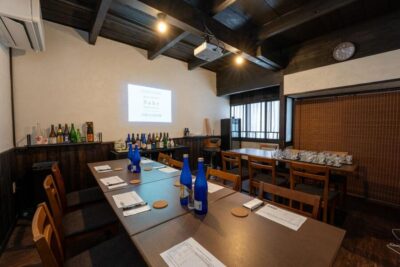
Insider Sake Experience with 7 Tastings and Snacks
Read our review →
Sake Omakase in Tokyo: Guided Tasting by Certified Sommeliers
Read our review →
Private Tea Ceremony and Sake Tasting in Kyoto Samurai House
Read our review →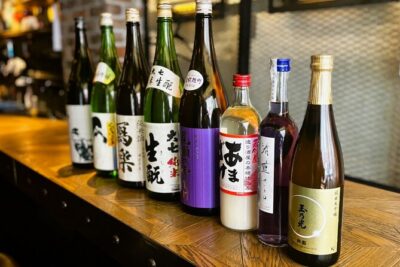
Casual Japanese SAKE tasting and snack experience in Kabukicho
Read our review →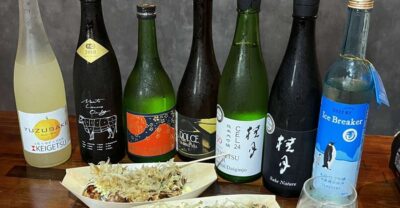
Browse the lists this tour appears in