
Reviewed · SAKE TASTING
Osaka: Cooking Class & Sake Tasting with Local Market Visit
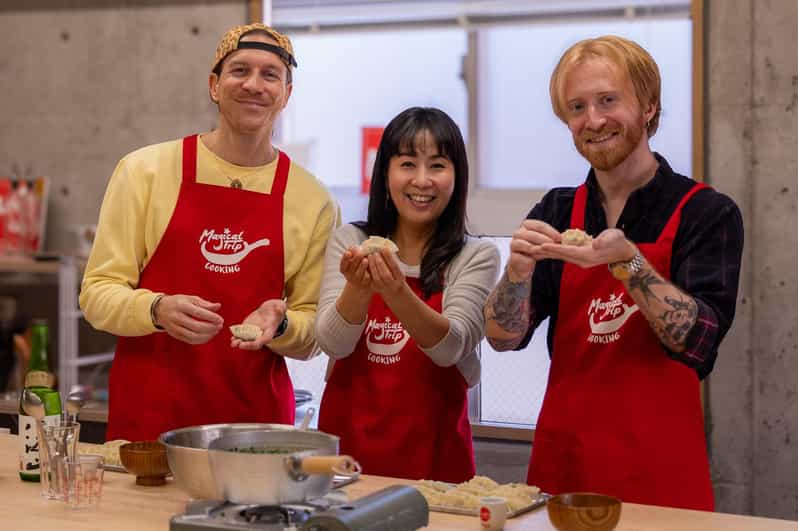
Osaka’s food culture makes the most sense when you get your hands busy. This four-hour class takes you first to a neighborhood supermarket, then to a small cooking studio for niku-sui beef soup, okonomiyaki, and gyoza. I like the ordinary shopping stop, which shows you what people in Osaka actually buy, and the small group of up to seven, which gives you room to ask questions and work at the counter. The main drawback is that gluten-free meals are not available, and allergies cannot be guaranteed away.
I also like that the recipes use simple ingredients rather than rare items you will never find again. Guides such as Chie, Eri, Emi, Akko, Ayu, and Linda bring different personalities to the class, but the format stays friendly and hands-on. Plan to walk, arrive on time, and bring an appetite, because lunch includes a generous amount of food.
Key points to know before booking
- Shop like a local: Start at a supermarket near Minami Morimachi and see the ingredients before you cook them.
- Make three Osaka favorites: Prepare niku-sui, okonomiyaki, and gyoza with step-by-step help.
- Small, social setting: The group is limited to seven, with time for conversation and questions.
- Drinks are part of the meal: Three canned drinks are included, with alcoholic and non-alcoholic choices, plus tea.
- Take the class home: Recipes are provided after the experience, and your guide sends tour photos by email.
- Check dietary and mobility needs: Vegetarian and vegan participants are welcome, but gluten-free options are unavailable.
Why this class works better than a simple restaurant meal
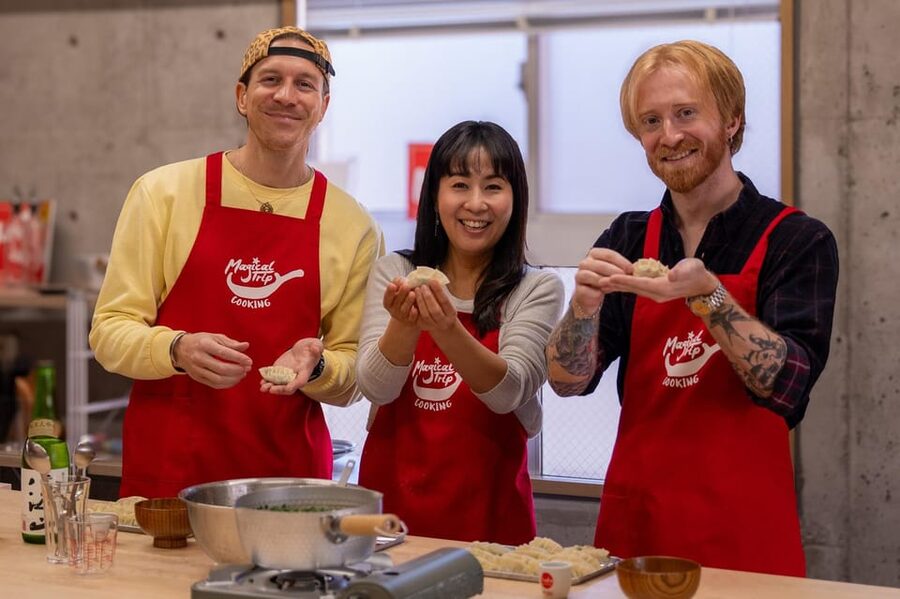
A restaurant lets you taste Osaka. This class helps you understand how the food comes together. You see the ingredients at the supermarket, handle them in the studio, and eat the finished meal while talking with a local guide.
That sequence matters. Okonomiyaki can look simple on a menu, but preparing it shows how flexible the dish is. Gyoza seems easy until you start folding several dumplings and notice how quickly the process becomes social. Niku-sui is less familiar to many visitors, so making it gives you a useful introduction to a local comfort food that may not appear on every Osaka food crawl.
I think this suits you best if you want a meal with some structure but do not want a formal cooking school. You are not expected to have kitchen training. The guide explains each step, answers questions, and keeps the mood relaxed. The small group also means you are likely to spend the meal talking with the people beside you rather than sitting quietly at a large demonstration.
The three canned drinks add to the casual feel. You can choose alcoholic or non-alcoholic drinks, and tea is served during the class. This is not a sake seminar with a detailed tasting lesson. It is closer to cooking lunch with a local who happens to have drinks ready for the table.
More Cooking Classes with Sake in Japan:
- Ramen and Sushi Cooking Class with Sake Pairing Set in Tokyo
★ 5.0 · 291 reviews - Osaka Sake Tasting with Takoyaki Cooking
★ 5.0 · 156 reviews - Osaka Sake Tasting & Takoyaki Cooking Experience
★ 5.0 · 149 reviews
The supermarket stop near Minami Morimachi
Meet in front of FamilyMart, a one-minute walk from Exit 4 of Minami Morimachi Station. The first part of the experience takes place at a local supermarket, where the guide buys the fresh ingredients needed for the dishes.
This stop is one of the most useful parts for anyone curious about everyday Japan. You can see the products used for a normal home meal, rather than only ingredients selected for a tourist demonstration. The guide can also explain what you are looking at and how the items fit into Osaka cooking.
Do not expect a long food-market expedition. The information describes a local supermarket visit, not a sprawling market tour or a series of tastings. That is actually helpful if you want the shopping to support the cooking instead of taking over the day.
The supermarket also gives the class a clear beginning. You are not simply dropped into a studio with prepared bowls on the table. You see where the meal starts, then follow the ingredients into the kitchen.
Wear shoes and clothing that are comfortable for walking and standing. The class lasts four hours, and the full experience includes the walk through the neighborhood, shopping, cooking, and lunch.
Cooking niku-sui, Osaka’s beef soup
Niku-sui is a beef soup favored by local diners and home cooks. It is also the least familiar of the three dishes for many people coming from outside Japan, which makes it a good reason to take this class instead of ordering only the best-known Osaka foods.
You will learn the basic method with guidance from your host. The appeal is not complicated technique. It is seeing how a few everyday ingredients can become a warm, savory bowl of soup.
This part of the class may appeal most to you if you enjoy food with a sense of place. Okonomiyaki and gyoza are well known around Japan and abroad. Niku-sui gives the meal a more local angle and helps broaden your idea of what Osaka food includes.
The recipe is designed to be practical at home. You should not need a specialist kitchen or hard-to-find equipment to try it again. The exact ingredients and steps are provided after the class, so you can use the meal as a starting point for a dinner at home.
Building okonomiyaki the Osaka way
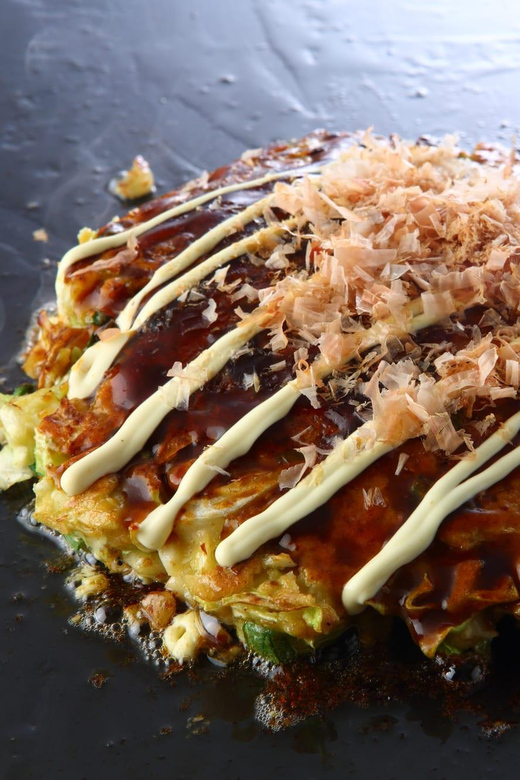
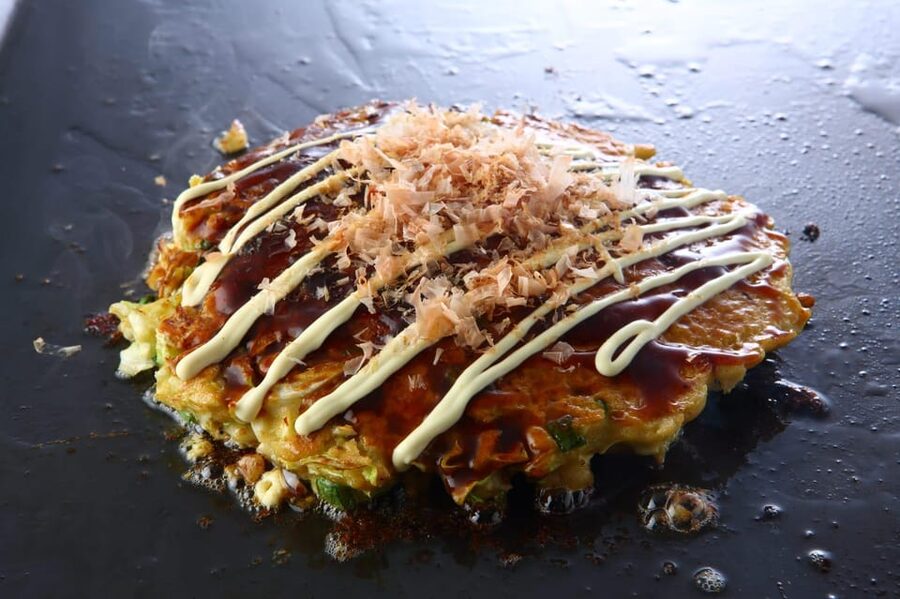
Okonomiyaki is Osaka’s famous savory pancake, made for personal variations and shared eating. The class lets you prepare it rather than simply watch a guide cook one.
That hands-on approach is valuable because the dish is more about feel and choices than strict restaurant-style precision. You can see how the mixture comes together, follow the cooking instructions, and understand why the finished pancake works as a filling, flexible meal.
The class presents okonomiyaki as an Osaka dish people take pride in, not just a novelty for visitors. Guides also use the cooking time to discuss Japanese products, regional differences, and food customs. Chie, in particular, has been praised for explaining Japanese history and products while keeping the kitchen work easy to follow.
You should still keep expectations realistic. This is a friendly four-hour class, not a professional chef course. You will learn a reliable home method, but the goal is a good meal and a pleasant cultural exchange rather than advanced knife skills or restaurant-level presentation.
More Sake Tastings in Japan:
- 3-Hour Kyoto Insider Sake Brewery Tour with Tastings & Pairings
★ 5.0 · 917 reviews - Kyoto Sake Brewery & Tasting Walking Tour
★ 5.0 · 623 reviews - 1.5-Hour Kyoto Insider Sake Experience with 7 Tastings & Pairings
★ 5.0 · 297 reviews - Sake Tasting Masterclass in Shinjuku (8+ Varieties with a Pro)
★ 5.0 · 271 reviews
Folding gyoza with the group
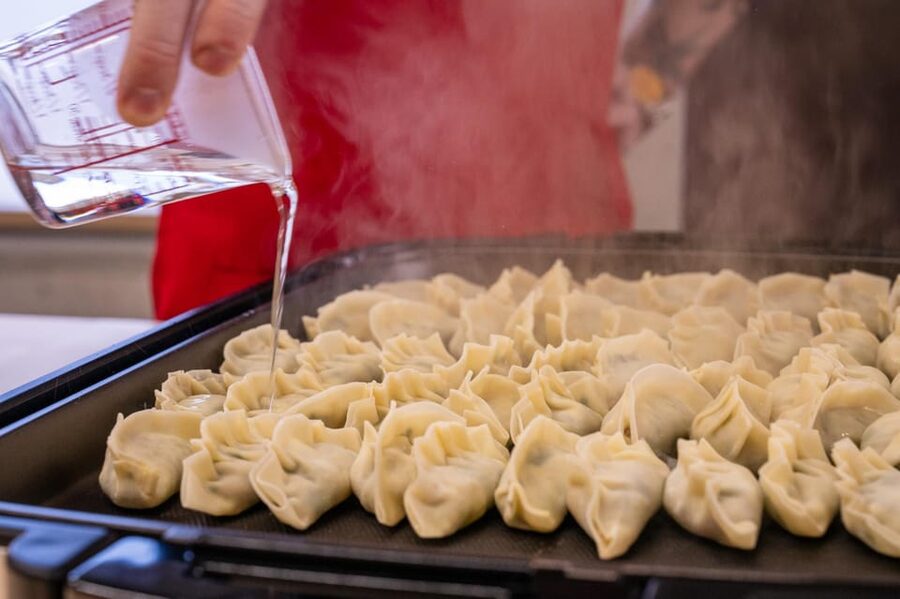
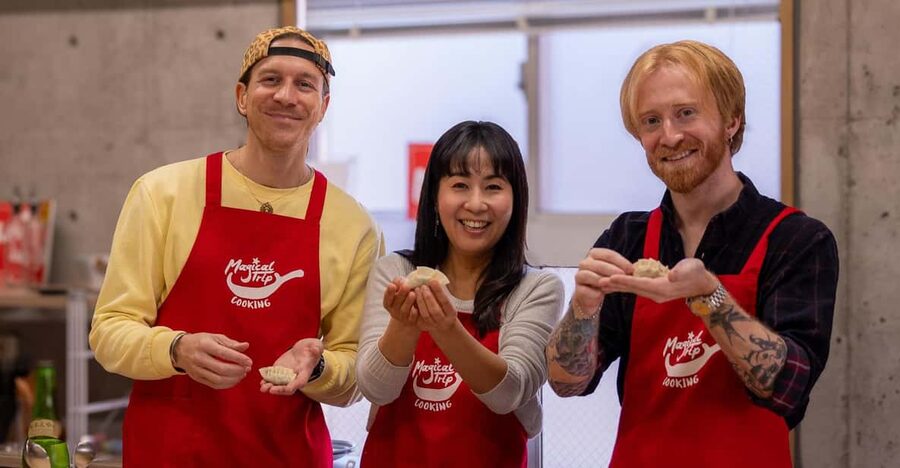
Gyoza provides the most playful part of the class. Folding the dumplings gives everyone a task, and the repetition makes it easy to chat while your hands stay busy.
You do not need to arrive knowing how to fold perfect dumplings. The guide demonstrates the method and helps you along. Some will come out neat, and some may look more personal. That is part of the fun, especially for families, friends, and couples who want an activity they can do together.
The finished gyoza should be crispy and juicy, but the real value is the shared work. Cooking beside other people creates natural conversation without forcing anyone into a formal introduction session. You might compare folds, ask about Osaka, or simply concentrate on sealing the next dumpling.
This is also the dish most likely to become a group memory. You will have a visible record of what you made, and the recipe gives you a way to repeat the activity later with friends at home.
The guide makes the difference
The company uses different local hosts, so the personality of your class can vary. Chie has been praised for combining food instruction with stories about Japanese history and regional products. Eri is described as friendly, helpful, and good at answering questions about Osaka and Japanese culture. Emi has guided participants through the supermarket and all three recipes, while Akko and Ayu have also led warm, relaxed classes.
Linda has even added seasonal touches, decorating the room for Christmas and helping with a sake purchase afterward. That kind of extra attention cannot be promised on every date, but it shows how the format leaves room for a personal host style.
The common thread is direct instruction and conversation. You are not left to guess what to chop or when to cook. The guide works through each recipe, explains the process, and helps the group keep moving.
Because the group limit is seven, you have a better chance to speak with the guide than you would in a large cooking studio. If you have questions about Osaka, food customs, or places to visit next, ask during the cooking and meal time. Guides have also offered general Osaka tips, which can be useful early in your stay.
Lunch, drinks, recipes, and photos
The meal is included, along with all ingredients. You make the food and then eat it as lunch, so this is not a quick demonstration followed by a small sample. One participant specifically noted that there was a lot of food, which is useful advice if you are planning another major meal soon afterward.
You receive three canned drinks, with alcoholic and non-alcoholic choices. Sake and beer are available, and soft drinks can be chosen instead. Tea is served during the experience. The drinks are meant to accompany the cooking and conversation, not replace a separate tasting tour.
Afterward, recipes are available for download. This is one of the strongest practical features because the dishes are designed around simple ingredients and ordinary home cooking. You can recreate the menu for a dinner party, make gyoza with family, or use the recipes to bring a small piece of Osaka into your own kitchen.
Your guide also takes tour photos and sends them by email. That gives you a record of the supermarket visit, the cooking, and the meal without requiring you to keep taking pictures while handling food.
Who should book, and who should think twice
I would recommend this to couples, friends, families with older children, and solo visitors who like meeting people through food. Anyone over 12 can join, but cooking involves cutting and heat, so younger children are not part of the stated age range.
It is also a good choice for first-time visitors who want a low-pressure cultural activity. You learn food basics, get local conversation, and eat a full lunch in one four-hour block. It can fit well near the start of a trip, when you want practical context for later meals, or near the end, when you want recipes to take home.
Vegetarians and vegans are welcome, but you must share dietary needs or allergies at least one day ahead. Gluten-free options are not available, and the kitchen cannot guarantee an allergy-free meal because food is prepared in external kitchens. Substitutions may not always be possible, so anyone with a serious allergy should consider that limitation carefully.
Mobility is another concern. The experience may include places that are difficult for wheelchairs or strollers, and it is not recommended if you have walking difficulties. A private tour is suggested for those who need more flexibility.
The class starts on time. Late arrivals cannot join, reschedule, or receive a refund, so allow extra time to find Exit 4 and the FamilyMart meeting point. Osaka weather can also be extreme, with very hot summers and cold winters, so dress for the season during the walk to and from the supermarket.
Is $90 a fair price?
At $90 per person, this is not the cheapest way to eat lunch in Osaka. You could order okonomiyaki and gyoza for much less, especially if your only goal is to taste the dishes.
The value comes from the full package. You get four hours with an English-speaking local guide, all ingredients, a supermarket visit, three cooked dishes, lunch, three drinks, tea, recipes, and photos. The group size is limited to seven, which adds personal attention that a large class may not offer.
I think the price makes sense if you value participation and local conversation. It is less convincing if you mainly want a quick cooking demonstration or a formal sake tasting. This experience gives you a meal plus a skill, and the recipes can keep paying off after you return home.
Free cancellation is available up to 24 hours before the start, and you can reserve now and pay later. Those terms help if your Osaka schedule is still changing, but the strict late-arrival rule means you should treat the meeting time seriously.
Should you book this Osaka cooking class?
Book it if you want to cook three local dishes, see a regular supermarket, and spend a relaxed half-day with an English-speaking guide. The strongest reasons are the small group, the useful recipes, the substantial lunch, and the chance to learn about Osaka while your hands are busy.
Skip it if you need gluten-free food, cannot manage walking and standing, or want a serious technical cooking course with a formal sake education. For everyone else, this is a practical and social way to move beyond eating Osaka food at a restaurant. You leave with a full meal, a few new kitchen skills, and recipes that can bring the trip back to your table.
FAQ
Where does the Osaka cooking class meet?
Meet in front of FamilyMart, about one minute from Exit 4 of Minami Morimachi Station.
How long does the experience last?
The cooking experience lasts four hours, including the supermarket visit, cooking, and lunch.
What dishes will I make?
You will prepare niku-sui beef soup, okonomiyaki, and gyoza.
Are drinks included?
Yes. Three canned drinks are included, and you can choose alcoholic or non-alcoholic options. Tea is also served.
Can vegetarians and vegans join?
Yes. Vegetarians and vegans are welcome, but you must share dietary needs or allergies at least one day ahead. Gluten-free options are unavailable.
Is the class suitable for children or people with mobility issues?
Participants must be over 12 because cooking involves cutting and heat. The experience may include areas that are difficult for wheelchairs or strollers and is not recommended for people with walking difficulties.
More Market Mornings in Japan
- Tsukiji: Outer Market Walking Tour & Sake Tasting Experience
★ 4.9 · 81 reviews - Tsukiji Market Eating Tour, Authentic Sushi & Sake Comparison
★ 5.0 · 52 reviews - Private Nishiki Market Food & Sake Tour by Young Local Guides
★ 5.0 · 12 reviews
Newly added around Japan
- Nara: Sake Tasting Tour at the Birthplace of Japanese Sake★ 4.9 · 8 reviews
- Kobe: Sake Brewery Tour with Tasting and Kobe Beef Bites★ 5.0 · 11 reviews
- Kobe: Sake Brewery Tour with Tasting Sake★ 4.7 · 9 reviews
- Kyoto: Fushimi Sake District Tour with Boat Ride★ 4.6 · 10 reviews
- Nara – Craft Beer, Sake, and Food Walking Tour★ 3.5 · 9 reviews
- World Heritage Himeji Castle & Sake Breweries Private Tour★ 4.5 · 11 reviews
- Visit behind the Scenes: Hiroshima Saijo Sake Brewery Tour★ 5.0 · 9 reviews
- Sake Town Tour in Saijo Hiroshima★ 5.0 · 9 reviews
Sake Tasting, compared.

3-Hour Kyoto Insider Sake Brewery Tour with Tastings & Pairings
Read our review →
Sake Tasting Masterclass in Shinjuku (8+ Varieties with a Pro)
Read our review →
Insider Sake Experience with 7 Tastings and Snacks
Read our review →
Sake Omakase in Tokyo: Guided Tasting by Certified Sommeliers
Read our review →
Private Tea Ceremony and Sake Tasting in Kyoto Samurai House
Read our review →
Casual Japanese SAKE tasting and snack experience in Kabukicho
Read our review →
Browse the lists this tour appears in