
Reviewed · SUSHI & SAKE TOURS
Tsukiji Market Eating Tour, Authentic Sushi & Sake Comparison
Tsukiji is easiest to enjoy when someone else helps you choose what to eat. This small-group tour leads you through seafood stalls, knife shops, sweets counters, and cooking stores before finishing with fresh sushi and three sake tastings.
I like the six-person limit, which makes it easy to hear your guide and ask questions. I also like the mix of food and tradition: you get market snacks, a Kanji name sticker, Tsukiji Hongwanji Temple, and Namiyoke Inari Shrine. The main caution is that the market can be crowded and the schedule leaves little time for slow browsing or a large independent meal.
Key points to know before booking
- Three sake samples accompany the food, giving you a simple way to compare different brands and styles.
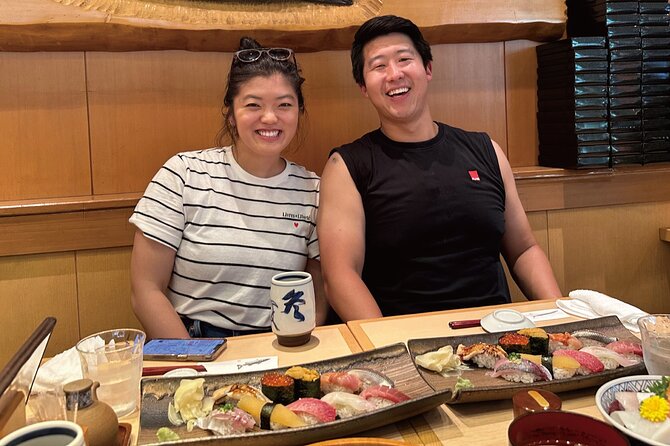
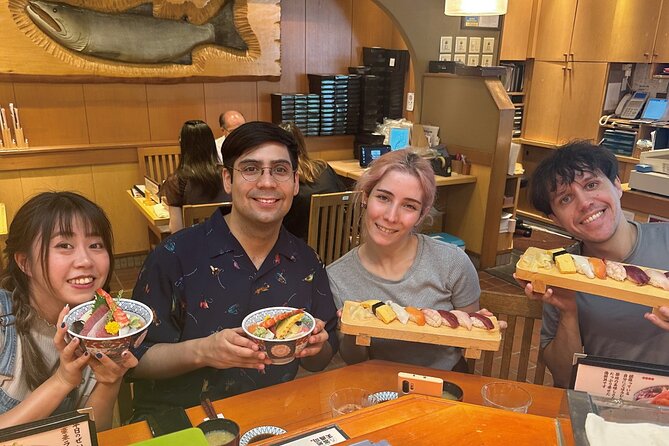
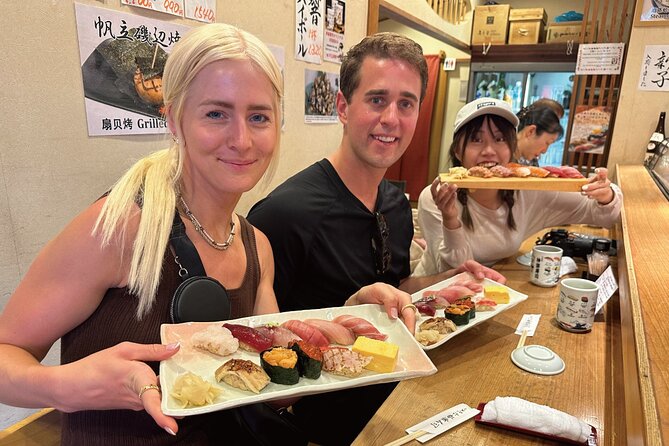
- The sushi lunch is the main event, with fresh seafood from the Tsukiji area served at an authentic sushi restaurant.
- Groups are limited to six people, so the guide can shape the walk around your interests.
- Ariel is a particularly warm guide when assigned, with an easy, friendly manner and strong knowledge of Tokyo food spots.
- The route adds two places of worship, Tsukiji Hongwanji Temple and Namiyoke Inari Shrine, to the food-focused morning or afternoon.
- The $30 price includes food, lunch, guide service, and sake, making this unusually good value if you eat and drink everything provided.
Why Tsukiji works better with a guide
Tsukiji’s outer market, known as Tsukiji Jogai Market, is not one single hall with a neat entrance and exit. It is a web of adjoining streets and shops, with more than 400 businesses selling seafood, sweets, soup stock, sake, knives, and other cooking tools.
You can wander alone, but it is easy to miss the small counters and specialty shops that make the area interesting. A guide also helps you understand what you are seeing. A stall selling dried ingredients, for example, is not just a shop. It is part of the everyday food system behind Japanese home cooking and restaurant meals.
This tour is built around that local point of view. You move at a practical pace, taste several items, and get help deciding what deserves your attention. The small group matters here. In a large crowd, a market guide can become a distant voice. With no more than six people, you can stop to ask about ingredients, customs, or other food areas in Tokyo.
The tour lasts about three hours. That is long enough for a proper introduction, but not so long that the market becomes tiring. You should still wear comfortable shoes and expect to walk and stand through active shopping streets.
More Sushi and Sake Tours in Tokyo:
- Ramen and Sushi Cooking Class with Sake Pairing Set in Tokyo
★ 5.0 · 291 reviews - Sake Omakase in Tokyo: Guided Tasting by Certified Sommeliers
★ 5.0 · 239 reviews - Tokyo: Sushi and Ramen Cooking Class with Sake Pairing Set
★ 5.0 · 81 reviews
Starting at Tsukiji Hongwanji Temple
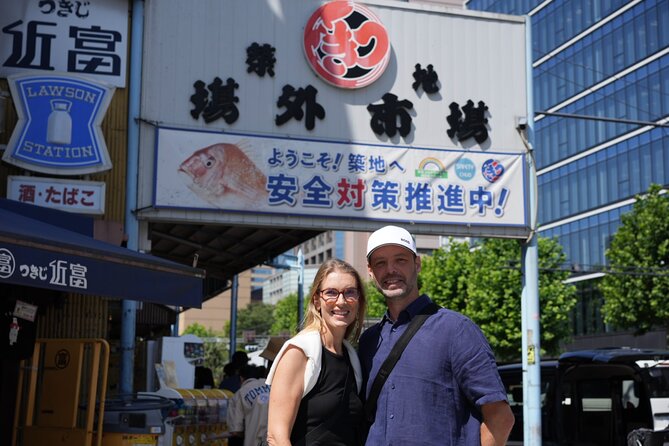
The meeting point is near Tsukiji Station at 3 Chome-9 Tsukiji. The first stop is Tsukiji Hongwanji Temple, where you get a short introduction to the district before entering the market.
The temple has an unusual exterior modeled on ancient Buddhist architecture from India and other parts of Asia. Inside and around the entrance, you may notice stained glass and sculptures of animals. It does not look like the plain wooden temple many people picture when they think of Japan, and that contrast makes it a useful first stop.
You get about 10 minutes here. That is enough to see the exterior and take in the setting, but not enough for a long visit or quiet religious reflection. Think of it as a cultural opening rather than a full temple tour.
I like this choice because it gives the food walk some balance. Tsukiji is famous for eating, yet the neighborhood also has working religious sites tied to local life. Starting at the temple helps you see the area as more than a place to buy breakfast.
Sampling the outer market for an hour
The longest stop is Tsukiji Jogai Market, where you spend about an hour looking through the shops and tasting selected foods. The exact path can be tailored to your interests, which is useful if you already know that you prefer seafood, sweets, kitchen tools, or sake.
The included snacks may include Japanese omelet, strawberry daifuku, dashi, tea, and nuts. You may also try other market foods such as skewers or mochi, depending on the route and what is available. These small tastings are important because they let you sample several flavors without filling up before lunch.
The egg omelet is a good example of why a guide helps. It may look simple, but Japanese market omelet can be sweet, soft, and quite different from a Western breakfast egg. Strawberry daifuku gives you a chewy rice cake with a sweet filling, while dashi introduces the savory stock used in many Japanese dishes.
Tea and nuts provide a quieter counterpoint to the more obvious seafood and sweets. You are not simply racing from one famous bite to another. You are getting a compact lesson in the ingredients and textures that shape Japanese food.
The market also sells knives, utensils, soup stock, sake, and other food goods. If you want a souvenir that is useful rather than decorative, this is the place to look. Keep in mind that the tour includes tastings, not a personal shopping budget. Any knives, food, or gifts you buy are extra.
Seeing seafood at the Tsukiji Fish Market
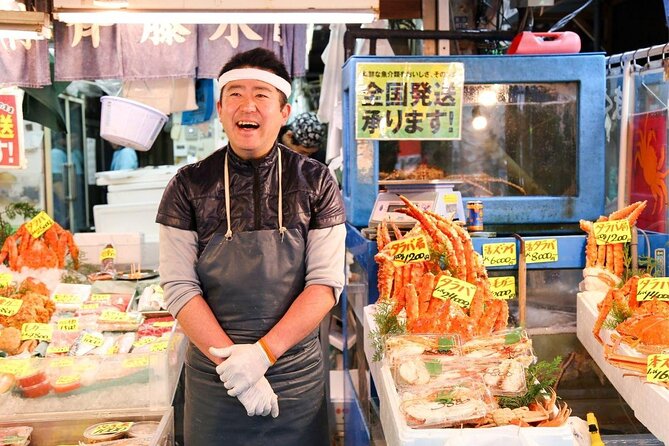
The route then spends about 45 minutes around the fish market and its specialty seafood stores. Buyers from culinary businesses shop here, and you can see the close-up detail of Japan’s seafood trade without needing to arrange a separate market visit.
The timing can affect what you see. If conditions are right, you may catch a tuna dismantling show. It is not guaranteed, so treat it as a possible bonus rather than the central promise of the tour.
This section is likely to appeal most if you care about how food reaches the plate. The displays give you a closer look at the range of seafood used in Japanese cooking, and your guide can answer questions that would be hard to resolve by reading signs alone.
There is a practical limit, too. Tsukiji is a working market, not a museum built only for sightseeing. Shops may be serving buyers, and narrow areas can feel crowded. Your guide helps you move through it without getting lost, but you should stay alert and avoid blocking shop entrances.
More Market Mornings in Tokyo:
- Tsukiji: Outer Market Walking Tour & Sake Tasting Experience
★ 4.9 · 81 reviews - Osaka: Cooking Class & Sake Tasting with Local Market Visit
★ 4.8 · 31 reviews - Private Nishiki Market Food & Sake Tour by Young Local Guides
★ 5.0 · 12 reviews
A quiet pause at Namiyoke Inari Shrine
Namiyoke Inari Shrine sits in a corner of the market and has a direct link to the people who work there. Fishermen and market workers pray for safety at the shrine, making it a fitting stop after the seafood section.
You spend about 10 minutes here. The feature most likely to catch your eye is the distinctive lion statue. It gives the shrine a visual identity that is easy to remember, and it adds a bit of local character to the route.
This short stop also shows why the tour is more than a meal with a walk attached. The shrine connects the market to the risks and routines of fishing and food work. You do not need a long lecture to understand the point. A brief visit, paired with your guide’s explanation, is enough.
Comparing sake before the sushi lunch
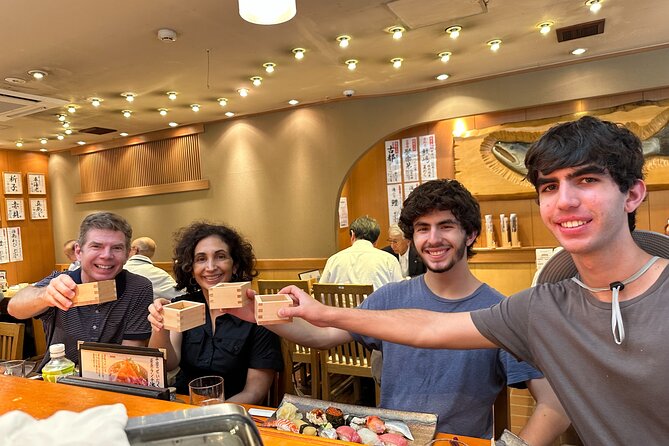
The sake tasting is one of the strongest parts of the experience. You compare three types from several Japanese brands, which is more useful than drinking one glass without context.
Sake can seem confusing if you have not tried it before. Tasting several versions side by side gives you a basic reference point. You can notice differences in sweetness, aroma, and finish, then decide what you prefer. The format suits both beginners and people who already enjoy sake but want a wider comparison.
Because the sake is served alongside market food, you also get a sense of how the drink works with Japanese flavors. The tour includes alcoholic beverages as part of the sake comparison. Extra drinks and food are not included, so budget separately if you want to continue sampling after the planned tastings.
The sake portion deserves some pacing. You still have a market walk and sushi lunch ahead, so this is not designed as a long drinking session. It is a guided tasting that adds context to the meal.
Finishing with a real sushi lunch
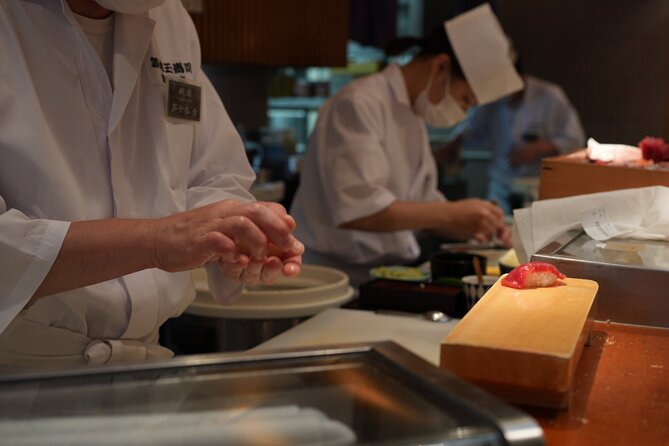
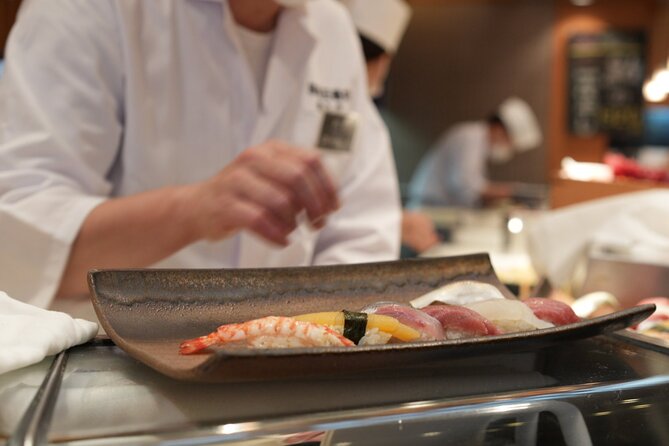
The tour concludes with a 45-minute sushi lunch at an authentic restaurant in the Tsukiji area. The meal uses fresh seafood from the market and is the part that gives the whole outing a clear finish.
I would plan this tour around the lunch, not treat it as a side dish. The earlier snacks are varied, but the sushi is the most substantial food included. If you are hungry when the tour begins, a light breakfast is sensible. If you eat a large meal beforehand, you may not appreciate the lunch as much.
The restaurant setting also changes the pace. After walking among market stalls, you sit down and focus on the food. Your guide can help explain what you are eating and answer questions about the meal. The tour description does not specify a fixed sushi menu, so you should not book it expecting particular fish or a specific number of pieces.
The lunch is also where the value becomes clear. At $30, the price includes snacks, tea, dashi, the sushi meal, an English-speaking local guide, and the sake comparison. Even if you would not normally pay for a guided market walk, the included food makes the cost easy to justify.
Ariel and the value of a small group
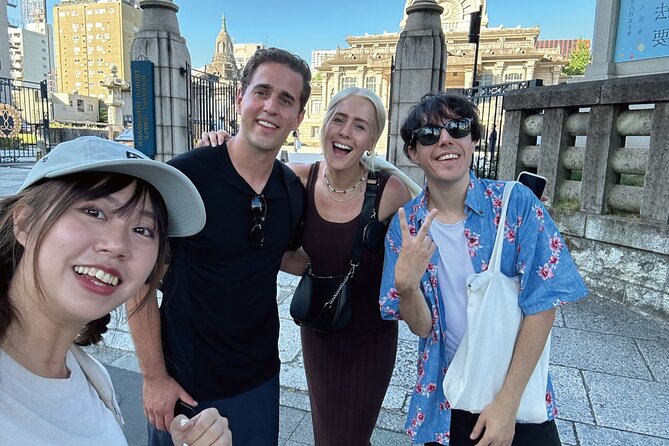
When Ariel leads the tour, her relaxed style is a major asset. She is described as friendly, enthusiastic, and easy to spend time with, more like a companion showing you favorite food stops than a guide delivering a memorized speech.
That style matters in Tsukiji. You want someone who can answer questions about food, point out worthwhile stalls, and adjust the pace when your group is curious about something. Ariel is also praised for helping families enjoy the experience, including groups with children aged 8 and 14.
The maximum of six people supports this kind of personal attention. You can hear the guide clearly, ask about ingredients, and mention other parts of Tokyo you plan to visit. A larger group might offer a lower price, but it would not provide the same ease of conversation.
The provider is Rec Loc Experience. Your guide will be English-speaking, but the specific guide is not guaranteed in the booking details, so Ariel’s presence should be treated as a possibility rather than a promise.
What the $30 price really includes
The $30 price is strong for a three-hour food experience in central Tokyo. You receive:
- A local English-speaking guide
- Market snacks such as omelet, daifuku, dashi, tea, and nuts
- A fresh seafood sushi lunch
- Three sake comparisons
- Visits to a temple and shrine
- A Kanji translation of your name on a sticker
Private transportation, hotel pickup, extra meals, extra drinks, and personal purchases are not included. You meet the group yourself near Tsukiji Station, so the price does not cover a car or transfer.
The name sticker is a small but enjoyable extra. It gives you a personal souvenir and adds a Japanese language element without turning the tour into a formal lesson.
The main question is appetite. If you enjoy tasting several small foods, drinking sake, and then having sushi, the inclusions are generous. If you mainly want time to shop or take photographs, the guided schedule may feel too structured.
Practical details that affect your day
You receive confirmation when you book, and the tour uses a mobile ticket. It begins near public transportation, with the stated meeting point at Tsukiji Station. Arrive with enough time to find the station exit and meeting area, since the route starts promptly and the market streets can be confusing.
The group maximum is six people. Most people can take part, but the experience involves walking, standing, and moving through active market areas. The supplied details do not give a specific accessibility plan, so contact the provider before booking if you have mobility needs.
Cancellation is free up to 24 hours before the start time for a full refund. Inside that window, no refund is provided, and changes are not accepted. The cut-off uses Tokyo local time, so check the timing carefully if you are booking from another country.
The tour is suitable for solo visitors, couples, families, and small groups who want help choosing food. It is especially useful on a first Tokyo visit, when you may not yet know which stalls are worth your time.
Who should book this Tsukiji experience?
You should book it if you want a guided introduction rather than an unplanned walk. The combination of snacks, sake, sushi, a temple, and a shrine gives you a broad taste of Tsukiji in three hours.
Families can benefit from the structure because children get frequent changes of scenery and several small foods to try. Food-focused visitors will appreciate the seafood stores, cooking tools, and sake comparison. First-time sake drinkers will find the side-by-side tasting more useful than ordering a random bottle.
You may want to skip it if you prefer complete freedom. The route gives you time to browse, but it is not an open-ended shopping trip. You also pay for food and drinks you may not want, so the value is lower for people who avoid seafood, alcohol, or Japanese sweets.
Should you book it?
For $30, I would book this tour if you want an easy, food-led introduction to Tsukiji and prefer having a friendly guide make the choices simpler. The small group, included sushi lunch, and three-sake tasting are the strongest reasons to go.
Book with realistic expectations. The market walk is compact, the tuna dismantling is not guaranteed, and the sushi menu is not specified in advance. If those limits suit you, this is a practical way to eat well, learn the area, and leave Tsukiji with more than a bag of souvenirs.
FAQ
How long does the Tsukiji Market Eating Tour last?
The tour lasts approximately three hours, including the temple, market areas, shrine, tastings, sake comparison, and sushi lunch.
Where does the tour meet?
The stated meeting point is near Tsukiji Station at 3 Chome-9 Tsukiji, Chuo City, Tokyo 104-0045, Japan.
What food is included?
Included snacks may include egg omelet, strawberry daifuku, dashi, Japanese tea, and nuts. The tour also includes a sushi lunch using fresh seafood from Tsukiji.
Is sake included?
Yes. The Sake Drinking Comparison includes several types of sake from different Japanese brands, with three types available for comparison.
How large is the group?
The tour has a maximum of six participants.
Is an English-speaking guide included?
Yes. An English-speaking local guide is included. Ariel is one guide associated with the experience, but the assigned guide is not guaranteed in the provided details.
Can I cancel for a refund?
Yes. You can cancel at least 24 hours before the local start time for a full refund. Cancellations or changes made within 24 hours are not accepted, and no refund is provided.
Newly added around Tokyo
- Japanese Sake Tasting & Wagyu Sukiyaki Cooking Class in Tokyo★ 5.0 · 10 reviews
- Tokyo Sake Tour with a Local Guide, Private & Tailored to Your Taste★ 4.0 · 12 reviews
- 7 Kinds of Sake Tasting with Complementary Foods★ 5.0 · 11 reviews
- Wagyu Beef & Sake Pairing Foodie Tour in Tokyo★ 5.0 · 16 reviews
- Luxury Tokyo Sake, Cocktail, Whisky and Pairing Tour★ 5.0 · 18 reviews
- Sake & Food Pairing with Sake Professional★ 5.0 · 28 reviews
- 10 kinds Sake Tasting Experience in Tsukiji with local!!★ 5.0 · 19 reviews
- Private Tour: Tokyo’s Oldest Sake Brewery and Riverside Walk★ 5.0 · 25 reviews
Sushi & Sake Tours, compared.
Düsseldorf: Sushi, Sake & Japanese Lifestyle Tour
Read our review →
Ramen and Sushi Cooking Class with Sake Pairing Set in Tokyo
Read our review →
Sake Omakase in Tokyo: Guided Tasting by Certified Sommeliers
Read our review →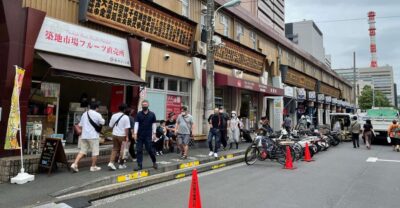
Outer Market Walking Tour & Sake Tasting Experience
Read our review →
Cozy Tokyo Class: Ramen, Sushi, Sake Pairing & Cultural Exchange
Read our review →
Tokyo Sushi Making Class : Sake Ceremony & Matcha Experience
Read our review →Browse the lists this tour appears in