
Reviewed · SAKE TASTING
Tokyo Sake Tasting with a Pro: Find Your Perfect Sake
Tokyo Sake Tasting with a Pro turns a drink many visitors find mysterious into something you can understand, compare, and enjoy. In 90 minutes, you taste 5 to 6 Japanese sakes, including warm sake, while learning how aroma, flavor, and temperature shape each glass.
I like the small group of up to eight, which gives the English-speaking Sake Navigator room to explain the basics without turning the session into a lecture. I also like the decorated masu cup, a simple hands-on souvenir that connects the tasting to Japanese craft.
The main consideration is location. The experience takes place in a private room near Ikebukuro, not at a famous brewery or a traditional countryside sake house. If you want a polished introduction in Tokyo, it fits well. If you want a production tour, choose something else.
Key points at a glance
- Five to six sake styles in one sitting: Compare fragrant, light, full-bodied, and aged examples rather than sampling one narrow type.
- Warm sake is part of the lesson: You can see how heating changes the drink instead of assuming sake is always served cold.
- English guidance from a certified Sake Navigator: The session is designed for international visitors, beginners, and sake fans.
- A creative souvenir you make yourself: Decorate a traditional wooden masu cup with a Japanese brush pen and take it home.
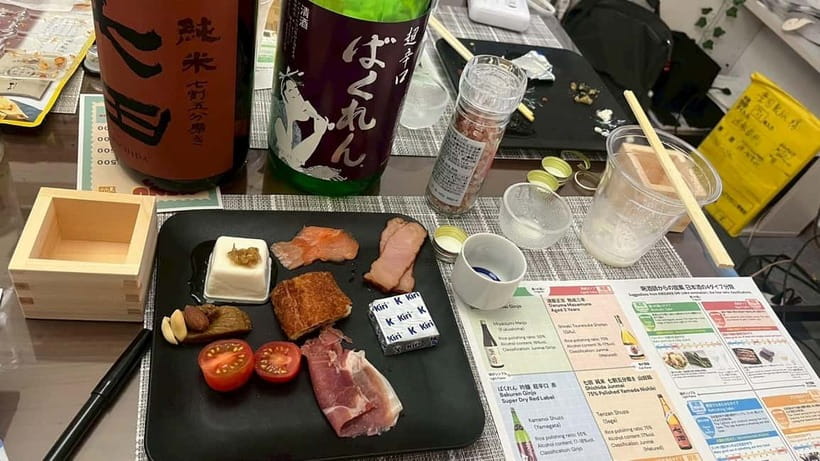
- Snacks are matched to the sake: Small food pairings help explain how sake works with a meal.
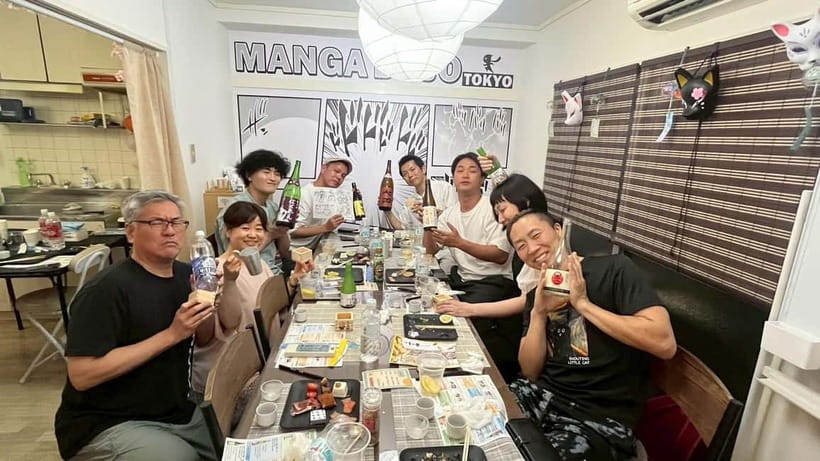
- Eight people maximum: The format is more personal than a large bar tasting, though availability may be limited.
Why this Tokyo sake tasting works for first-timers
Sake can seem hard to approach. Labels use Japanese terms, bottles vary by rice polishing and brewing method, and serving temperature can change the character of the drink. This experience gives you a practical way in.
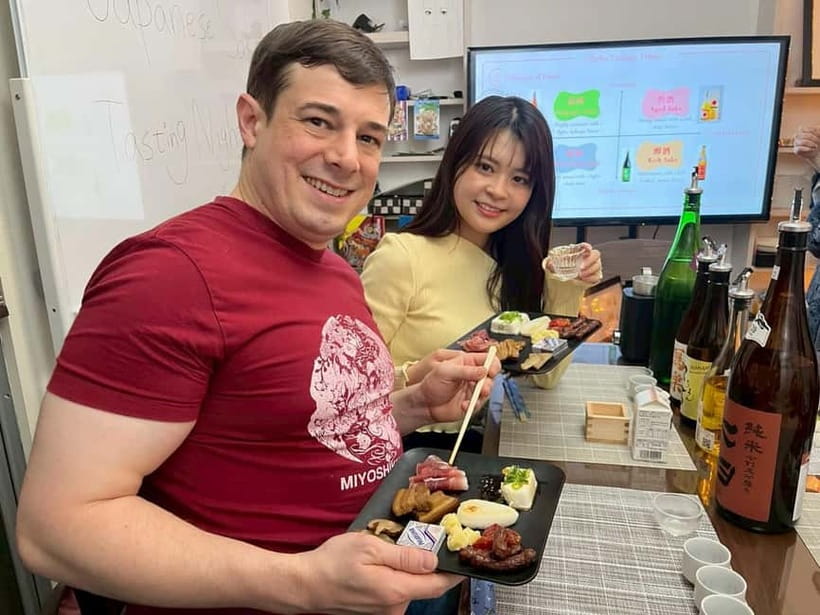
Rather than asking you to memorize technical details, the session organizes sake into four broad styles: Kunshu, Soshu, Junshu, and Jukushu. These names point to different drinking experiences. Kunshu is fragrant, Soshu is light, Junshu is fuller and more substantial, and Jukushu is aged.
That framework matters because it gives you a vocabulary for your own taste. You may learn that you prefer a floral, aromatic sake, or you may find that a lighter style suits you better. You might even discover that the aged option is more appealing than the fresh, crisp bottles often recommended to beginners.
The host also explains how sake is made and how to enjoy it. That basic context is useful at restaurants later in your Japan trip. You will be better prepared to read a menu, ask for a style you liked, or explain that you want something served warm.
The English format is a major advantage. You do not need prior sake knowledge, Japanese language ability, or confidence with tasting-room etiquette. The tone is relaxed, and the activity is built for people who want clear explanations rather than a formal seminar.
More Sake Tastings in Tokyo:
- Sake Tasting Masterclass in Shinjuku (8+ Varieties with a Pro)
★ 5.0 · 271 reviews - Sake Omakase in Tokyo: Guided Tasting by Certified Sommeliers
★ 5.0 · 239 reviews - Casual Japanese SAKE tasting and snack experience in Kabukicho
★ 5.0 · 159 reviews
Arriving at the Sansho Building in Ikebukuro
The meeting point is Sansho Building 602 at 1-31-6 Higashi-Ikebukuro, Toshima-ku, Tokyo 170-0013. You take the elevator to the sixth floor and continue to room 602.
This is a practical detail worth taking seriously. The venue is not described as a street-level bar with a large sign, so allow enough time to find the building and reach the room. Keep the address and map link handy on your phone, especially if you are coming from another part of Tokyo.
Inside, you can expect a cozy, stylish setting reserved for international participants. That private-room setup helps the experience feel focused. You are not trying to hear an instructor over a noisy public bar, and the small group gives you space to ask questions.
The activity is wheelchair accessible. Transportation is not included, so you make your own way to and from Ikebukuro. Since the tasting lasts only 90 minutes, it can fit neatly between sightseeing plans, shopping, or an evening meal.
The first pours explain how sake changes
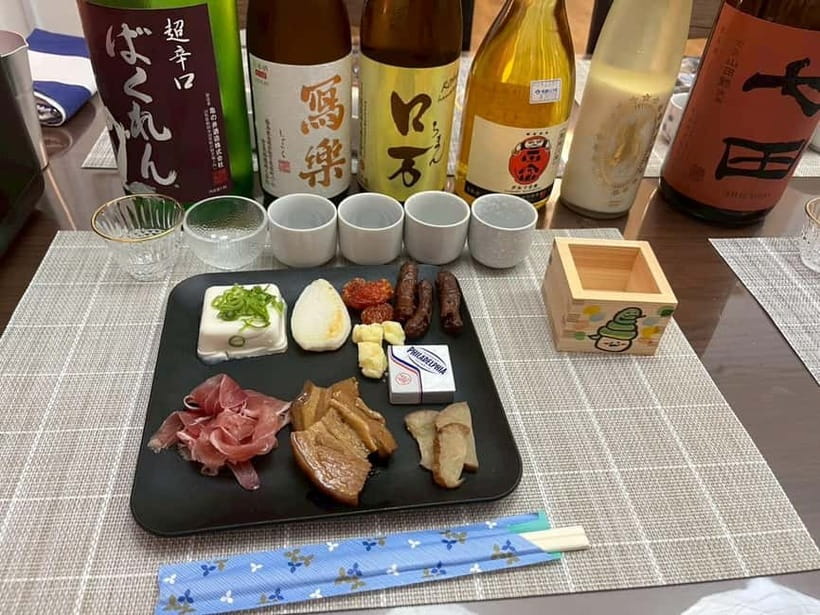
The session begins with the basics: how sake is made, how people drink it, and how to identify the qualities in the glass. You then move through 5 to 6 carefully selected varieties.
The selection represents the four main styles rather than offering several nearly identical bottles. That makes the tasting useful. You are comparing categories, not simply working through a flight with no clear purpose.
As you taste, pay attention to three things:
- Aroma, including how much the sake smells before you sip
- Flavor, from light and clean to fuller and more rounded
- Finish, or how the taste lingers after swallowing
You do not need expert tasting language. Start with simple observations. Is it light or strong? Floral or plain? Smooth or sharp? Warm or chilled? The host can help connect your impressions to the style of sake in front of you.
This is one of the strongest parts of the activity because you leave with a way to choose sake later. A tasting should not only give you drinks for one afternoon. It should help you make better choices at an izakaya, department-store food hall, or restaurant.
The exact brands and labels can vary, so you should not book this expecting one fixed bottle list. The important promise is the range of styles and the chance to compare them in a guided setting.
Warm sake changes the lesson
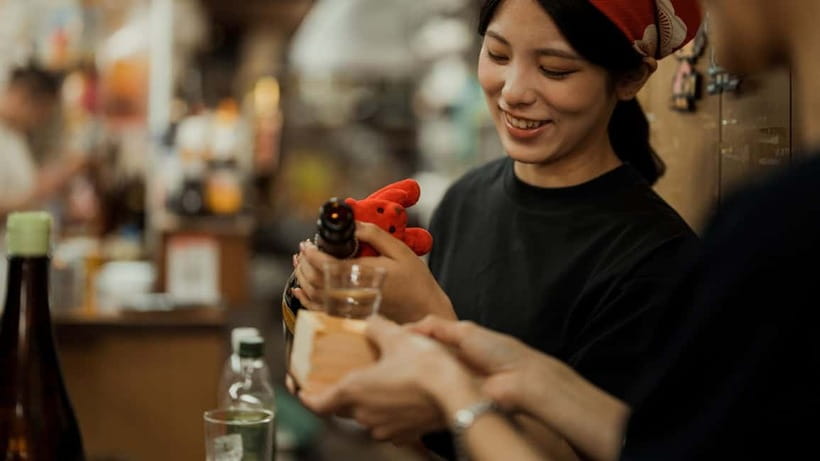
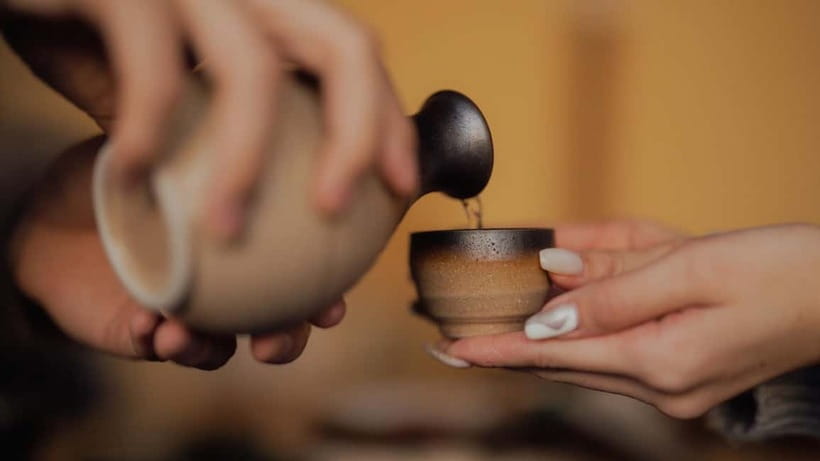
Many people arrive with the idea that sake is always served cold. This tasting corrects that quickly with a warm sake, called kanzake.
Heating does not simply make the same drink feel warmer. Temperature can change how aroma and flavor come forward. A sake that seems restrained when chilled may feel softer, rounder, or more pronounced when warm. The comparison gives you a clear example of why serving temperature matters.
This is also a useful restaurant skill. If you find a style you enjoy warm, you can look for it again. If you prefer a delicate, fragrant pour chilled, you will know not to order blindly from a menu.
The warm-sake portion may be less appealing if you already know you only enjoy cold drinks. Even then, it is worth treating as a comparison rather than a challenge. The point is not to force a favorite. It is to see how the same broad drink category can shift with temperature.
More Sake Tours in Tokyo:
- Ramen and Sushi Cooking Class with Sake Pairing Set in Tokyo
★ 5.0 · 291 reviews - Tasting All Types of Sake with Sommelier
★ 5.0 · 151 reviews - Wagyu & Sake Pairing in Shinjuku – Steak, Shabu-Shabu & More
★ 5.0 · 112 reviews - Tokyo Wagyu & Sake Pairing Tasting Experience with Local Flavors
★ 5.0 · 108 reviews
Snack pairings make the tasting more practical
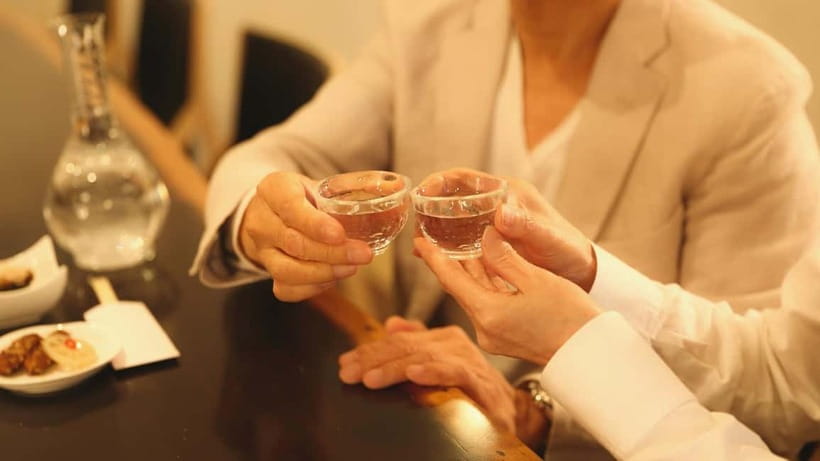
Light snacks are served during the tasting and selected to pair with the sake. They are not intended to replace dinner, so plan another meal if you arrive hungry.
Their value is in the comparison. Food changes the way alcohol tastes, and a snack can soften, sharpen, or balance what is in the cup. Trying the sake alone and then with food gives you a better sense of how to use it at the table.
The pairings have earned especially strong praise for being well matched. That matters because a poorly chosen snack can distract from the drink. Here, the food supports the lesson and adds a welcome break between pours.
You should still pace yourself. Five or six samples in 90 minutes is not a full evening of drinking, but it is enough to notice the alcohol. Eat the snacks, drink water when available, and avoid planning a demanding activity immediately afterward.
Because the group is small, you can ask why a particular snack works with a particular style. That question is more useful than simply being told that the pairing is good. It helps you notice what to look for when ordering sake with food later.
Decorating the wooden masu cup
The craft portion gives the tasting a personal finish. You receive a traditional masu, a small wooden sake cup, along with Japanese brush pens and materials for decorating it.
You can write your name, draw a design, or create something simple and personal. You do not need to be an artist. A short name, a travel date, or a basic Japanese-inspired mark is enough to turn the cup into a souvenir with a story attached.
The activity is a good change of pace after the tasting. It lets you slow down and work with your hands instead of moving straight from one explanation to the next. It also gives solo visitors and small groups an easy shared task without requiring a separate craft workshop.
Do not expect a large souvenir or a high-end piece of pottery. The masu is a modest wooden cup, and the value comes from decorating it yourself. It is light, easy to pack, and more personal than a standard shop purchase.
If you are traveling with children, note that the activity is not suitable for anyone under 20. The age rule applies to the sake experience, so this is an adult activity rather than a family craft stop.
What the $45 price gets you
At $45 per person, this tasting sits in a reasonable range for a guided Tokyo food and drink activity. You receive the instruction, 5 to 6 premium Japanese sakes, light snacks, the wooden cup, brush pens, and the finished souvenir.
The value depends on what you want from a tasting. If you only want to drink a small amount of sake, you can spend less at a bar. But that option will not necessarily give you a structured comparison of four styles, an explanation of temperature, English guidance, or a hands-on keepsake.
The small group also adds value. With no more than eight people, the host can keep the pace comfortable and respond to questions. The two published ratings give the experience a perfect score, with particular praise for the friendly hosts, clear learning, and snack pairings. That matches the design of the activity: it is not just a flight of drinks, but a short cultural lesson with food and craft included.
The price does not include transportation. You also need to account for a separate meal if light snacks are not enough. Still, for an English-language activity in central Tokyo with a certified guide and several premium samples, the package is fairly balanced.
Who will enjoy this most
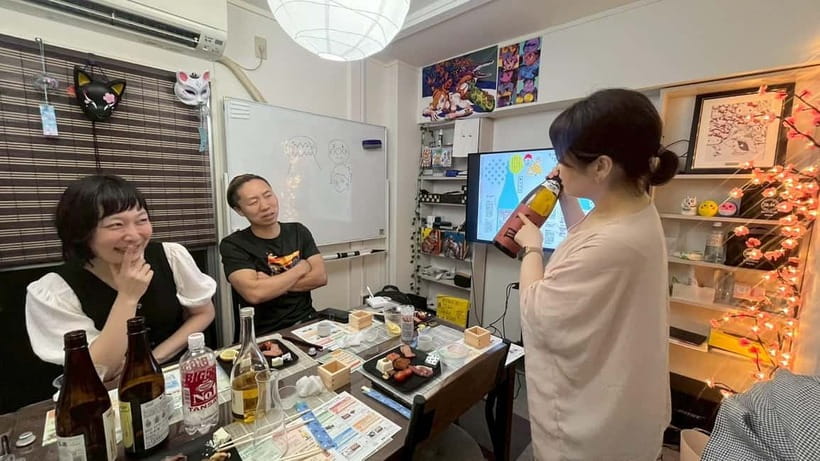
I would recommend this activity to a first-time sake drinker who wants help choosing a style. You get enough range to learn what you like without committing to a long course.
It also suits sake fans who want a compact introduction to Japanese categories and serving temperatures. You may already know your preferred bottle, but comparing fragrant, light, full-bodied, and aged styles side by side can sharpen your palate.
Couples and small groups should find the format easygoing. The cup decoration gives you a shared activity, and the snack pairings keep the session from feeling like a string of technical explanations.
Solo visitors are a good match too. The group limit and English instruction make it easier to meet others without the awkwardness of joining a large tour. You can ask questions at your own pace and leave with a souvenir you made yourself.
This is less suitable for anyone searching for a brewery visit, a long history lesson, a full meal, or a large nightlife event. The setting is a private room in Tokyo, and the focus is tasting, learning, and making a small keepsake.
Timing, booking, and practical details
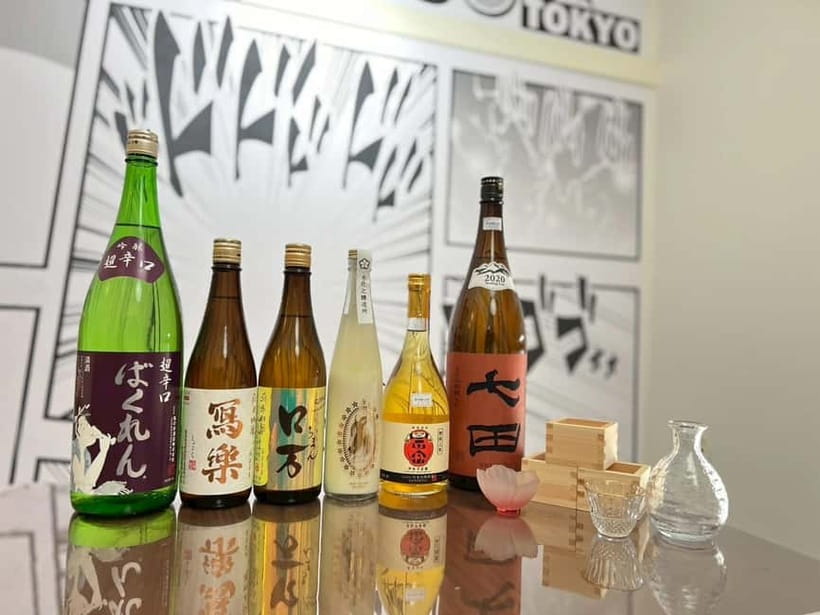
The activity lasts 90 minutes, with starting times based on availability. That length is enough for a proper introduction but short enough to fit into a busy Tokyo schedule.
You can cancel up to 24 hours in advance for a full refund. The reserve-now, pay-later option also helps if your sightseeing plans are still shifting. Since the group is limited to eight people, popular times may fill sooner than a large group activity.
Instruction is in English. The host is a certified Sake Navigator, and the experience is designed for international visitors. No transportation is provided, so plan your route to the Sansho Building before the start time.
The activity is wheelchair accessible. Participants must be at least 20 years old.
Should you book Tokyo Sake Tasting with a Pro?
Book it if you want a friendly, focused introduction to sake with clear English guidance, several styles, warm-sake comparison, paired snacks, and a souvenir you create yourself. The strongest reasons are the small group, the useful temperature lesson, and the chance to discover your own preference instead of being handed one standard drink.
Skip it if your main goal is to tour a brewery, eat a full dinner, or spend an entire evening at a sake bar. For most adult visitors with 90 minutes to spare in Ikebukuro, $45 buys more than a few samples. It gives you a better understanding of what is in your cup and a practical way to order with confidence later in Japan.
FAQ
Where does the sake tasting take place?
It takes place at Sansho Building 602, 1-31-6 Higashi-Ikebukuro, Toshima-ku, Tokyo 170-0013. Take the elevator to the sixth floor and proceed to room 602.
How long does the experience last?
The tasting lasts 90 minutes.
How many kinds of sake will I try?
You will taste 5 to 6 carefully selected varieties representing Kunshu, Soshu, Junshu, and Jukushu.
Is warm sake included?
Yes. The experience includes a warm sake tasting, known as kanzake, so you can compare how temperature changes the drink.
Is the activity held in English?
Yes. The instruction and support are provided in English by a certified Sake Navigator.
Can I cancel or pay later?
You can cancel up to 24 hours in advance for a full refund. You can also reserve your place and pay later, so you do not need to pay at the time of booking.
Newly added around Tokyo
- Wagyu BBQ & Sukiyaki with Sake Pairing Experience near Ginza★ 5.0 · 2 reviews
- Tokyo Sake Tasting Tour with a Sake Expert★ 5.0 · 7 reviews
- Sake Tasting and Cherry Blossom Fun in Tokyo!★ 5.0 · 4 reviews
- Private Sake Tasting at 300 Years Old Sake Brewery in Tokyo★ 5.0 · 3 reviews
- Tokyo: Serene Sakura & Sake: An Exclusive Brewery Pairing Lunch★ 5.0 · 2 reviews
- Sake Pairing Workshop with Japanese Food in Shinjuku★ 5.0 · 5 reviews
- Nagano: Snow Monkey and Zenkoji Temple Free Sake Taste Day Tour★ 4.5 · 8 reviews
- Cherry blossom & Japanese Sake Tasting in Shinjuku★ 5.0 · 4 reviews
Sake Tasting, compared.

3-Hour Kyoto Insider Sake Brewery Tour with Tastings & Pairings
Read our review →
Sake Tasting Masterclass in Shinjuku (8+ Varieties with a Pro)
Read our review →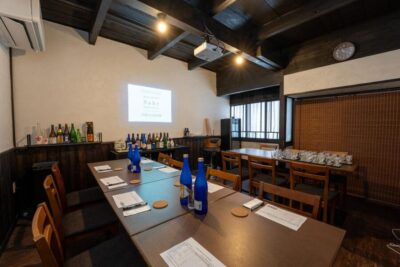
Insider Sake Experience with 7 Tastings and Snacks
Read our review →
Sake Omakase in Tokyo: Guided Tasting by Certified Sommeliers
Read our review →
Private Tea Ceremony and Sake Tasting in Kyoto Samurai House
Read our review →
Casual Japanese SAKE tasting and snack experience in Kabukicho
Read our review →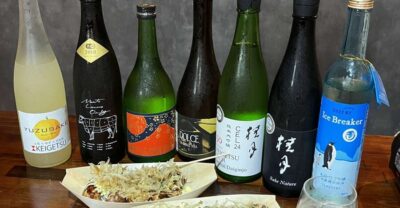
Browse the lists this tour appears in