
Reviewed · SAKE TASTING
Japanese Sake Tasting and Masu Crafting Experience in Tokyo
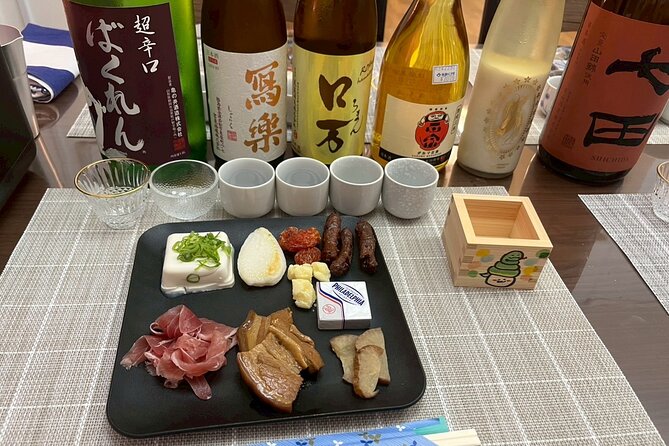
Japanese sake is more varied than many first-time drinkers expect. At Manga Dojo Tokyo, you taste five to six types, compare their aromas and flavors, and see how warmth changes a sake through a serving of kanzake. The evening also includes snacks, including some less obvious pairings, and a chance to decorate your own masu cup.
I especially like the small group size, with no more than eight people, and the mix of tasting and hands-on craft. The manga setting near Animate in Ikebukuro gives the evening a personal, creative feel. The main caution is simple: vegetarian and vegan options are not offered, and the 6 pm start leaves little room for a late arrival.
Key points
- Five to six sake styles: Compare clear differences in aroma, flavor, and finish rather than drinking just one house pour.
- Hot sake included: Taste kanzake and notice how warmth brings out different qualities.
- Snack pairings: Small bites accompany the sake, with unusual combinations such as curry bread.
- Make-your-own souvenir: Decorate a traditional wooden masu cup with Japanese brush pens.
- Small English-language group: The session welcomes solo visitors, couples, and groups, with a maximum of eight people.
- Convenient Ikebukuro setting: Manga Dojo Tokyo is a few minutes from Ikebukuro Station and ends where it begins.
A sake lesson with a creative Ikebukuro setting
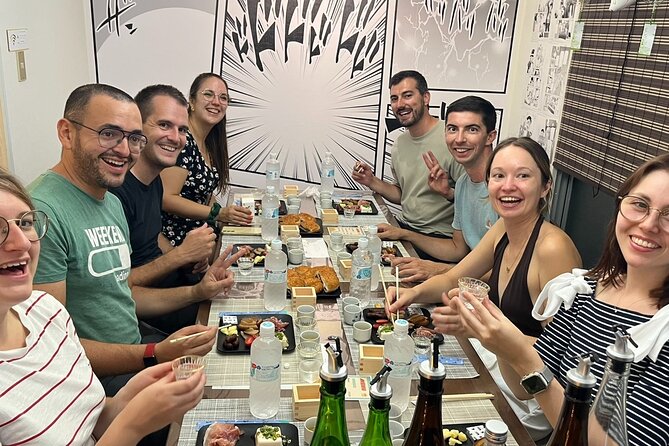
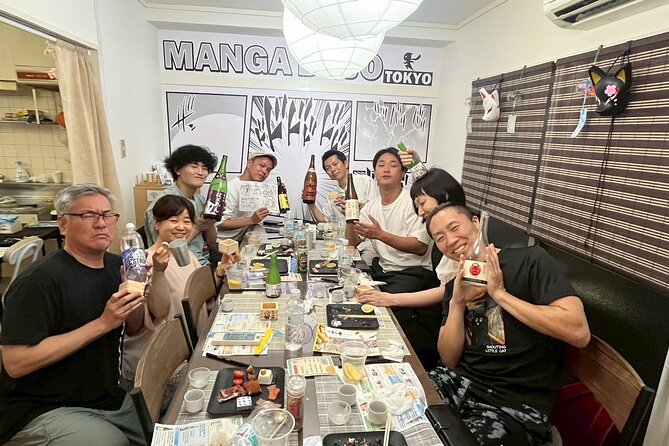
This is not a formal tasting room with rows of polished bottles and a quiet counter. Manga Dojo Tokyo is a cozy room in an apartment building near Animate, with manga-related displays and the creative atmosphere of a workshop. That setting matters because the evening feels social and informal from the start.
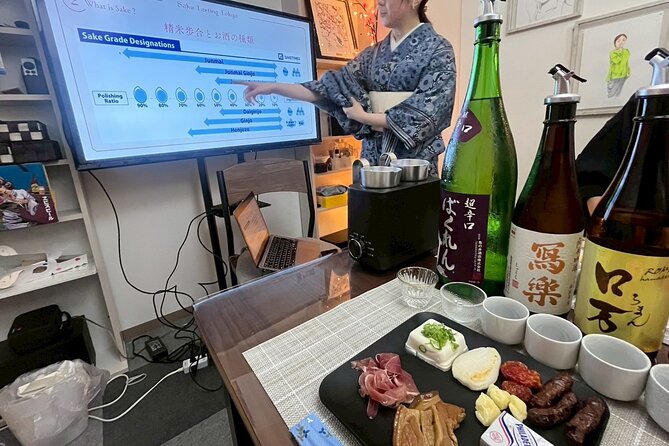
The host, known as Aki-san in the session, leads an English-language introduction to sake and its place in Japanese food culture. You learn the basic production process, how sake is tasted, and why terms such as ginjo and daiginjo refer to meaningful differences in style. Even if you already know a little about sake, the comparison format helps turn labels into something you can actually taste.
The group limit of eight is one of the strongest practical features. You have a better chance to ask questions, talk with the people beside you, and receive help during the craft portion. It also means this is a social activity rather than a private lesson. If you prefer complete quiet and a highly technical tasting, the friendly room and conversation may feel less formal than expected.
More Sake Tastings in Tokyo:
- Sake Tasting Masterclass in Shinjuku (8+ Varieties with a Pro)
★ 5.0 · 271 reviews - Sake Omakase in Tokyo: Guided Tasting by Certified Sommeliers
★ 5.0 · 239 reviews - Casual Japanese SAKE tasting and snack experience in Kabukicho
★ 5.0 · 159 reviews
What happens when the tasting begins
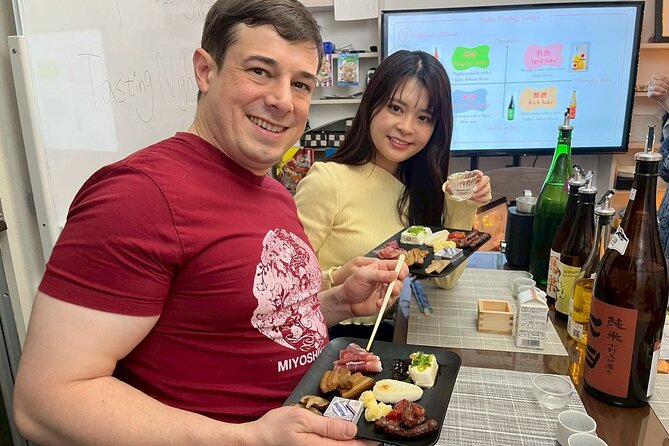
The session starts at 6 pm at Manga Dojo Tokyo, at 1-chome 31-6 Higashiikebukuro, Toshima City, in the Sansho Building, room 602. The meeting point is near public transportation, and the activity returns to the same location at the end.
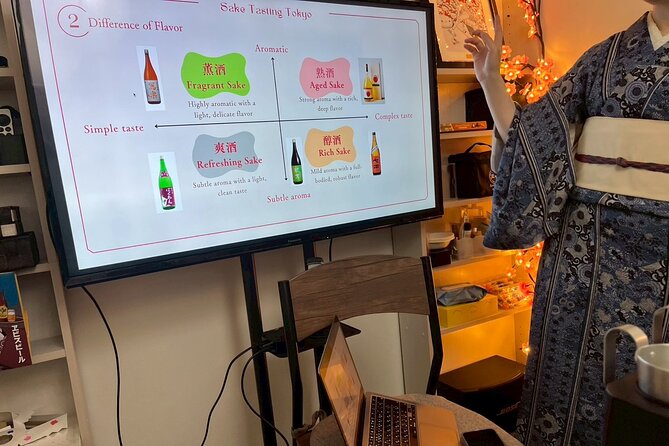
After the welcome, the host explains how sake is made and introduces the main differences between the bottles being served. The point is not to memorize a long list of Japanese terms. It is to give you enough context to notice what changes from one pour to the next.
You’ll taste five to six different varieties. The selection may vary with the season, so you should not book expecting one fixed menu. That variation is useful if you return to Tokyo at another time, but it also means the exact bottles and snacks cannot be promised in advance.
The tasting gives you a chance to compare several elements:
- Aroma, from soft and floral to more pronounced styles
- Sweetness and dryness
- Texture and weight
- How the flavor changes with serving temperature
- The difference between styles such as ginjo and daiginjo
This is the part I find most useful for beginners. A sake label can look mysterious in a shop, especially when several bottles use unfamiliar categories. Tasting a group of different styles side by side gives you a starting point for finding your own preference.
Why the hot sake matters
Many first-time drinkers think of sake as one drink served cold. This session challenges that assumption with kanzake, or warm sake. The change is not just about temperature. Warmth can make certain aromas and flavors more noticeable, giving the same broad category of drink a different character.
You do not need a trained palate to benefit from this comparison. Taste the warm serving slowly, then think about how it differs from the cooler samples. Does it seem softer, fuller, more fragrant, or simply different? The host’s explanations help you put those impressions into words.
This is also a useful lesson for ordering sake later in Japan. You may find that one style suits you chilled while another works better warm. The activity does not reduce sake to a list of rules. Instead, it shows that temperature is part of the choice.
Snacks that make the sake easier to understand
Each sake comes with small snacks, turning the tasting into a food-pairing exercise rather than a series of drinks. The menu changes by season, and the available information does not promise a fixed selection. You may find familiar Japanese-style bites alongside more playful combinations.
One memorable pairing mentioned during the session is curry bread with sake. It is an unexpected match, and that is exactly why it is useful. Pairing sake with something savory, rich, or strongly flavored can reveal qualities that are easy to miss when you drink it alone.
I like this approach because food gives you another way to judge a sake. A bottle that seems too dry or sharp by itself may work well with a salty snack. Another may become more noticeable beside a sweeter or heavier bite. You are not only asking if you like the drink. You are also learning where it might fit at a meal.
The food is light, not a substitute for dinner. Plan to eat beforehand if you need a full meal, especially since the activity lasts about 90 minutes and begins in the evening. The provider does not offer vegetarian or vegan choices, so plant-based diners should consider this carefully before booking.
Allergy-friendly options are available when requested in advance. You should share allergy information before the session rather than waiting until you arrive. Since the menu can vary, early notice gives the host the best chance to prepare.
More Sake Tours in Tokyo:
- Ramen and Sushi Cooking Class with Sake Pairing Set in Tokyo
★ 5.0 · 291 reviews - Tasting All Types of Sake with Sommelier
★ 5.0 · 151 reviews - Wagyu & Sake Pairing in Shinjuku – Steak, Shabu-Shabu & More
★ 5.0 · 112 reviews - Tokyo Wagyu & Sake Pairing Tasting Experience with Local Flavors
★ 5.0 · 108 reviews
Decorating your own wooden masu cup
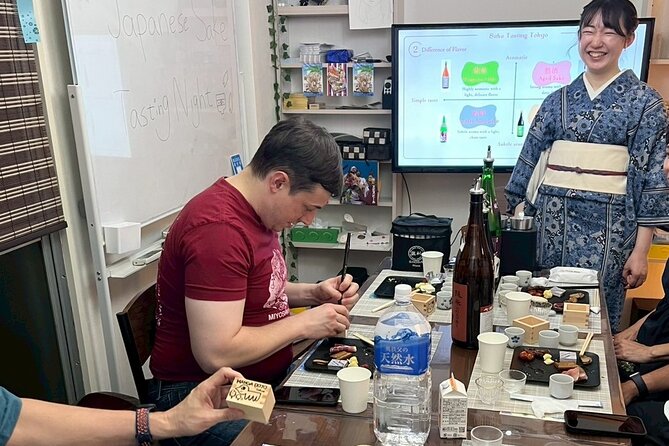
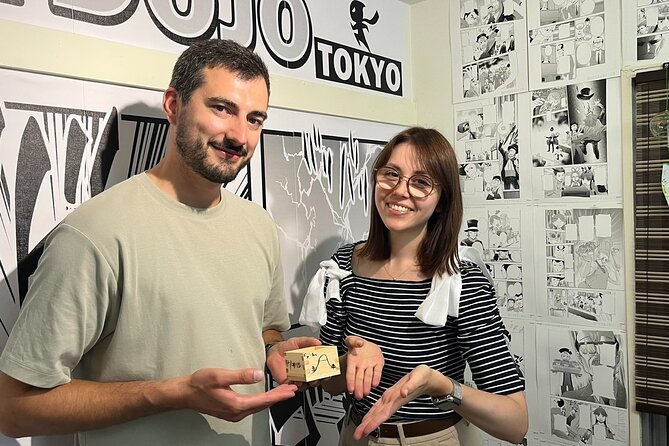
After the tasting, the activity shifts from explanation to making. You decorate a traditional wooden masu cup using Japanese brush pens, then take the finished cup home.
A masu was historically used as a measuring cup for rice and later became closely linked with sake service. Here, its value is less about formal tableware and more about the personal connection you create. You are not simply buying a souvenir in a shop. You are making a small object during the evening, with a design that reflects your own choices.
The brush pens make the craft approachable. You do not need to arrive with drawing skills, and the activity offers a welcome change after sitting through the tasting. It also gives you something concrete to remember the evening by, beyond photographs and a bottle you may not be able to carry home.
The craft portion may appeal most to couples, friends, and solo visitors who enjoy relaxed creative activities. If you want a highly polished finished object made by a professional, this is not that. The appeal is the handmade result, including its small imperfections.
The manga displays and workshop setting add to this part of the evening. Manga Dojo Tokyo is connected with manga lessons by professional manga artists, so the room has a creative identity rather than feeling like a generic classroom. The sake and manga elements do not appear to be one formal lesson, but they create an appealing Japanese cultural setting.
A social evening for solo visitors and small groups
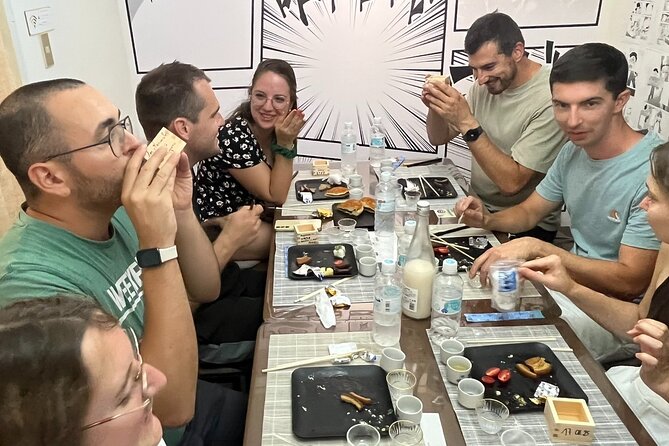
The maximum group size is eight, which keeps the activity intimate without making it exclusively private. You can expect conversation with the host and the other people at the table. That makes this a good choice if you are traveling alone and want one evening with built-in social contact.
The relaxed format also suits couples and small groups. You can compare your tasting notes, help one another with the masu designs, and talk about what you plan to eat or drink elsewhere in Tokyo. The small room encourages conversation more than a large commercial tasting venue would.
The atmosphere may be especially appealing if you are already spending time in Ikebukuro. The meeting point is only a few minutes from Ikebukuro Station and close to Animate, making it easy to combine with shopping, manga, or other neighborhood plans. Still, the listed address is inside a building and includes a room number, so allow time to find the correct entrance and reach room 602.
The 6 pm start is fixed. Arrive with enough time to get your bearings, since changes made less than 24 hours before the start are not accepted and late arrival could cut into a short session. The experience ends back at the meeting point, so you do not need to arrange a separate return transfer.
Is $60 a fair price?
At $60 per person, this is not the cheapest way to drink sake in Tokyo. You can buy a single glass or bottle for less at many restaurants and bars. That comparison, however, misses the main value here.
You are paying for five to six samples, guided instruction in English, food pairings, a warm sake comparison, and a decorated wooden cup to take home. The small group is important too. A large public tasting might offer more bottles, but less time for questions and less personal attention during the craft activity.
The price makes the most sense if you want help understanding sake rather than simply consuming it. It is also useful early in a Japan trip, before you visit izakayas or sake shops, because you leave with a clearer idea of the styles and temperatures you prefer.
The value is weaker if you already have strong sake knowledge and only want a large selection of premium bottles. It may also be a poor fit if you do not drink alcohol, need a full dinner, or require a vegetarian or vegan menu. The activity is designed around tasting, so the sake component is not something you can simply skip.
The activity is commonly booked well ahead, with an average booking lead time of about 68 days. That does not guarantee that every date sells out, but it is a useful warning if your Tokyo schedule is fixed. The group limit and evening start can reduce flexibility, so check availability before building the rest of your Ikebukuro plans around it.
Practical details before you reserve
You must be at least 20 to drink alcohol under Japanese law. This is not an activity for younger members of a family group, even if they would only take part in the craft portion.
The session lasts approximately 1 hour and 30 minutes. That is long enough for a proper introduction, several pours, snacks, and the masu decoration, but short enough to fit into an evening itinerary.
A mobile ticket is provided. Confirmation arrives within 48 hours of booking, subject to availability. If your plans change, free cancellation is available up to 24 hours before the local start time for a full refund. Less than 24 hours before the session, the payment is not refunded, and changes are not accepted.
Most people can participate, and the meeting point is near public transportation. Specific accessibility details beyond that are not provided, so contact the provider if you have mobility needs or need clarification about the building and room access.
Who should book the sake and masu workshop?
I would choose this for a first or second visit to Japan when you want cultural context without spending half a day in a museum. It gives you a clear introduction to sake, lets you test several styles, and adds a craft activity that keeps the evening from feeling like a lecture.
It is also a strong match for:
- Solo visitors who want a small social group
- Couples looking for a hands-on date activity
- Sake beginners who want plain explanations
- Manga fans already visiting Ikebukuro
- Returning Japan visitors who want to compare sake styles
- Anyone who values a handmade souvenir over a standard gift-shop purchase
I would think twice if you are looking for dinner, need vegan or vegetarian food, or prefer a private and highly formal tasting. The exact sake and snack menu varies, and the room has a casual workshop character. That is part of its charm, but it will not suit every style of evening.
Should you book it?
Book this Japanese sake tasting and masu crafting experience if you want more than a drink at a bar. The strongest combination is the five to six sake samples, the hot sake comparison, the snack pairings, and the cup you decorate yourself. The small English-language group and Ikebukuro location make it easy to fit into a Tokyo evening.
The main decision comes down to your food needs and drinking interests. If you are at least 20, enjoy alcohol, can manage the menu limitations, and like relaxed cultural activities, $60 is a reasonable price for the amount included. If your priority is a full meal, a large premium tasting, or plant-based food, choose another plan.
FAQ
Where does the sake tasting take place?
The activity takes place at Manga Dojo Tokyo, at 1-chome 31-6 Higashiikebukuro, Toshima City, Tokyo 170-0013, in the Sansho Building, room 602. It is a few minutes from Ikebukuro Station and near public transportation.
What time does the experience start?
The start time is 6 pm. The activity lasts approximately 1 hour and 30 minutes and ends back at the meeting point.
How many types of sake will I taste?
You will taste five to six different sake varieties. The selection may change depending on the season.
Is hot sake included?
Yes. The tasting includes kanzake, or warm sake, so you can compare how temperature changes the drink’s character.
Is food included, and are vegetarian options available?
Small snacks are served with the sake. Vegetarian and vegan options are not offered, but allergy-friendly options are available if you provide information in advance. The menu may vary by season.
Who can take part, and what is the cancellation policy?
Alcohol consumption is prohibited for anyone under 20 under Japanese law. The group has a maximum of eight people. You can cancel for a full refund up to 24 hours before the local start time. Cancellations or changes made less than 24 hours before the start are not accepted for a refund.
Newly added around Tokyo
- Wagyu BBQ & Sukiyaki with Sake Pairing Experience near Ginza★ 5.0 · 2 reviews
- Tokyo Sake Tasting Tour with a Sake Expert★ 5.0 · 7 reviews
- Tokyo: Serene Sakura & Sake: An Exclusive Brewery Pairing Lunch★ 5.0 · 2 reviews
- Sake Tasting and Cherry Blossom Fun in Tokyo!★ 5.0 · 4 reviews
- Private Sake Tasting at 300 Years Old Sake Brewery in Tokyo★ 5.0 · 3 reviews
- Sake Pairing Workshop with Japanese Food in Shinjuku★ 5.0 · 5 reviews
- Nagano: Snow Monkey and Zenkoji Temple Free Sake Taste Day Tour★ 4.5 · 8 reviews
- Cherry blossom & Japanese Sake Tasting in Shinjuku★ 5.0 · 4 reviews
Sake Tasting, compared.

3-Hour Kyoto Insider Sake Brewery Tour with Tastings & Pairings
Read our review →
Sake Tasting Masterclass in Shinjuku (8+ Varieties with a Pro)
Read our review →
Insider Sake Experience with 7 Tastings and Snacks
Read our review →
Sake Omakase in Tokyo: Guided Tasting by Certified Sommeliers
Read our review →
Private Tea Ceremony and Sake Tasting in Kyoto Samurai House
Read our review →
Casual Japanese SAKE tasting and snack experience in Kabukicho
Read our review →
Browse the lists this tour appears in