
Reviewed · SAKE TASTING
Japanese Sake Tasting & Wagyu Sukiyaki Cooking Class in Tokyo
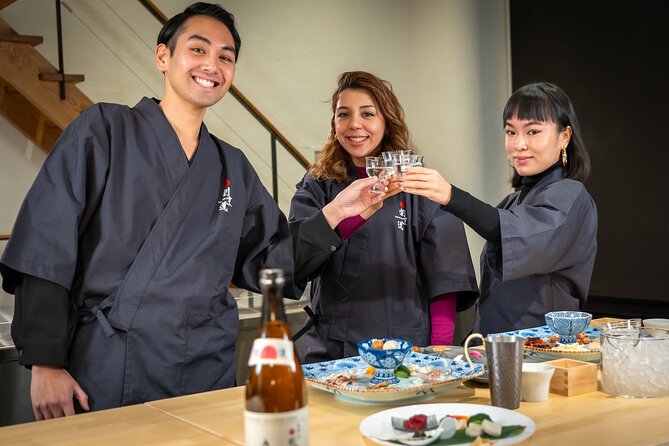
The clever part of this Tokyo class is that it treats sake as food, not just a drink. You compare the same sake chilled, at room temperature, and warm, then pair it with Japanese snacks before cooking your own Wagyu sukiyaki. Hiromi leads the sake lesson, while the cooking portion includes help from staff such as Naoya and chef Kimagai.
I like the small maximum of eight people, which gives the class a friendly, hands-on feel. I also like the vegetable-cutting demonstration, a bit of culinary theater that adds craft and visual flair while your sukiyaki simmers. The main consideration is price: at $129 per person, this is a focused two-hour class rather than a full-day food tour, so it suits you best if you value instruction, tasting, and a prepared meal in one booking.
Key points at a glance
- Three sake temperatures: Compare chilled, room-temperature, and warm sake to see how heat changes aroma and taste.
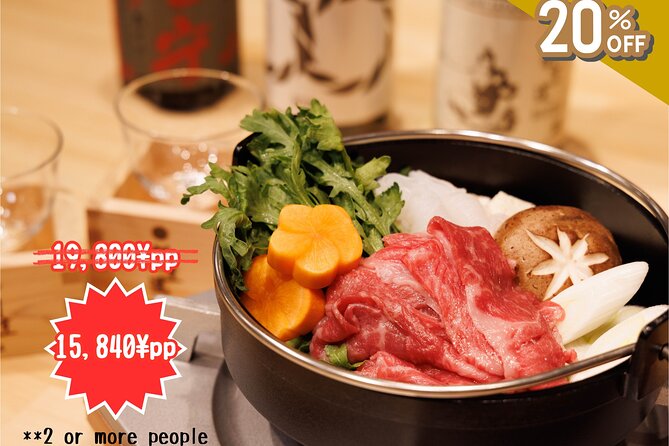
- Wagyu sukiyaki lunch: Prepare and eat a hot pot featuring premium Wagyu beef.
- Small group setting: The class accepts a maximum of eight people, making it easier to follow demonstrations and ask questions.
- Professional vegetable carving: Watch a chef create decorative cuts while your sukiyaki cooks.
- English-friendly instruction: Hiromi and the team explain sake, food, and preparation in an accessible way.
- Useful extras: You receive a participation certificate and 10% off purchases at the first-floor shop that day.
Sake first, sukiyaki second
The class begins at 11:00 a.m. at Kappodo H.Q., also identified as Tokyo D Kitchen Studio, in Nishiazabu, Minato City. You meet at the modern kitchen studio and begin with sake rather than jumping straight into cooking. That order makes sense: your palate gets a clear introduction before the savory hot pot arrives.
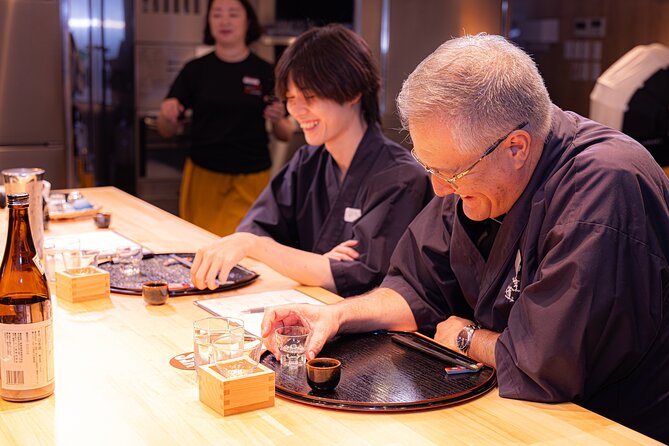
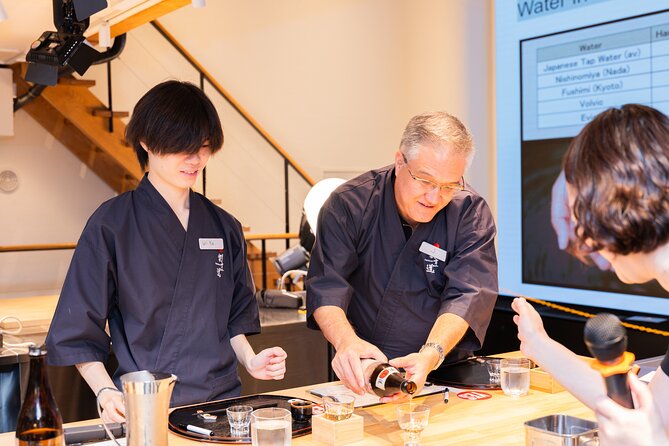
Hiromi guides the sake portion and explains how serving temperature affects the drink. You taste sake in three temperature ranges: chilled, at room temperature, and warm. The comparison is practical. Instead of hearing a general lecture about sake, you can notice how the same drink changes in your own glass.
The class also covers different types of sake and the role of serving vessels. That detail matters because a cup or glass can shape the way you notice aroma, warmth, and flavor. You do not need prior sake experience. The structure gives you a simple way to identify your own preferences, which can help later when ordering sake in Japan.
Selected Japanese snacks accompany the tasting. These pairings make the lesson more useful than a series of isolated pours. You can see how a salty or savory bite changes the drink, and you get a better sense of why sake appears so often alongside Japanese food.
More Wagyu and Sake Tours in Tokyo:
- Wagyu & Sake Pairing in Shinjuku – Steak, Shabu-Shabu & More
★ 5.0 · 112 reviews - Tokyo Wagyu & Sake Pairing Tasting Experience with Local Flavors
★ 5.0 · 108 reviews - Wagyu Beef and Sake Pairing Foodie Tour in Tokyo
★ 5.0 · 71 reviews
Learning sake through temperature
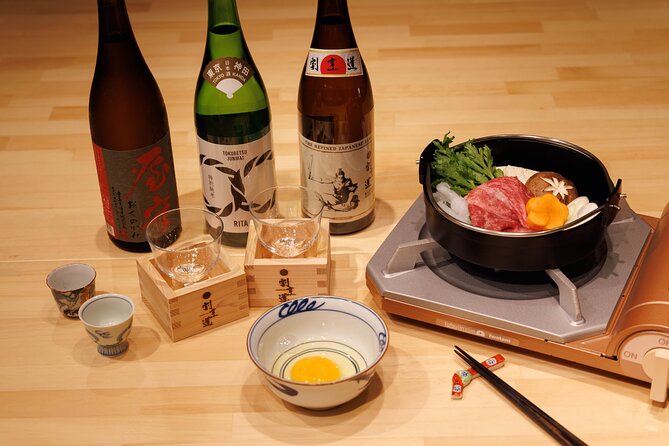
This is likely the most distinctive part of the experience. Many sake tastings focus on different bottles, but this class also asks you to compare temperature. Chilled sake may feel lighter or sharper, while warm sake can bring out a different set of aromas and a fuller sensation. The point is not to declare one temperature best. It is to help you find what you enjoy.
The warm tasting is especially useful for anyone who has only tried cold sake. You may discover that a heated pour works better with certain snacks or suits your taste more than expected. The staff also explain how warm sake can enhance flavors, giving the tasting a clear connection to the meal that follows.
You should expect alcohol to be part of the class from the start. Sake is provided in several temperature ranges, along with other types of sake. Since the experience lasts about two hours and begins at 11:00 a.m., this may not be the right choice if you prefer to avoid alcohol during the day. The description does not specify a nonalcoholic alternative, so ask the provider before booking if that matters to you.
Cooking Wagyu sukiyaki in a Tokyo studio
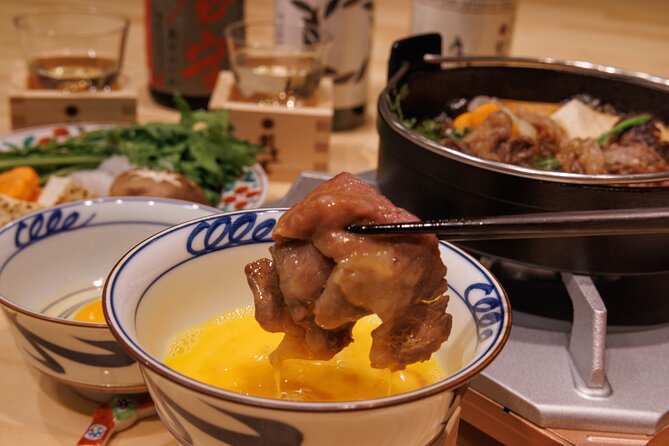
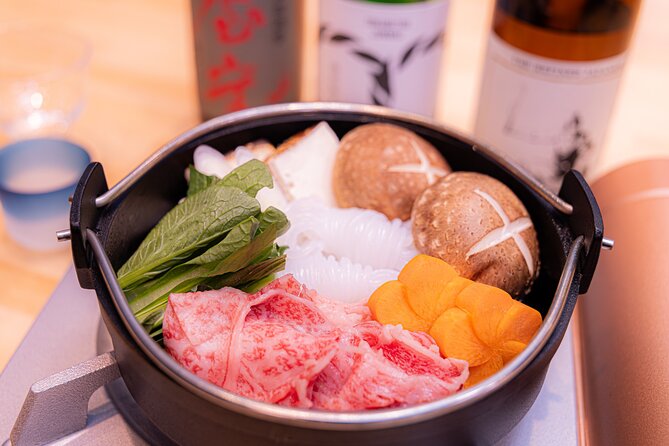
After the tasting, the focus shifts to Wagyu sukiyaki. Sukiyaki is a Japanese hot pot built around thinly sliced beef, vegetables, and a sweet-savory cooking broth. Here, you do not simply watch a chef prepare lunch. You take part in the cooking workshop and then eat the finished dish.
The premium Wagyu beef is the main reason the meal feels special. Wagyu brings a soft texture and rich flavor, so the cooking method matters. The class lets you see how the ingredients come together rather than presenting the dish as a finished plate with no explanation.
The exact step-by-step recipe is not provided, so you should not expect a take-home technical cooking course with detailed measurements. Instead, think of it as a guided food experience. You learn by following the instructor, using the equipment supplied for the lesson, and watching the cooking process in front of you.
Chef Kimagai is associated with the Kano-style sukiyaki portion, and the team also includes cooks such as Naoya. The staff receive consistent praise for making the process smooth and enjoyable. That is useful for families and groups with different cooking confidence levels. You can participate without needing to arrive with knife skills or knowledge of Japanese cuisine.
A vegetable-cutting demonstration with a purpose
While the sukiyaki simmers, a professional chef demonstrates decorative vegetable cutting. This is more than a pause between activities. Japanese food places real value on appearance, and the demonstration gives you a glimpse of the care that can go into preparing even a humble vegetable.
The timing works well. You have something interesting to watch while the hot pot cooks, and the demonstration keeps the class from feeling like a long wait around the stove. It also adds a visual lesson to the sake and cooking instruction, so the experience appeals to people who enjoy technique as much as eating.
I would keep your expectations measured. The supplied information does not say that you personally practice the decorative cutting, so treat this as a live demonstration rather than a hands-on carving workshop. Your active cooking role centers on the sukiyaki.
More Cooking Classes with Sake in Tokyo:
- Ramen and Sushi Cooking Class with Sake Pairing Set in Tokyo
★ 5.0 · 291 reviews - Tokyo: Sushi and Ramen Cooking Class with Sake Pairing Set
★ 5.0 · 81 reviews - Tokyo: Sushi Cooking Class with Sake Tasting
★ 4.8 · 55 reviews - Tokyo Sushi Making Class : Sake Ceremony & Matcha Experience
★ 5.0 · 44 reviews
Eating the hot pot with sake
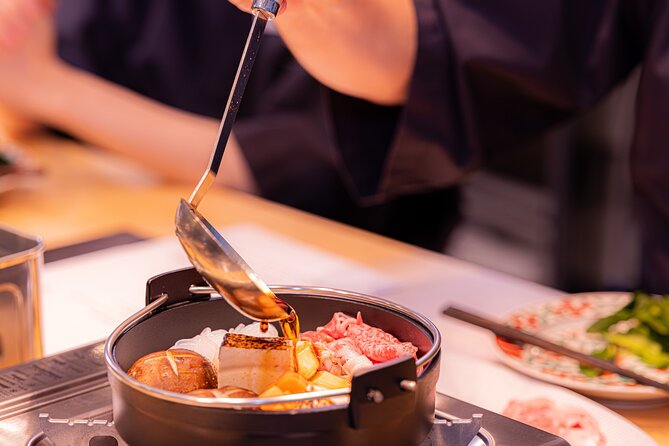
Once the sukiyaki is ready, you sit down to eat your meal with sake. The pairing feels more meaningful because you have already tested different temperatures and styles. You can consider which pour works best with the beef and broth, rather than simply accepting a recommended drink without comparison.
The meal is included in the $129 price, along with the alcoholic beverages and equipment used in the sake lesson. That makes the cost easier to understand. You are paying for a guided class, several tastings, a Wagyu lunch, staff instruction, and a cultural activity in a small group.
Still, this is not a cheap lunch. If you only want to eat sukiyaki, you can likely find less expensive options elsewhere in Tokyo. The value comes from combining the meal with an explanation of sake, a cooking session, and a chef demonstration. I would book it for the activity and the food education, not simply for the portion of beef.
The class ends back at the meeting point. Because the whole experience lasts about two hours, it can fit neatly into a sightseeing day. You might book it before an afternoon in Roppongi, Azabu, or another part of central Tokyo, but the provided details do not include a full neighborhood itinerary or private transport.
Why the group size matters
The maximum group size is eight people. That number is small enough to make the workshop feel personal without turning it into a private class. You should have a better chance of hearing the explanations, seeing the demonstrations, and getting help during the cooking than you would in a large culinary school group.
A small class also suits families. Several families have enjoyed the format together, and the activity gives adults and children, if eligible to participate in the booking, something to do at each stage. Keep in mind that sake is included, so families should confirm age requirements and participation arrangements directly before booking. Those details are not specified here.
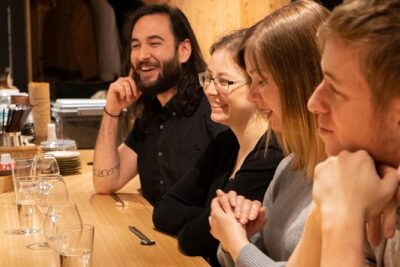
The atmosphere is described as warm and relaxed, with staff who are friendly and helpful. That tone matters in a cooking class. A stiff lesson can make you nervous about making a mistake, while a relaxed instructor encourages you to taste, ask, and try. Hiromi’s role is particularly important because she handles the sake explanations in an engaging way.
Location, timing, and practical planning
You meet at Kappodo H.Q., Tokyo D Kitchen Studio, at 2-chome 21-12 Nishiazabu, Minato City, Tokyo 106-0031. The activity is near public transportation, but private transportation is not included. Plan your route before the morning of the class and allow enough time to arrive at 11:00 a.m.
The meeting point name may appear in more than one form, including Kappodo H.Q. and Tokyo D Kitchen Studio. Save the full address and check your booking confirmation so you go to the correct entrance. Confirmation is provided at booking.
The experience ends at the same place where it starts. That is convenient if you are carrying shopping bags or want to continue exploring nearby. It also means you should not expect a drop-off at your hotel or another Tokyo attraction.
A mobile ticket is available, which keeps the booking simple. Group discounts may also be available, so check the current price if you are booking for several people. The listed rate is $129 per person, but discounts and final pricing can depend on the booking date and party size.
What the price includes
The inclusions are fairly clear:
- Sake served across three temperature ranges
- Other sake varieties
- Japanese snack pairings
- Wagyu beef sukiyaki lunch
- Equipment for the sake pairing lesson
- Participation certificate
- 10% off items at the first-floor shop on the same day
The shop discount is a nice extra if you are interested in Japanese kitchen goods or related products. It is not a reason by itself to book the class, but it can add value if you already plan to browse the shop after the workshop.
Private transportation is not included. The description also does not list hotel pickup, additional sightseeing, or a full recipe booklet. If any of those matter to you, ask before paying. The class is designed as a compact food experience, not as a transport-inclusive tour of Tokyo.
Cancellation and booking details
You can cancel for a full refund up to 24 hours before the scheduled start time. Cancellations made less than 24 hours before the class are not refunded, and changes inside that same window are not accepted.
The cut-off follows Tokyo local time. That is easy to overlook when booking from another time zone, so check the local start time carefully. The class also requires a minimum number of participants. If the provider cancels because that minimum is not reached, you are offered another date or experience, or a full refund.
Who should book this experience?
I would recommend this class to you if you want a structured introduction to Japanese food culture without committing half a day. It suits first-time sake drinkers, food-focused visitors, couples, families, and small groups who prefer doing something together rather than sitting through a standard restaurant meal.
It is also a good pick if you are curious about the difference between chilled and warm sake. That temperature comparison gives the experience a clear purpose and may change how you order drinks during the rest of your time in Japan.
You may want to skip it if you dislike alcohol, have little interest in cooking, or want a large meal with extensive menu choice. The class follows a set format and centers on sake, Wagyu sukiyaki, and the demonstration. It is not a broad survey of Japanese cuisine.
The two-hour length is both a strength and a limit. You get a focused activity that leaves time for other plans, but you will not cover every aspect of sake making or Japanese cooking. I see that as a fair trade for a class that stays manageable and easy to fit into a busy Tokyo itinerary.
Should you book the Kappodo sake and sukiyaki class?
Book it if you want to taste sake with a purpose, cook a premium Japanese dish, and learn from a small team in a central Tokyo studio. The combination of three serving temperatures, food pairings, Wagyu sukiyaki, and vegetable carving gives the class more substance than a basic tasting or a meal alone.
At $129, the value depends on your interest in the lesson. You are paying a premium for instruction and participation, not only for lunch. For a first visit to Tokyo, a family event, or a small group looking for a shared cultural activity, I think that makes the price reasonable.
The best reason to choose it is the way the parts connect. You taste sake, learn how temperature changes it, prepare sukiyaki, watch the chef’s technique, and then pair the finished meal with what you have learned. If that sounds like your kind of morning, this is a practical and enjoyable booking.
FAQ
Where does the class take place?
The class begins and ends at Kappodo H.Q., also called Tokyo D Kitchen Studio, at 2-chome 21-12 Nishiazabu, Minato City, Tokyo 106-0031.
What time does the experience start?
The class starts at 11:00 a.m. and lasts approximately two hours.
How many people can join?
The maximum group size is eight people.
Is lunch included?
Yes. Wagyu beef sukiyaki is included, along with sake and the Japanese snack pairings used during the tasting.
Do I receive anything after the class?
You receive a certificate of participation. You can also receive 10% off items at the first-floor shop on the same day as your workshop.
Can I cancel for a full refund?
Yes. You can cancel at least 24 hours before the local start time for a full refund. Cancellations or changes made less than 24 hours before the start are not accepted for a refund.
More Sake Tastings in Tokyo
- Sake Tasting Masterclass in Shinjuku (8+ Varieties with a Pro)
★ 5.0 · 271 reviews - Sake Omakase in Tokyo: Guided Tasting by Certified Sommeliers
★ 5.0 · 239 reviews - Casual Japanese SAKE tasting and snack experience in Kabukicho
★ 5.0 · 159 reviews - Tasting All Types of Sake with Sommelier
★ 5.0 · 151 reviews
Newly added around Tokyo
- Tokyo Sake Tour with a Local Guide, Private & Tailored to Your Taste★ 4.0 · 12 reviews
- 7 Kinds of Sake Tasting with Complementary Foods★ 5.0 · 11 reviews
- Wagyu Beef & Sake Pairing Foodie Tour in Tokyo★ 5.0 · 16 reviews
- Luxury Tokyo Sake, Cocktail, Whisky and Pairing Tour★ 5.0 · 18 reviews
- Sake & Food Pairing with Sake Professional★ 5.0 · 28 reviews
- 10 kinds Sake Tasting Experience in Tsukiji with local!!★ 5.0 · 19 reviews
- Private Tour: Tokyo’s Oldest Sake Brewery and Riverside Walk★ 5.0 · 25 reviews
- Wagyu & Sake 8 Course Tasting Dinner in Shinjuku★ 4.9 · 20 reviews
Sake Tasting, compared.

3-Hour Kyoto Insider Sake Brewery Tour with Tastings & Pairings
Read our review →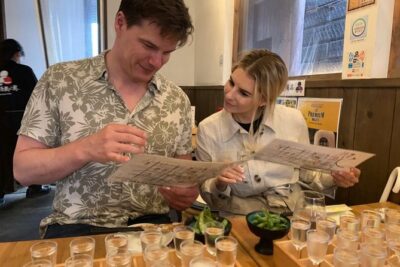
Sake Tasting Masterclass in Shinjuku (8+ Varieties with a Pro)
Read our review →
Insider Sake Experience with 7 Tastings and Snacks
Read our review →
Sake Omakase in Tokyo: Guided Tasting by Certified Sommeliers
Read our review →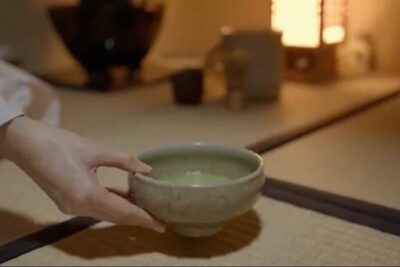
Private Tea Ceremony and Sake Tasting in Kyoto Samurai House
Read our review →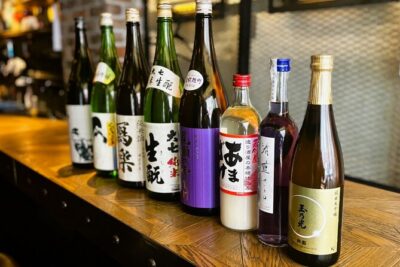
Casual Japanese SAKE tasting and snack experience in Kabukicho
Read our review →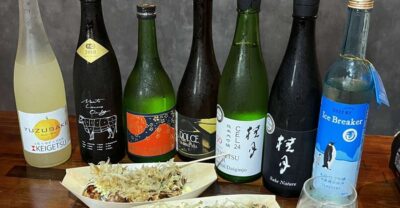
Browse the lists this tour appears in